Surviving (and Thriving in) My First Year of Junior High Library Class

If you had told me at the beginning of this school year that a blended 7th and 8th-grade library class would become one of my favorite parts of my week, I might not have believed you.

Coming from an elementary background, the thought of staring down a classroom of junior high students for 90-minute blocks, two and three times a week, felt a little intimidating. How was I going to keep them engaged? How do you fill that much time without losing them to the abyss of middle school eye-rolls?

But as the year wrapped up, I looked back and realized it was an incredible success. Having those long blocks actually allowed us to dive into deep, meaningful research activities that you just can’t squeeze into a standard 45-minute elementary rotation.

My secret weapon? Mixing it up every single week. If you are starting a new junior high library class next year, here is a breakdown of some of the units, resources, and activities that kept my students engaged, talking, and learning.

Media Literacy & Big Discussions

Junior high students are drowning in digital media, but they don’t always know how to navigate it. We dived deep into digital citizenship and internet safety using Above the Noise (via KQED/PBS).

  • How I used it: These videos are sharp, fast-paced, and highly relevant to teens. I paired them with video guides for the students to fill out as they watched to keep them focused. I also used this as an opportunity to practice Google Slides and Canva. Students summarized what they learned by creating presentations in one of these.
  • The result: This completely unlocked the room. It led to some of the most insightful, honest discussions and discoveries about social media algorithms, fake news, and digital footprints.

Collaborative Research with a Retro Twist

To teach research skills without hearing the groaning and complaining, I used videos from Retro Report (an incredible resource that connects history to current events).

  • How I used it: We used their investigative videos to look at topics like invasive species and media frenzies. Students worked in groups to unpack the history, analyze the media’s role, and conduct their own deep-dive research based on the prompts.

Creative Writing & Author Deep Dives

With 90 minutes on the clock, we had the luxury of slowing down for multi-step creative projects. Two of our absolute favorite writing and research units were:

  • “Library After Dark” Creative Writing: I challenged the students to write a creative story about what happens in our library when the lights go out. Giving them the freedom to write ghost stories, fantasy adventures, or mysteries set in their actual school building sparked incredible creativity.
  • Author Deep Dives: Instead of a generic biography report, students chose an author and did a comprehensive research deep dive. They investigated the author’s background, their writing process, what inspired their most famous works, and how their style evolved over time. It was a fantastic way to blend database research with literary appreciation.

The Middle School Mock Caldecott

Think picture books are just for the younger grades? Think again. One of our major highlights was running a Mock Caldecott unit with my 7th and 8th graders.

  • How I used it: I chose books that were recommended on different Mock Caldecott blogs and sites, plus some of my own personal favorites. Then, we looked at the actual evaluation criteria used by the real-world ALA judges to grade the art, media, and storytelling. Finally, the students cast their official votes to see if they could successfully predict the real winners.
  • The result: The kids took this so seriously. It was a brilliant way to practice critical evaluation skills and analyze visual storytelling at a higher level.

Rethinking “Book Time” for Big Kids

You might think 8th graders are “too old” for certain library books, but I found that changing how we interacted with the collection changed everything. Some of the fun activities we did with books were:

  • Wordless Picture Books: We used these for visual literacy, storytelling, and sequencing activities. It forced them to slow down and look at detail, context clues, and subtext.
  • Ripley’s Believe It or Not Books: Never underestimate the power of weird trivia. These were fantastic for an end of the year news article writing assignment. They had to pick a bizarre event and then write a realistic sounding news article.
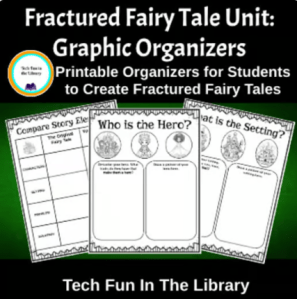
  • Fractured Fairy Tales: We spent time analyzing traditional fairy tales and breaking down how they are built. Then, I set the students loose to write and create their very own fractured versions. They had a blast spinning old classics on their heads.
  • Studying Point of View: I pulled various picture books specifically to study point of view. Because they are short and direct, they were a fast, visual, and really effective way to show students how a story changes drastically depending on who is telling it.

Keeping Catalog Skills Sharp

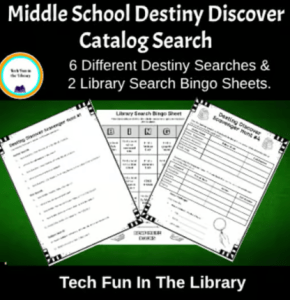
  • Destiny Scavenger Hunts: Destiny Scavenger Hunts: To make sure they didn’t lose their practical library skills amidst all the big projects, we periodically did Destiny Scavenger Hunts. It was a great way to keep them familiar with using the library catalog system so they can find the books they need.

Year One: In the Books!

Overall, it was a great first year with this course. I was definitely worried at the beginning, but it quickly became one of my absolute favorite classes. It turns out that when you give 7th and 8th graders the right mix of new activities, videos, and creative choices, a 90-minute block actually flies by. I’m so glad I got to try these new ideas with them, and I’m already looking forward to adding to the class year after year.

Fellow librarians: Do you teach a junior high or middle school block? What are your go-to resources for media literacy or creative writing? Let’s swap ideas in the comments!

Click the images below to find these activities on my TPT page.

Behind Closed Doors: Inside the Empty School Library

The final bell has rung, the backpacks are cleared out, and the hallways are completely quiet. You might think the school library goes to sleep for the summer… but you’d be wrong.

Have you ever wondered what the books do when the students are away? We managed to sneak in and capture some exclusive behind-the-scenes footage. Here is the actual truth about what happens after student leave for summer break:

  • The Graphic Novel Reunion: During the school year, the Dog Man and I Survived books are never on the shelf at the same time. They are constantly checked out! Summer is their only chance to finally sit together, catch up, and swap stories.
  • The Picture Book Spa Day: After nine months of being stuffed headfirst into overstuffed backpacks next to crunchy potato chips, dropped on the floor, and read aloud to enthusiastic puppies, the picture books are finally taking a break. Right now, they are relaxing on the shelves, getting a gentle spine massage, and enjoying the peace and quiet.
  • The Chapter Book Marathon: The thick chapter books have been waiting all year for someone with enough free time to read past chapter three. Right now, they are flexing their bookmarks, stretching their pages, and doing some heavy lifting to get in shape for your fall book reports.
  • The Scanner’s Deep Sleep: The library barcode scanner beams its red laser thousands of times a week. It is currently in a deep hibernation mode, dreaming of that satisfying BEEP! sound. (Please do not make any loud noises near the circulation desk; we don’t want to wake it up.)
  • The Great Book Drop Vacation: The library book drop handles hundreds of heavy books a day. Right now? It’s taking a well-deserved nap. We even caught it wearing sunglasses.
  • The Dust Bunny Takeover: With no feet running down the aisles, the library dust bunnies have formed a tiny civilization in the biography section. They are currently electing a mayor.

The Librarian’s Confession

As for me? I’m busy doing the most important summer job of all: reading a massive stack of brand-new books to make sure they are safe for the shelves this fall. (It’s tough work, but someone has to do it!)

We miss you already, readers! Stay cool, read some great books at home, and try not to let the dust bunnies take over your bedroom.

What do you think your favorite library book is doing right now? Let us know in the comments below!

Fairy Tales, Fractured Fun, and Library Magic

I love May because the sun is shining, the birds are singing, and it is time to begin our fairy tales unit in the library! This is always one of the most enjoyable units of the year, and students of all ages look forward to it.

Fairy tales are important because they help students explore storytelling, character development, problem solving, and life lessons that have been shared for generations. They also introduce students to different cultures and traditions through stories that have been passed down over time. As we read fairy tales together, students practice making predictions, comparing stories, identifying themes, and recognizing story elements.

Over the years, I have added many cultural fairy tale versions to our library collection so students can experience stories from around the world. Some favorites include Ra Pu Zel and the Stinky Tofu, The Rough-Face Girl, and Lon Po Po. These stories help students see both the similarities and differences in tales across cultures while broadening their understanding of traditions and perspectives from around the world.

One of the best parts of the unit is adding our own creative twist through fractured fairy tales. These stories take familiar fairy tales and change them in funny, surprising, or unexpected ways. Students love comparing the original versions with the fractured versions and noticing how the stories are transformed.

After reading many different fractured fairy tales together, students get the opportunity to create their own. Their creativity always shines as they reimagine classic characters, settings, and plots in brand-new ways. This unit is filled with laughter, imagination, and wonderful storytelling, making it a favorite time of year in the library!

I have also created activities to go along with our fractured fairy tale unit, and they are available in my Teachers Pay Teachers store for anyone looking to bring a little extra fairy tale fun into their classroom or library.

Click here to grab your copy of the Fractured Fairy Tale Unit

Deep Thinking Over Hot Coffee

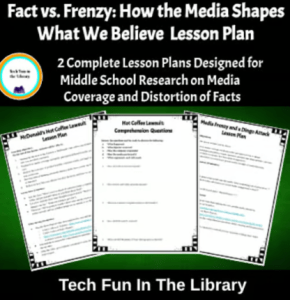
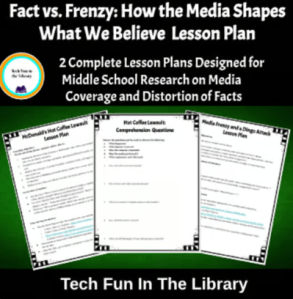
This week in our Grade 7 and 8 library class we dove into Retro News articles, and it ended up being one of those lessons that went even better than I planned. Surprisingly my students were really engaged in this assignment, and you could actually see the deep thinking happening.

This lesson focused on the famous Liebeck v. McDonald’s Restaurants case, better known to most people as the McDonald’s hot coffee lawsuit. Some of the students thought they already knew the story while some had never heard of it which is not surprising since it did happen in the early 90s. “Someone spilled coffee and sued for millions.” That was the reaction at first. After talking about it a bit we watched a short video on Retro News that walked through what actually happened.

As they watched, students answered comprehension questions to show they were really paying attention. I always tell them that in library class we are not just reading books. We are learning how to read the world. The questions helped them slow down and notice details. What were the injuries? What did the company know? What information was left out of the headlines?

The discussion after the video is when some great discussions began. Students were genuinely surprised at how different the full story was from the version they had heard before. We talked about the power of media and how a story can be framed in a way that shapes public opinion. We looked at headlines, tone, and how quickly people form opinions without all the facts.

Then we moved into group work. I split the class into four teams and each one took a different deep dive angle.

*Product Safety and Corporate Response
*Legal Precedents and Consumer Protection
*Media Framing and Public Opinion
*Ethics, Fairness and Corporate Responsibility

Each group created a presentation to teach the rest of the class about their findings. I loved seeing them take ownership of their section. They were citing evidence, making connections between cases, and even challenging each other’s thinking in respectful ways. Several students said they were shocked at how many similar cases have happened and how often key details get left out when stories are retold.

What started as “that silly coffee lawsuit” turned into a powerful lesson in media literacy, critical thinking, and asking better questions. Watching students move from quick assumptions to thoughtful analysis reminded me exactly why I love teaching library.

Retro News for the win.

Don’t Judge a Book by Its Page Count: Picture Books in Middle School

When people think of picture books, they often imagine elementary classrooms and early readers. But here is something I have been happily reminded of this year: middle school students still love picture books, and they benefit from them in powerful ways.

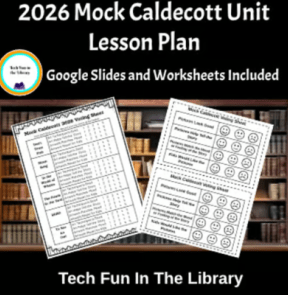
I was not sure how my middle school students (grades 7 and 8) would respond to participating in a Mock Caldecott Medal this year. Would they think it was too young? Would they take it seriously? As it turns out, they absolutely rose to the occasion.

At their age, they were mature enough to thoughtfully evaluate the books using our four criteria: Art Technique is Good, Art Helps Tell the Story, Artwork Matches Mood, and Artwork Meant for Kids. As they read through the titles on our mock list, I could hear them debating artistic choices, discussing how illustrations supported the text, defending their scores with evidence, and even questioning the mediums used for the artwork. They were asking whether an illustrator used watercolor, collage, digital art, or mixed media, and discussing how those choices affected the overall impact of the story. They were not just reading. They were analyzing.

Picture books are uniquely powerful for middle schoolers for several reasons.

First, they spark great conversations. Because the books are shorter, students are more willing to jump in and share their opinions. Before you know it, they are pointing out small details in the illustrations or arguing about whether the artwork really matches the mood of the story.

They also let students dig deeper without feeling overwhelmed. A picture book might look simple, but there is often a lot going on beneath the surface. The combination of text and illustrations gives them more to notice and more to talk about.

And honestly, they are fun. Middle schoolers still enjoy being read to. They still like flipping through beautifully illustrated pages. Giving them access to picture books reminds them that reading does not always have to feel heavy or complicated to be meaningful.

Our Mock Caldecott experience did more than introduce students to new and engaging picture books. It also gave them an understanding into how the Caldecott process works and helped them appreciate the artistry behind the books they may have once rushed past.

Most importantly, it reminded all of us that picture books are not defined by age level. They are defined by the power of storytelling. And middle schoolers are more than ready to engage with that power.

If you need a Mock Caldecott lesson plan you can find one in my TPT store.

Big Impact, Small District: The Power of Our Read A Thon

For the past five years, our annual Read A Thon has been one of the highlights of the school year. What started as something I wasn’t quite sure would take off in our small district has grown into a positive, exciting experience for both our students and our library.

Our Read A Thon serves two important purposes: it encourages daily reading and it raises funds to support our library. As a fundraiser, it has exceeded my expectations. Families truly jump onboard and enthusiastically sponsor their students to read. We use the Read A Thon website, which makes the entire process incredibly simple. They provide the flyers, host everything on their platform, and handle all payments online. Parents register their students and submit donations directly through the website, which means I don’t have to collect, track, or manage any money. That convenience alone has been a game changer.

I always select the 80% no-prize option, which allows us to keep more of the funds raised. Instead of spending money on pre-packaged prizes, I purchase books to use as rewards. The money we raise goes right back into our library—buying new books, funding reading contest prizes, and stocking our makerspace with supplies. For a small district, this fundraiser has made a big difference.

Beyond fundraising, the Read A Thon is a powerful reading incentive. Once students are registered, they record their reading minutes each day. We offer grand prizes that require a minimum number of minutes read to qualify, which motivates students to stay consistent and build strong reading habits. It’s amazing to see the focus and excitement around reading during this time.

We celebrate our readers in big ways. Each grade level has one grand prize winner who receives a family four-pack to the zoo, museum, or local waterpark. I also select 15 students in grades K–3 for a field trip to the science museum and 15 students in grades 4–6 for a second science museum trip. Last year, I added a special bonus: the top two readers and the top two money earners enjoyed a trip to the bookstore to spend $25 on books of their choice. Watching students pick out their own books was such a rewarding experience.

We also recognize classes as a whole. The class with the most minutes read and the class with the most money raised each earn an ice cream party and an extra activity day in the library. These celebrations build excitement and create a shared goal within classrooms.

Overall, our Read A Thon has become so much more than a fundraiser. It’s a joyful, community-supported event that strengthens our reading culture while providing meaningful financial support for our library. Five years in, I can confidently say it has been one of the best initiatives we’ve implemented—and I can’t wait to see it continue to grow.

Calm, Cozy, and Consistent: Managing December in the Library

December in the library can feel magical… and a little chaotic. With excitement building for winter break, keeping routines consistent is key to helping students stay focused and successful. I’ve learned that sticking to our regular expectations, no matter the season, creates a calm, predictable environment for everyone.

After Thanksgiving break, I always start with a quick reteach of library rules and expectations. Even a 2–3 minute review helps students (especially the younger grades) remember what it looks like to listen to stories, stay in their seats, follow directions, and participate in our activities. A refresher sets the tone and helps prevent behavior issues before they start.

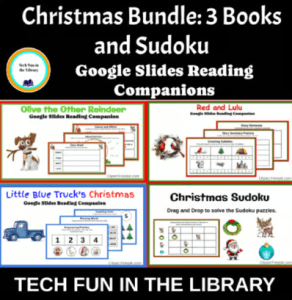
To keep engagement high, I fill our time with plenty of winter-themed read-alouds featuring snowmen, snowy adventures, and cozy seasonal stories. I also make sure our displays reflect the many ways people celebrate this time of year. Along with Christmas, I feature books on Hanukkah, Kwanzaa, Diwali, Las Posadas, St. Lucia Day, and Winter Solstice/Yule.

I always keep inclusivity in mind. I know I have students in a few classes who do not celebrate holidays, so for those groups, I skip holiday-themed read-alouds completely. Instead, I focus on snowmen, winter animals, and other neutral seasonal stories. This ensures that every student feels comfortable, included, and respected.

I’ve also created a variety of lesson activities that connect directly to the books we read, which helps maintain structure and purpose during a busy month. If you’re looking for low-prep resources to use in your own library or classroom, you can find many of these activities in my Teachers Pay Teachers store.

Keeping routines steady doesn’t take away the fun—it helps students enjoy the season even more. With clear expectations, engaging stories, and a welcoming space for all, December becomes one of the most joyful months in the library.

You can find these and more on my TPT store. Click here to see my entire store.

Making 90 Minutes Count in Junior High Library

This is my first year teaching a junior high library class, and I’ll be honest—I’m only about one step ahead of the students most days when it comes to planning. One of the biggest challenges has been filling a full 90-minute class block, especially with new classes still getting used to the routine.

Today, though, I pulled together an educational, engaging activity that filled the whole time and actually went really well, so I wanted to share in case it helps someone else.

I knew I wanted to cover a digital citizenship lesson and found a great one on PBS Learning Media called “When Is Your Brain Ready for Social Media?” It includes a short video and a viewing guide with questions. We watched the video once and answered the questions together. Then we watched it again so students could take notes to use for writing a claim.

After that, they wrote their own claim using evidence from the video to back it up. This part only took about 30 minutes. So… I had 60 minutes left and needed to come up with something fast!

Last week I had them do a research activity in which they created Google Slides to present their information. While grading I noticed a lot of students were struggling with how to make their slides look polished. So I saw a chance to squeeze in a quick Google Slides lesson using the same video content.

I showed them how to:

  • Add background color or themes
  • Use simple animations
  • Add images to support their points and make their slides more professional

They each made a short slideshow using the information from the video. They practiced their digital skills and reviewed the video info again—win win! Best part? It took up the full 90 minutes and everyone stayed engaged.

Just a reminder that sometimes we have to turn on a dime and be flexible. Those quick thinking moments can turn into great lessons!

Here’s the link to the PBS lesson if you want to check it out:
When Is Your Brain Ready for Social Media? – PBS LearningMedia

Library Scavenger Hunt with Middle Schoolers

This year, I was asked to teach a library class for our 7th and 8th graders. I’ve been teaching elementary library (K–6) for a while now, but middle school is new territory for me. We’re all on the same campus, but once kids hit middle school, they kind of disappear from the library. So I was actually really excited to have a reason to bring them back in.

I spent a good chunk of my summer coming up with ideas and lessons that would get them moving and keep things interesting. For our first class this week, I did a QR code scavenger hunt, and it ended up being a total hit.

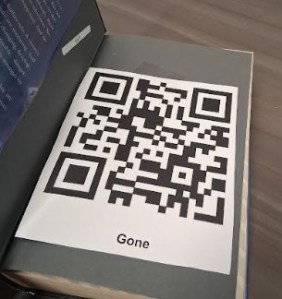
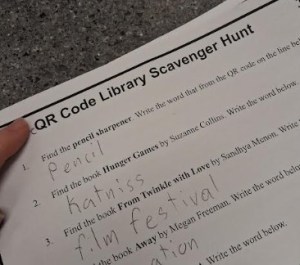
I made 30 QR codes, and when scanned, each one shows a word related to books and a few that connect to something in the library — like “pencil sharpener,” “Chromecart,” “circulation desk,” stuff like that. The students had an answer sheet with clues, and they had to scan the codes and write the correct word in the right spot.

I wasn’t sure how they’d react — middle schoolers can be a tough crowd sometimes — but they were all over it. Everyone was up out of their seat, looking around, scanning codes, finding books, and talking about what they were discovering. Not one single student said, “This is dumb” or “I don’t want to do this.” That’s a win in my book!

One group did put a book back in the wrong place, and I’m still hunting it down… but hey, small price to pay.

I’m planning to make a few more versions of this activity to use throughout the year. If you’re interested in trying it with your students, I added it to my TPT store. It’s fully editable so you can change the titles to fit your own library setup. Link is below!

Click here to go to my TPT store.

Book Shelving…Who Has the Time?

Here we are almost half way through the current school year and book returns are on the rise. While this is great it does pose a problem….shelving. One of the big issues I hear from school librarians is that there is very little time to shelve books. What do you do about book returns? How do you get them back on the shelves in a timely manner? As a librarian of a K-12 library with no aide, I understand the difficulties of shelving books while conducting back to back classes. I have made a few adjustments in my library to make it easier to go home with an empty book cart every day.

Baskets for Series Books

When I set up our new library 7 years ago I purchased baskets for all of the elementary series books. There are sooooo many series books and they take up valuable real estate on the shelves. Putting the series books in baskets was a game changer for our library.

Putting them in baskets means that all of the series books are easy for students to find and easy for me to shelve. The bulk of my books, aside from graphic novels, that are checked out by 1st through 4th come from these baskets. Students find a book they like and then they run with it and finish the series. When books are returned I just walk around and drop them in the correct basket. I don’t worry about putting them in order within the basket during the school year. At the end of the year, if I have time, I go through and arrange them in order but to be honest being out of order within the basket does not seem to hinder students in finding their desired read.

What about the cost? I had no budget when I set up our brand new library 7 years ago. I went to Dollar Tree and found these green baskets that matched the color decor fairly well. I wondered how they would hold up but I have not had to replace one basket in 7 years so I would say they were worth the dollar. There are lots of options out there for baskets that would work for your library.

Graphic Novel Section

The busiest section of my library is the graphic novel section. Student’s love these books so making them easy to access was key. I moved them out of the nonfiction section and created a section of shelving just for the graphic novels. When I first set it up I had 5 sparsely filled shelves. Fast forward to today and I have 36 shelves of graphic novels. I just had to move things around this week to free up space so the shelves weren’t packed so tightly. I keep series books together within this section and…total transparency here… the rest are just put on the shelves in any order. They go in and out so quickly I don’t worry about alphabetical order. When shelving I am able to grab the graphic novels and go right to this section to put them away. Again, easy for students to find the graphic novel section and easy for me to shelve.

Finding the Time

I have found that shelving books is much like doing laundry. If you take the clothes out of the dryer and throw them on the sofa or in a spare room to “fold later”. They can pile up and become an overwhelming task. But, if you fold each load right as it comes out of the dryer it only takes a few minutes. For me, it is the same principle with shelving books in the library. When students come in they put their books on the blue book cart I use for library returns. After we read a story and they start their lesson or centers I go and scan the books that were returned. I then call them over 2 at a time to check out. While they are checking out I am walking through the stacks putting books away. With the systems I spoke of above it takes no time at all to put them back on the shelves. I have all the books from each class put away by the end of that class. If something happens, and I get busy I might end up with a few at the end of the day but I can quickly get those put away after my last class before heading home.

Now, that being said my book return cart is empty each day but that by no means is saying I have everything on my library list done. Back in my office I have an overflowing cart and stacks of books waiting to be processed and put on the shelves. But….we will leave that for another blog post. Happy shelving friends!!

What have you done in your library to make shelving easier? Any super tips you would like to share?