The Little Things That Make the Library Special

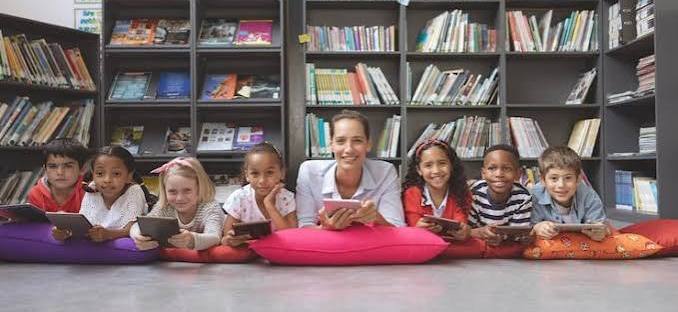
I want my students to enjoy coming to the library.

Not just because we have books. Not just because they know they have to come to library class. I want them to walk through the door and wonder what we’re going to do today.

Over the years, I’ve found that it doesn’t always take a big activity or hours of planning to make that happen. Sometimes it’s the little things that make the biggest difference.

Let them have a voice.
Let students vote, choose between two activities, or tell you what they like to read or play. I like to have reward days where if they get 10 good visits then then as a class they get to pick the activity. Of course, I give them the options so they are still getting learning activities but they love getting to choose.

Have something unexpected.
A mystery book, a quick game, a silly question on the board, or something different waiting for them can make the library feel special. Around every holiday I put out guess the amount jars. This month will be candy corn, Halloween colored M & Ms, and guess how many seeds are in the pumpkin. The winners get to take the candy home and they love trying to guess…even though the younger ones have no clue how to guestimate.

Talk about books without making everything a lesson.
Sometimes just saying, “You have to see this one!” is more effective than a formal book talk. It is so much fun when we get new books because I can pull a few out, show them to students, and share why I think they might love them. Sometimes that little bit of excitement is all it takes to get a student interested in a book.

Use games to build community.
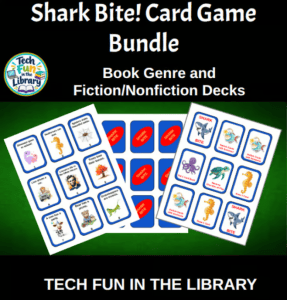
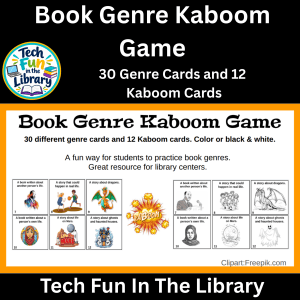
I have lots of board games available in my library that students love to play. Sometimes they just need a chance to sit down, play a game, talk, laugh, and enjoy being together. I also like sneaking a little learning into the fun with games like Library Would You Rather or Shark Bite! to practice genres. They may not even realize they are learning because they are too busy having fun.

Give students something to look forward to.
A weekly question, challenge, favorite-book share, or little library tradition can make students excited for their next visit. Last week I had a couple students asking when I was going to put a new Pumpkin Jack out so they could watch him decompose.

At the end of the day, I want my students to enjoy coming to the library. I want them to feel like the library is a place where they can explore, play, discover something new, and maybe even get a little messy watching a pumpkin decompose!

It doesn’t have to be complicated. A little choice, a little fun, a good book, or something unexpected can be enough to make the library a place students look forward to visiting.

What are some little things you do that make your students excited to come to the library? I’d love to hear your ideas!

Easy Library Activities for When You Have Limited Class Time

With budget cuts and changes in schedules, library classes seem to be getting shorter and shorter. Sometimes 15 to 20 minutes is all we have.

But even with a short class, there is still time to have an engaging activity, talk about books, and get students excited about coming to the library.

Here are a few things I like to do when I don’t have much time.

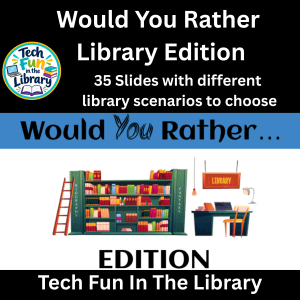
Would You Rather?

Kids love making choices, and Would You Rather questions are an easy way to get everyone involved. You can use book related questions, silly questions, or even food choices. I like having students choose an answer and then explain why. It gets them talking and doesn’t take much time.

Library Scavenger Hunts

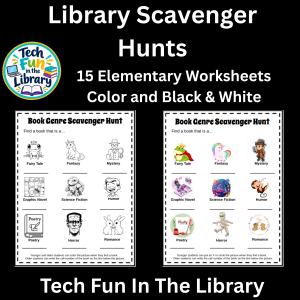
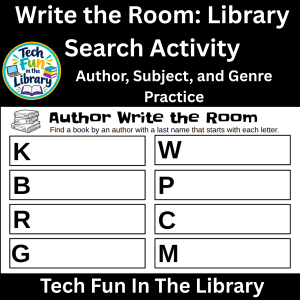
A quick scavenger hunt can get students moving around the library while they practice finding things. You can have them find a certain section, locate a book, find an author, or answer a simple question using the library.

Book Talks

You don’t need a whole lesson to talk about a good book. Pick one book, show the cover, read a little bit, and tell students why you think they might enjoy it. Sometimes that little introduction is all it takes to get a student interested in a book.

Book Care

Short classes are a good time to review simple book care skills. How do we carry books? What happens if a page gets torn? Why shouldn’t we use a book as a place to write or color? These little reminders can make a big difference.

A Quick Library Game

Sometimes you just need something fun. Library trivia, guessing the book, book character questions, or a quick partner game can fill a short class and still keep students connected to the library.

I don’t think a short library class has to mean a boring library class. We may not have as much time as we used to, but there are still plenty of ways to make those few minutes count.

Sometimes a 20 minute class with a good book, a fun question, or a quick game is enough to leave a student excited about coming back to the library.

If you are looking for some ready to use activities for those shorter library classes, I have several of my library activities available in my TPT store. I have included a few of them below. They are easy to use and give you something fun to pull out when you only have a little time. Just click on the links below to take a look.

Behind Closed Doors: Inside the Empty School Library

The final bell has rung, the backpacks are cleared out, and the hallways are completely quiet. You might think the school library goes to sleep for the summer… but you’d be wrong.

Have you ever wondered what the books do when the students are away? We managed to sneak in and capture some exclusive behind-the-scenes footage. Here is the actual truth about what happens after student leave for summer break:

  • The Graphic Novel Reunion: During the school year, the Dog Man and I Survived books are never on the shelf at the same time. They are constantly checked out! Summer is their only chance to finally sit together, catch up, and swap stories.
  • The Picture Book Spa Day: After nine months of being stuffed headfirst into overstuffed backpacks next to crunchy potato chips, dropped on the floor, and read aloud to enthusiastic puppies, the picture books are finally taking a break. Right now, they are relaxing on the shelves, getting a gentle spine massage, and enjoying the peace and quiet.
  • The Chapter Book Marathon: The thick chapter books have been waiting all year for someone with enough free time to read past chapter three. Right now, they are flexing their bookmarks, stretching their pages, and doing some heavy lifting to get in shape for your fall book reports.
  • The Scanner’s Deep Sleep: The library barcode scanner beams its red laser thousands of times a week. It is currently in a deep hibernation mode, dreaming of that satisfying BEEP! sound. (Please do not make any loud noises near the circulation desk; we don’t want to wake it up.)
  • The Great Book Drop Vacation: The library book drop handles hundreds of heavy books a day. Right now? It’s taking a well-deserved nap. We even caught it wearing sunglasses.
  • The Dust Bunny Takeover: With no feet running down the aisles, the library dust bunnies have formed a tiny civilization in the biography section. They are currently electing a mayor.

The Librarian’s Confession

As for me? I’m busy doing the most important summer job of all: reading a massive stack of brand-new books to make sure they are safe for the shelves this fall. (It’s tough work, but someone has to do it!)

We miss you already, readers! Stay cool, read some great books at home, and try not to let the dust bunnies take over your bedroom.
What do you think your favorite library book is doing right now? Let us know in the comments below!

Lucky Stories and Folklore Fun: St. Patrick’s Day Reads for the Library

One of my favorite things about being a school librarian is tying books to holidays. It just makes reading feel a little more fun for students, and it’s an easy way to bring in traditions, stories, and a little learning at the same time. St. Patrick’s Day is a great one for this because there are so many stories about luck, leprechauns, and a little bit of mischief. Of course, I always keep in mind that not all students celebrate every holiday, so I try to approach it in a way that’s fun and educational without assuming everyone is participating.

It’s also a really good time to talk with students about folklore. A lot of the stories connected to St. Patrick’s Day come from Irish folklore. Folklore is basically stories that have been passed down over time. People told them long before they were written down, and they were shared from one generation to the next. Sometimes the stories change a little depending on who is telling them, but the main ideas stick around. I like pointing this out to students because it helps them see that stories can travel through time and still be enjoyed today.

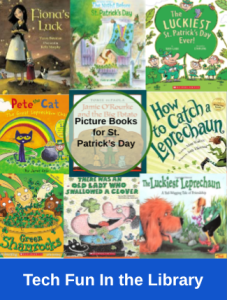
Here are some of the books I like to share in the library around St. Patrick’s Day.

How to Catch a Leprechaun by Adam Wallace is always a big hit. Students love the rhymes and all the creative traps people try to build to catch a sneaky leprechaun.

The Night Before St. Patrick’s Day by Natasha Wing is a fun twist on the classic Night Before Christmas style rhyme. Two kids get everything ready for the holiday, and it builds a lot of excitement.

Fiona’s Luck by Gail Gibbons is one I like to use when talking about folklore. Fiona is clever and brave, and students enjoy seeing how she outsmarts the leprechauns.

The Luckiest St. Patrick’s Day Ever! by Teddy Slater follows a boy named Sean who thinks finding a pot of gold will make his day perfect. By the end he realizes that the real luck comes from family and friends.

Pete the Cat: The Great Leprechaun Chase by Kimberly and James Dean is perfect for younger students who already love Pete. When Pete hears about a hidden pot of gold, he goes on a leprechaun chase to try to find it.

Jamie O’Rourke and the Big Potato by Tomie dePaola is a funny Irish folktale about the laziest man in Ireland who somehow ends up growing a giant potato. It’s a great read aloud and a fun way to introduce folktales.

Green Shamrocks by Eve Bunting is a sweet story about Rabbit growing shamrocks for the St. Patrick’s Day parade. When they go missing, Rabbit goes on a search to find them before the celebration.

There Was an Old Lady Who Swallowed a Clover by Lucille Colandro is a silly read aloud that students love to join in on.

The Luckiest Leprechaun by Bryce Dallas Howard tells the story of Finn, a leprechaun who has plenty of luck but wishes he had a real friend to share it with.

Holiday themed books make it easy to mix fun with learning. Students get excited about the stories, and it’s a great way to bring in things like traditions, folktales, and cultural stories from around the world.

If you use these books with your students, I also have companion activities in my TPT store that go along with many of these titles and work well as follow up activities after the read aloud.

Click here to check out activities on my TPT page.

Big Impact, Small District: The Power of Our Read A Thon

For the past five years, our annual Read A Thon has been one of the highlights of the school year. What started as something I wasn’t quite sure would take off in our small district has grown into a positive, exciting experience for both our students and our library.

Our Read A Thon serves two important purposes: it encourages daily reading and it raises funds to support our library. As a fundraiser, it has exceeded my expectations. Families truly jump onboard and enthusiastically sponsor their students to read. We use the Read A Thon website, which makes the entire process incredibly simple. They provide the flyers, host everything on their platform, and handle all payments online. Parents register their students and submit donations directly through the website, which means I don’t have to collect, track, or manage any money. That convenience alone has been a game changer.

I always select the 80% no-prize option, which allows us to keep more of the funds raised. Instead of spending money on pre-packaged prizes, I purchase books to use as rewards. The money we raise goes right back into our library—buying new books, funding reading contest prizes, and stocking our makerspace with supplies. For a small district, this fundraiser has made a big difference.

Beyond fundraising, the Read A Thon is a powerful reading incentive. Once students are registered, they record their reading minutes each day. We offer grand prizes that require a minimum number of minutes read to qualify, which motivates students to stay consistent and build strong reading habits. It’s amazing to see the focus and excitement around reading during this time.

We celebrate our readers in big ways. Each grade level has one grand prize winner who receives a family four-pack to the zoo, museum, or local waterpark. I also select 15 students in grades K–3 for a field trip to the science museum and 15 students in grades 4–6 for a second science museum trip. Last year, I added a special bonus: the top two readers and the top two money earners enjoyed a trip to the bookstore to spend $25 on books of their choice. Watching students pick out their own books was such a rewarding experience.

We also recognize classes as a whole. The class with the most minutes read and the class with the most money raised each earn an ice cream party and an extra activity day in the library. These celebrations build excitement and create a shared goal within classrooms.

Overall, our Read A Thon has become so much more than a fundraiser. It’s a joyful, community-supported event that strengthens our reading culture while providing meaningful financial support for our library. Five years in, I can confidently say it has been one of the best initiatives we’ve implemented—and I can’t wait to see it continue to grow.

Calm, Cozy, and Consistent: Managing December in the Library

December in the library can feel magical… and a little chaotic. With excitement building for winter break, keeping routines consistent is key to helping students stay focused and successful. I’ve learned that sticking to our regular expectations, no matter the season, creates a calm, predictable environment for everyone.

After Thanksgiving break, I always start with a quick reteach of library rules and expectations. Even a 2–3 minute review helps students (especially the younger grades) remember what it looks like to listen to stories, stay in their seats, follow directions, and participate in our activities. A refresher sets the tone and helps prevent behavior issues before they start.

To keep engagement high, I fill our time with plenty of winter-themed read-alouds featuring snowmen, snowy adventures, and cozy seasonal stories. I also make sure our displays reflect the many ways people celebrate this time of year. Along with Christmas, I feature books on Hanukkah, Kwanzaa, Diwali, Las Posadas, St. Lucia Day, and Winter Solstice/Yule.

I always keep inclusivity in mind. I know I have students in a few classes who do not celebrate holidays, so for those groups, I skip holiday-themed read-alouds completely. Instead, I focus on snowmen, winter animals, and other neutral seasonal stories. This ensures that every student feels comfortable, included, and respected.

I’ve also created a variety of lesson activities that connect directly to the books we read, which helps maintain structure and purpose during a busy month. If you’re looking for low-prep resources to use in your own library or classroom, you can find many of these activities in my Teachers Pay Teachers store.

Keeping routines steady doesn’t take away the fun—it helps students enjoy the season even more. With clear expectations, engaging stories, and a welcoming space for all, December becomes one of the most joyful months in the library.

You can find these and more on my TPT store. Click here to see my entire store.

Gobbling Up Learning: Our Thanksgiving Library Activities

This time of year, our library isn’t just about reading Thanksgiving books, though we definitely enjoy those too! We also mix in some fun Thanksgiving-themed activities that help students practice library skills and basic tech skills. By this point in November, students (and staff!) are definitely ready for a break, so these hands-on activities keep things fun and engaging.

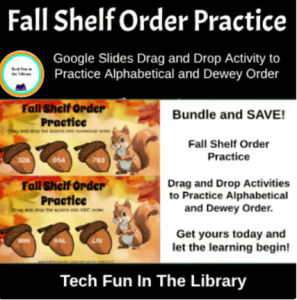
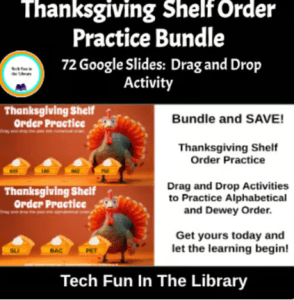
One activity my students love is our Thanksgiving shelf-order practice. This is a Google Slides activity I created where students drag and drop little “pie pieces” into alphabetical and numerical order. It sounds simple, but it really helps them understand how books are arranged on the shelves. This is an important skill when they start looking for books on their own. This is also available as a Fall shelf order practice activity for students who do not celebrate the holiday season. I add both to the Google classroom and they can choose.

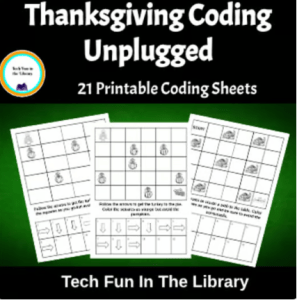
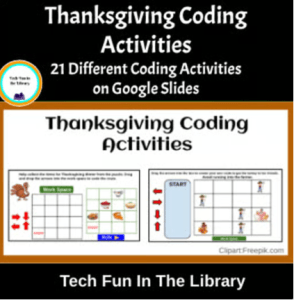
Students also have fun doing coding activities with a Thanksgiving twist. For my younger students, especially 2nd grade, we do unplugged coding where they learn the basics without devices. For 3rd and 4th graders, we use a digital coding activity in Google Slides with fun Thanksgiving-themed drag-and-drop tasks. They always enjoy it, and it’s a great way to ease into Hour of Code next month.

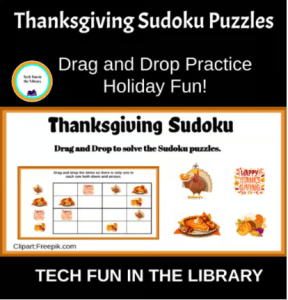
Another favorite is Thanksgiving Sudoku. I created a drag-and-drop Sudoku game in Google Slides where students move Thanksgiving pictures into the right spots to solve the puzzles. It’s great practice for using a trackpad or mouse, and it builds critical thinking and problem-solving skills. Grades 4–6 especially love this one. I have also offered a Fall Sudoku for my students who don’t celebrate holidays or for students who would just rather do a Fall themed activity. I put both into the Google classroom and they can choose.

These are just a few of the fun things we do in the library during November when we are learning, thinking, creating, and of course, having fun while celebrating the Thanksgiving season!

All of these activities are also available in my Teachers Pay Teachers store for anyone who wants to use them in their own library or classroom. Click the images below to go directly to the items.

Getting “Squirrely” in the Library

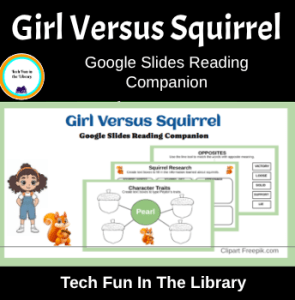
Did you know October is National Squirrel Awareness Month? We celebrated in the library this week with a super fun read-aloud — Girl Versus Squirrel by Hayley Barrett. The students LOVED it! Lots of giggles and big reactions, especially when we followed it up with Mark Rober’s Squirrel Ninja Course video on YouTube. So much laughter!

When their teacher came to pick them up, they were all talking a mile a minute, excited to share what they learned about squirrels. The teacher smiled and said, “I love seeing so much excitement about reading.” Big win!

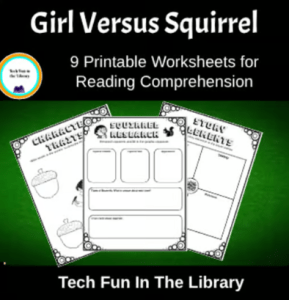
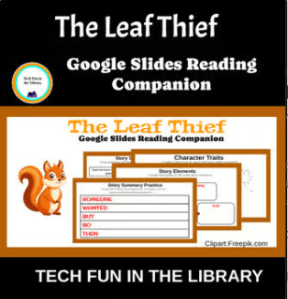
During their next visit, students jumped right into the Google Slides Reading Companion I made to go along with the book. They practiced story elements, sequencing, syllable counting, opposite words, and even did a mini research activity on squirrels. For anyone who prefers to keep screens off during library time, I also made a printable version.

It was such a fun way to mix reading, learning, and a little squirrel silliness.

Click images for links to activities.

Shop here for more fun activities!

Photo by <a href=”https://stockcake.com/i/squirrel-reading-book_823831_825778″>Stockcake</a&gt;

Fall Into Reading: Fun & Easy Activities for Your Favorite Autumn Books

Fall is such a fun time in the library! There are so many great books to choose from, and every year I pull out some of my favorites to read with students. These fall-themed books aren’t just fun — they help students build important reading skills too.

Some of my go-to titles include:

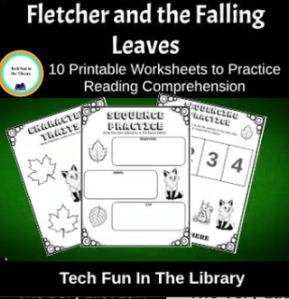
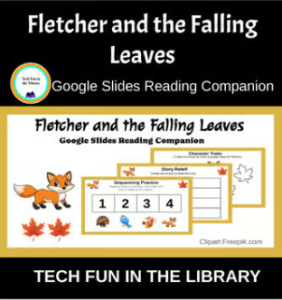
🍂 Fletcher and the Falling Leaves – We talk about how Fletcher feels as the seasons change and do a character traits activity. I also have a sequencing printable where students put the events of the story in order.

🍁 The Leaf Thief – This one is great for discussion on cause and effect! The activities we do cover character traits, sequencing, retelling the story, connecting to self by writing words they connect with fall and a fun word search.

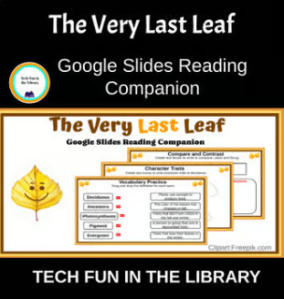
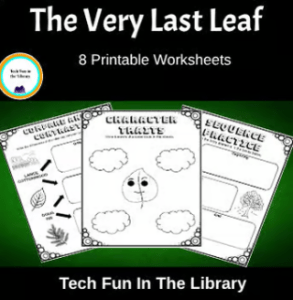
🍃 The Very Last Leaf – Perfect for discussing character growth. We talk about being brave and making connections to times students felt nervous about something new. The activities cover a range of skills but kids enjoy comparing deciduous trees and evergreen trees.

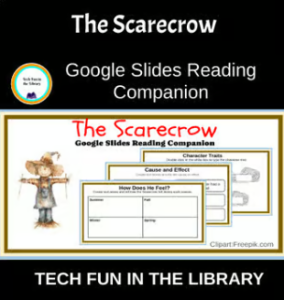
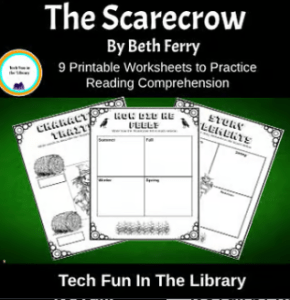
🌾 The Scarecrow – This book gets a little deeper. We compare and contrast characters and talk about kindness. These activities cover basic story elements but also cause and effect, rhyming words, and counting syllables. Students are then asked to think about how the Scarecrow was feeling each season of the year.

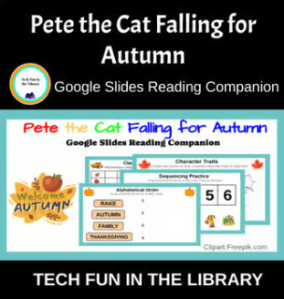
🎃 Pete the Cat: Falling for Autumn – Always a hit! I use this with my younger grades and they love it! Students learn to put words in alphabetical order, pute events in sequential order, and do a fun class survey. It is great watching them walk around the room asking classmates for their favorite Fall activity/item. A fun way to get them interacting with others while still learning drag and drop skills on the computer.

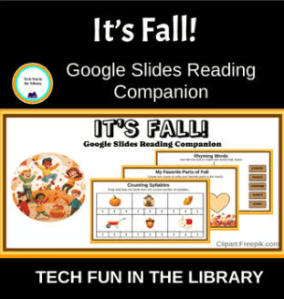
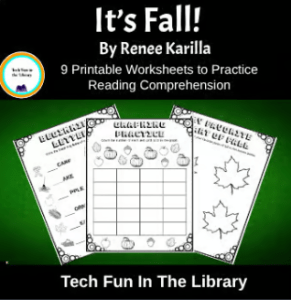
🍁 It’s Fall! – Great for nonfiction tie-ins. We use it to talk about signs of fall and then do either the digital or printable activities that go with this book. With this students practice graphing skills, connection to self, alphabetical order, and then the fun of drawing their own Jack-O-Lantern.

These activities are available in both printable and digital — easy to grab and go, and flexible for different grade levels. Each book gives us the chance to work on skills like story recall, character traits, sequencing, compare and contrast, and even some simple graphing! With these activities students stay engaged, and admin is always happy to see meaningful work that supports reading comprehension.

The best part? Kids have fun while learning. That’s what the library is all about this time of year!

Click on images to see product.

Shop for these and more on my TPT store!

Picture Books That Make Teaching Character Traits Easy and Fun

One of the first things I teach at the beginning of the year is character traits. We talk about them a lot all year long, so it’s important to make sure students really understand what they are from the start. And honestly, this lesson is always one of my favorites — it’s fun, easy to connect to, and gets great conversations going.

I start by showing my character traits anchor chart that hangs on the whiteboard at the front of the room. We go over what a character trait is and the difference between inside traits (like how a character feels or acts) and outside traits (like how they look or dress).

Once we have discussed character traits I read a picture book that really shows character traits in action. I encourage them to think about the character traits as they listen to the story. After we read, I have students raise their hands and share a trait they noticed. After they identify the trait they tell me if it’s an inside or outside trait. Simple, but powerful — and the kids get it.

Here’s what I read by grade level:

  • Kindergarten – Grumpy Monkey
    We talk about feelings and how Jim shows them, even if he says he’s “fine.” It’s a great way to start talking about inside traits.
  • 1st Grade – The Recess Queen
    This one always gets good reactions. We talk about how kids act when they want friends and how behavior shows what’s going on inside.
  • 2nd Grade – Stand Tall, Molly Lou Melon
    The kids love Molly Lou. We notice how she looks different (outside trait) but also how brave and confident she is (inside trait).
  • 3rd Grade – The Girl Who Never Made Mistakes
    This one brings out some great connections. We talk about how the character feels pressure to be perfect and what happens when she finally messes up.
  • 4th Grade – A Bad Case of Stripes
    Such a fun book! We dig into how the main character changes and what she learns about being herself. Lots of inside traits to explore.
  • 5th Grade – The Paper Bag Princess
    This one always surprises them. We talk about bravery, confidence, and how the princess is different from what they expect.

By the end, students are usually excited to share traits, and they’re already starting to think a little deeper about the characters in books. It’s an engaging way to start working on story elements — and they don’t even realize how much they’re learning because they’re having so much fun with the books.