Why Having a Diverse Collection Matters

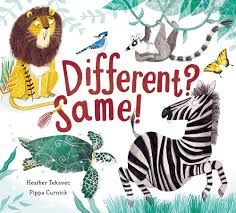
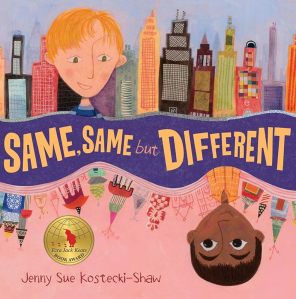
 In an increasingly diverse world, one of the most important responsibilities of libraries is to make sure our collections reflect a wide range of voices, experiences, and perspectives. A diverse collection in a library is not merely a matter of quantity—it’s about ensuring that everyone can see themselves represented in the materials we have in our libraries. The content in libraries should reflect the richness of human experience, addressing issues of race, gender, class, sexuality, ability, and beyond. Here’s why a diverse collection is so important:

Promoting Inclusivity and Representation

Representation matters. When libraries feature diverse materials, they validate the experiences of all groups. This is especially crucial for young readers and members of underrepresented communities who might not see themselves reflected often in books. Diverse collections ensure that every patron, regardless of background, can find books that connect with their identity, experiences, and struggles.

For example, children who see characters from various cultures, backgrounds, and abilities in books are more likely to develop empathy and an understanding of people who are different from themselves.

Encouraging Critical Thinking and Empathy

Our library collections should serve as a mirror to the world. Having library materials that present different viewpoints, backgrounds, and beliefs, will help encourage students to think critically about the world around them. Exposing students to diverse perspectives helps them to develop a deeper understanding of the world and people around them.

Fostering a Sense of Belonging

Libraries should be safe spaces where students can explore new ideas, learn, or even just find comfort in a place they feel safe and seen. When library collections are diverse, they create an environment where everyone feels seen and heard. For members of underrepresented communities, knowing that the library acknowledges their histories, experiences, and identities fosters a sense of belonging and respect.

These are just a few of the reasons we should be making sure that our collections are diverse to meet the needs of all our students. It is never too early to get started on making your collection as diverse as possible. A diverse library collection is not just about offering more books—it’s about building a more inclusive, understanding, and just world for everyone.

Book Shelving…Who Has the Time?

Here we are almost half way through the current school year and book returns are on the rise. While this is great it does pose a problem….shelving. One of the big issues I hear from school librarians is that there is very little time to shelve books. What do you do about book returns? How do you get them back on the shelves in a timely manner? As a librarian of a K-12 library with no aide, I understand the difficulties of shelving books while conducting back to back classes. I have made a few adjustments in my library to make it easier to go home with an empty book cart every day.

Baskets for Series Books

When I set up our new library 7 years ago I purchased baskets for all of the elementary series books. There are sooooo many series books and they take up valuable real estate on the shelves. Putting the series books in baskets was a game changer for our library.

Putting them in baskets means that all of the series books are easy for students to find and easy for me to shelve. The bulk of my books, aside from graphic novels, that are checked out by 1st through 4th come from these baskets. Students find a book they like and then they run with it and finish the series. When books are returned I just walk around and drop them in the correct basket. I don’t worry about putting them in order within the basket during the school year. At the end of the year, if I have time, I go through and arrange them in order but to be honest being out of order within the basket does not seem to hinder students in finding their desired read.

What about the cost? I had no budget when I set up our brand new library 7 years ago. I went to Dollar Tree and found these green baskets that matched the color decor fairly well. I wondered how they would hold up but I have not had to replace one basket in 7 years so I would say they were worth the dollar. There are lots of options out there for baskets that would work for your library.

Graphic Novel Section

The busiest section of my library is the graphic novel section. Student’s love these books so making them easy to access was key. I moved them out of the nonfiction section and created a section of shelving just for the graphic novels. When I first set it up I had 5 sparsely filled shelves. Fast forward to today and I have 36 shelves of graphic novels. I just had to move things around this week to free up space so the shelves weren’t packed so tightly. I keep series books together within this section and…total transparency here… the rest are just put on the shelves in any order. They go in and out so quickly I don’t worry about alphabetical order. When shelving I am able to grab the graphic novels and go right to this section to put them away. Again, easy for students to find the graphic novel section and easy for me to shelve.

Finding the Time

I have found that shelving books is much like doing laundry. If you take the clothes out of the dryer and throw them on the sofa or in a spare room to “fold later”. They can pile up and become an overwhelming task. But, if you fold each load right as it comes out of the dryer it only takes a few minutes. For me, it is the same principle with shelving books in the library. When students come in they put their books on the blue book cart I use for library returns. After we read a story and they start their lesson or centers I go and scan the books that were returned. I then call them over 2 at a time to check out. While they are checking out I am walking through the stacks putting books away. With the systems I spoke of above it takes no time at all to put them back on the shelves. I have all the books from each class put away by the end of that class. If something happens, and I get busy I might end up with a few at the end of the day but I can quickly get those put away after my last class before heading home.

Now, that being said my book return cart is empty each day but that by no means is saying I have everything on my library list done. Back in my office I have an overflowing cart and stacks of books waiting to be processed and put on the shelves. But….we will leave that for another blog post. Happy shelving friends!!

What have you done in your library to make shelving easier? Any super tips you would like to share?

Go Fish! Library Centers Game

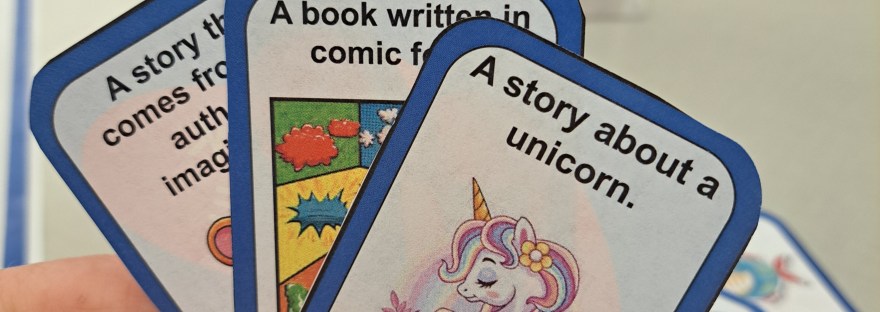
Keeping the library fun and educational can be a challenge. One way to do this is to have a good selection of center activities for students. One of my favorites to give students the opportunity to practice book genres is Go Fish! Book Genre Game. Most of the students already know how to play the classic game of Go Fish! so it is a familiar game that is easy to learn.

Go Fish! Book Genre Game is a great way for students to practice book genres in a fun way. Students get to see and say book genres over and over and as we know repeatedly exposing students to information or skills helps them retain it long term.

How to Play Go Fish!

  • Each player gets 7 cards. 
  • First player will ask one other player if they have a book genre card to match one of theirs. (Do you have Nonfiction with a snake?)
  • If the player has it they give it to them. This is a match and they lay the matched cards in front of them. The player gets to go again. 
  • If the player does not have it they say, “Go Fish” and the first person draws from the pile. If they do not get the card they asked for it is then the second players turn. 
  • The game continues until someone is out of cards. The person with the most matches wins the game.

Shop for your copy of Go Fish! here.

January is “Mock” Caldecott Time!

January is right around the corner and that means it is time for our “Mock” Caldecott. This is one of my favorite units because it gets kids reading and evaluating books. January can be a bit rough as we come back from an extended winter break and the fun of all the holiday activities is behind us. Adding this unit has been a great way to keep students engaged and learning in the library.

Preparing for the Unit

Getting ready for this unit does take a bit of preparation on your part as you need to decide what books you will have students reading and evaluating for the unit. I go on the Internet and search up Mock Caldecott books that others have posted and are using. There are also Mock Caldecott groups on social media that can be very helpful. I try to find ones that are mentioned on numerous sites. No one knows for sure what books are being scored by the actual Caldecott judges but so far I have always ended up with winning books in the list of books I provided for my students to judge.

Where Do You Get the Books?

Of course, I don’t always have all of the books that I put on my list. I work in a small district so purchasing that many new books for one unit is not feasible. What do I do? I go to my public library and check out the ones I don’t already have in my library. I make sure that I remind the students over and over that the books we are looking at do not belong to our school so we need to be extra careful when reading them. I have never had an issue with damaged books. If using the public library isn’t an option you can still do the unit by just picking books from your library that you feel have great illustrations and would be good for student evaluations. It is the process of viewing books and illustrations that is important for this unit not necessarily the books themselves.

Time to Start

On the first day of the unit I pull as many Caldecott and Honor winners as I can from my collection and display them on the tray of the whiteboard. When students come in they notice the books and they start asking about them. I find this is a great way to introduce the unit because it has already captured their attention. I then ask them what the books have in common. There are lots of different answers that arise but each time one student does notice the Caldecott Medals on the front. Once they know this is what we will be learning about I start my Google Slides lesson giving background about the award. Yes, I do this year after year and my upper grade students have heard it before but they always forget so it doesn’t hurt to reteach.

Looking Closely at Picture Books

After that we dive into the books and get started. (Step by step lesson plans are included in my Mock Caldecott Unit Lesson) I choose to use 12 books each year and it takes us 2-3 weeks to get through them. I read the books to lower elementary then they vote. For upper elementary I have them read the books to themselves and vote. My students, even the reluctant readers, enjoy this unit because they are really evaluating the illustrations and the pressure to read is not there as it is in some other reading activities. As they are working on each book I love the conversations I am hearing about the books.

Overall, this unit is a great way for students to be exposed to new books and to take the time to evaluate the illustrations. I know my students enjoy this unit because each year when they come in and see the books on the whiteboard tray I hear, “Oh yay, we are picking the winners again!”

Shop for your 2026 Mock Caldecott Unit Lesson Plan here.

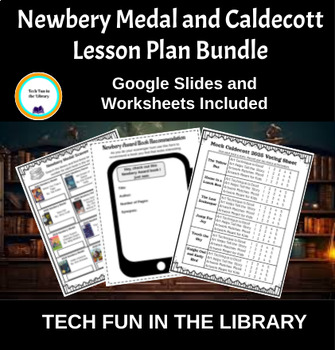
Shop for your 2025 Mock Caldecott and Newbery Award Unit Lesson Plan Bundle here.

Grab your your FREE Coretta Scott King Awards Google Slides Presentation here.

How to Play Kaboom! a Library Centers Game

When it comes to teaching elementary library classes I try to keep it fun and educational. One of the ways I do this is by offering library centers activities for students to use after a lesson or on specific days. Students want the fun aspect of library centers and my admin wants me to make sure that it is educational…the solution to both is using games like Kaboom!.

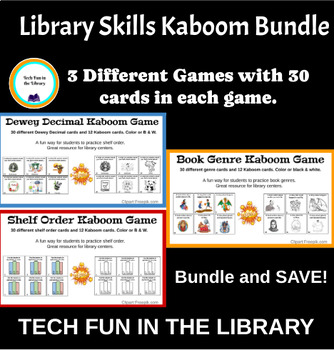
Kaboom! is one of my student’s favorite library centers activities. It can be used to practice book genres, shelf order, and the Dewey Decimal System. When it comes to reviewing or practicing these skills Kaboom! is the answer!

How to Play Kaboom!

Extra perk…Kaboom! is a very simple library centers activity. To set up, all you need is a set of Kaboom! cards and a bucket or some type of vessel to put the cards in so students can’t see them when drawing a card.

 Let’s use Book Genre Kaboom! for the sake of instruction.

  • Students find their place at the table.
  • One at a time, students pull a card out of the bucket. 
  • The student drawing will read the book genre card and then tell the group what genre it is describing.
  • If the student gets the correct answer, they keep the card. If not, they put the card back in the bucket. 
  • The game continues as students take turns playing.
  • If a student gets a Kaboom card, that student puts ALL of their cards back into the bucket. 
  • The student with the most cards at the end of time is the winner.
  • I have one “expert” at the table who has the answer key and can judge whether the students have given the correct answer. The “expert” can rotate in and then someone else will become the “expert”.

As you can see, this game can be done with any concept, just switch book genre with one of the other library related Kaboom cards.

Secret fact about the game…IT NEVER ENDS. Eventually, somebody gets a Kaboom! card which means they have to put their cards back in the bucket thus adding to the cards in the bucket over and over again. For library teachers this means students are engaged and learning the full 10 to 15 minutes of the library centers rotation.

Shop for your copy of Kaboom! here.

Black History Month Read Alouds

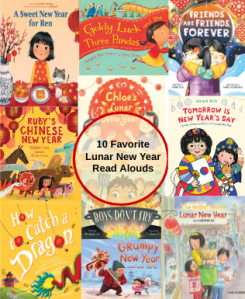
Black History Month gives us an opportunity to educate our young readers about the contributions and experiences of African Americans and celebrate diversity through read alouds. Selecting the right books will not only inform students but also help inspire students to understand and appreciate contributions made by African Americans.

Reading books about African Americans gives us elementary librarians the opportunity to promote understanding and appreciation of diverse cultures through read alouds. These books not only celebrate the contributions of African Americans but also foster an understanding of their cultural significance within American history.

Here are a few of my favorites to use in the library during Black History Month.

The Oldest Student by Rita L. Hubbard: The true story of Mary Walker, a formerly enslaved woman who learned to read at the age of 116, becoming known as the “nation’s oldest student”.

Mae Among the Stars by Rhoda Ahmed: Mae dreams of dancing among the stars and becomes an astronaut with unwavering determination and support from her family.

Henry’s Freedom Box by Ellen Levine: The true story of Henry “Box” Brown, an enslaved man who, after being separated from his family, decides to mail himself in a wooden crate to freedom in Philadelphia.

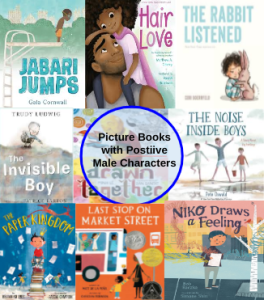
Hair Love by Matthew A. Cherry: Dad has to step in to help Zara do her hair but things don’t go as expected.

Hidden Figures by Margot Lee Shetterly and Winifred Conkling: The story of three African American women who helped during the Space Race.

Not Quite Snow White by Ashley Franklin: Tameika wants to play Snow White in the school play but negative comments by classmates and her own self doubt could keep her from trying out for the part.

The Boy Who Harnessed the Wind by William Kamkwamba and Bryan Mealer: The true story of William Kamkwamba, a young boy from Malawi who builds a windmill to bring electricity to his village during a drought.

Kick Push by Frank Morrison: The story of a skateboarder named Epic who learns to be himself and finds new friends in the process.

The Year We Learned to Fly by Jacqueline Woods on: A brother and sister learn from their grandmother to use their imaginations to “fly” above their difficulties.

Shop my store for Black History Month activities.

 Not Quite Snow White: Google Slides Reading Companion

Henry’s Freedom Box: Google Slides Reading Companion

Hair Love by Matthew A. Cherry: Google Slides Reading Companion

Snowman Read Alouds

Snowman-themed stories capture children’s attention through imaginative narratives and whimsical illustrations. The concept of snowmen, which are often depicted as friendly and magical characters, appeals to our student’s sense of wonder. These stories typically feature playful scenarios and adventures that encourage active listening and participation, making read alouds in the library a fun winter activity. ​Finding read alouds that will engage students is important because when students are engaged, they are more likely to develop a positive association with reading, fostering a love for books.

Here are a few of my favorites to share with students during winter library read alouds.

Sneezy the Snowman by Maureen Wright: Sneezy the Snowman is always trying to find ways to warm up but each one causes him to melt. Find out how his friends help him to stay warm and all in one piece.

Snowmen at Night by Caralyn Buehner: What do snowmen do at night? Find out in this sweet story about what snowmen really do after we all go to bed.

The Snowman by Raymond Briggs: The story of a young boy who builds a snowman that comes to life at the stroke of midnight when a magical adventure begins.

Snowzilla by Janet Lawler: Cami Lou and her brother build a giant snowman after it snows for weeks. Snowzilla becomes a tourist attraction, but some residents believe he causes problems. 

Snowman Magic by Katherine Tegan: A boy named George who builds a snowman that comes to life and they have a magical friendship.

Mouse’s First Snowman by Lauren Thompson: A small mouse named Mouse experiences his first snowfall and excitedly decides to build a snowman with his father, discovering the joys of winter activities.

The Biggest Snowman Ever by Steven Kroll: Clayton and Desmond, who compete in a town snowman building contest announced by the mayor of Mouseville, but soon realize that by working together instead of separately, they can create the biggest snowman ever.

How to Catch a Snowman by Adam Wallace: A group of kids enter their snowman in a contest, but the snowman magically comes to life and runs away.

The Most Perfect Snowman by Chris Britts: Drift dreams of being like other snowmen and having a perfect scarf, hat, and carrot nose. Will he finally get them? Will he be able to keep them? Find out in this sweet story of sharing and giving to others.

Shop my store for more Winter Read Aloud Activities

Snowzilla Google Slides Reading Companion

Snowmen at Night Google Slides Reading Companion