A blog for school librarians, media specialists, and teachers. Find ideas for lessons, library centers, and books to read with students to support reading.
We’ve been having so much fun in the library celebrating Johnny Appleseed’s birthday—also known as John Chapman! This is one of my favorite little traditions with our Pre-K, Kindergarten, and 1st grade students.
It’s the perfect time to bring out our folklore books and talk about what that genre means. The kids love hearing the tall tales and learning what’s real and what’s legend. We also tie in a mini science lesson by talking about the apple life cycle, which fits perfectly with the theme.
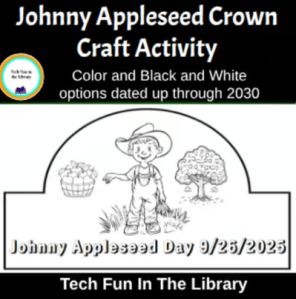
To celebrate, each student gets to color their very own Johnny Appleseed crown! I have a crown template in my TPT store that includes both an outline version for coloring and a pre-colored version if you need something quick and easy. It’s such a fun and simple way to wrap up a folklore lesson or an apple unit.
If you’re looking for Johnny Appleseed Day activities that mix reading, science, and a bit of craft fun, this is a great one to try!
This year, I was asked to teach a library class for our 7th and 8th graders. I’ve been teaching elementary library (K–6) for a while now, but middle school is new territory for me. We’re all on the same campus, but once kids hit middle school, they kind of disappear from the library. So I was actually really excited to have a reason to bring them back in.
I spent a good chunk of my summer coming up with ideas and lessons that would get them moving and keep things interesting. For our first class this week, I did a QR code scavenger hunt, and it ended up being a total hit.
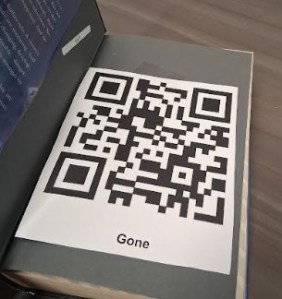
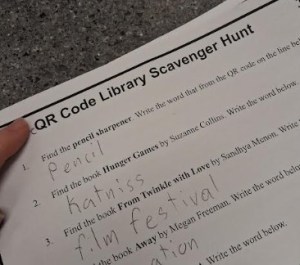
I made 30 QR codes, and when scanned, each one shows a word related to books and a few that connect to something in the library — like “pencil sharpener,” “Chromecart,” “circulation desk,” stuff like that. The students had an answer sheet with clues, and they had to scan the codes and write the correct word in the right spot.
I wasn’t sure how they’d react — middle schoolers can be a tough crowd sometimes — but they were all over it. Everyone was up out of their seat, looking around, scanning codes, finding books, and talking about what they were discovering. Not one single student said, “This is dumb” or “I don’t want to do this.” That’s a win in my book!
One group did put a book back in the wrong place, and I’m still hunting it down… but hey, small price to pay.
I’m planning to make a few more versions of this activity to use throughout the year. If you’re interested in trying it with your students, I added it to my TPT store. It’s fully editable so you can change the titles to fit your own library setup. Link is below!
One of the first things I teach at the beginning of the year is character traits. We talk about them a lot all year long, so it’s important to make sure students really understand what they are from the start. And honestly, this lesson is always one of my favorites — it’s fun, easy to connect to, and gets great conversations going.
I start by showing my character traits anchor chart that hangs on the whiteboard at the front of the room. We go over what a character trait is and the difference between inside traits (like how a character feels or acts) and outside traits (like how they look or dress).
Once we have discussed character traits I read a picture book that really shows character traits in action. I encourage them to think about the character traits as they listen to the story. After we read, I have students raise their hands and share a trait they noticed. After they identify the trait they tell me if it’s an inside or outside trait. Simple, but powerful — and the kids get it.
Here’s what I read by grade level:
Kindergarten – Grumpy Monkey We talk about feelings and how Jim shows them, even if he says he’s “fine.” It’s a great way to start talking about inside traits.
1st Grade – The Recess Queen This one always gets good reactions. We talk about how kids act when they want friends and how behavior shows what’s going on inside.
2nd Grade – Stand Tall, Molly Lou Melon The kids love Molly Lou. We notice how she looks different (outside trait) but also how brave and confident she is (inside trait).
3rd Grade – The Girl Who Never Made Mistakes This one brings out some great connections. We talk about how the character feels pressure to be perfect and what happens when she finally messes up.
4th Grade – A Bad Case of Stripes Such a fun book! We dig into how the main character changes and what she learns about being herself. Lots of inside traits to explore.
5th Grade – The Paper Bag Princess This one always surprises them. We talk about bravery, confidence, and how the princess is different from what they expect.
By the end, students are usually excited to share traits, and they’re already starting to think a little deeper about the characters in books. It’s an engaging way to start working on story elements — and they don’t even realize how much they’re learning because they’re having so much fun with the books.
One of my favorite ways to kick off the school year in the library is with a good old-fashioned game of “Would You Rather”—library-style! It’s a simple, fun activity that helps me get to know the kids and gets them learning a little bit about each other too. Plus, it gets them moving, which is always a win!
I use a Google Slides version of the game that I project on the whiteboard. Each slide has a fun, library-themed question with two choices (A or B), and students move to the side of the room that matches their answer. Example: “Would you rather read books that make you laugh or books that make you scared?” Boom—movement, laughter, and instant conversation starters.
As a library teacher, I only see students twice a week, so I don’t get the same daily time with them that their classroom teachers do. That’s why I try to be intentional about relationship-building right from the start. This game gives me a peek into their personalities and interests in a low-pressure way. And honestly, it’s just fun to see what they pick!
It’s also great for helping students learn about their classmates. They get to see who shares their love of fantasy books or who’s also into listening to audiobooks instead of reading print. It’s quick, interactive, and gets us all smiling and talking—exactly how I want the year to start.
If you’re looking for a simple way to connect with students and build community in your library space, give it a try. The Google Slides version I use is available in my TPT store if you want to grab it and use it with your own classes. You might just learn who would rather read a book that smells like cookies or read a book that makes noises when you turn the page—and that’s important stuff to know.
Summer is my time to relax and decompress from the busy school year. I think it’s so important to recharge after a busy, hectic, stressful school year. I spend the first part of my summer resting, binge-watching favorite shows, and enjoying time with family and friends doing all the fun summer things.
Around mid-July, I start to slowly shift back into school mode. I don’t go full speed, but I begin doing little things that help me feel more prepared for the new year. I’m always reading new books so I can have fresh titles to share with my students in the fall. As I am reading I am adding books to my Amazon wishlist. This helps me have my first book order partially completed before I even get back to school.
One thing I try to keep up on is making sure that my Donors Choose page is updated. If I’m lucky enough to have a project funded, I try to post a new one right away. So far this summer, I’ve had two projects funded and I’m so thankful for the kind people who made that happen. This means I have created two new book projects and posted them. I usually try to keep at least two live book projects going at a time. There is also a match day coming up so I am working on adding two extra projects…just in case. It is definitely worth the time to create and post projects to add books to your library.
Another thing I focus on in the summer is my Teachers Pay Teachers shop. I try to keep a running list of ideas I have throughout the year and focus on getting them completed over the summer. During the school year, there’s just not enough time to get everything done, so summer is the perfect time to add new resources, write blog posts, and get my shop ready for back-to-school shoppers.
In early August, I like to go into school for a day or two to get my bulletin boards done before our in-service days begin. Once the meetings start, there’s barely time to do it all. I enjoy being back in the library, getting things organized for the first day and enjoying the peace and tranquility of my library. I sharpen pencils, refill crayon totes, replace broken erasers, and tidy up cupboards that got a little wild at the end of the year and just try to get to those little things that will make the first day run a bit smoother.
I know that working over contract hours is controversial to some. Even though I try not to let school take over my whole summer, I’ve learned that a little prep now saves a lot of stress later. This fall will be year 33 for me, and that’s one thing I’ve figured out over time—being just a little ahead makes a big difference in how I feel the first week of school. We all have to do what works best for our own situation and for me a few days doesn’t seem like I am overdoing it or giving too much of my time.
I hope you’re enjoying your summer break. Take care, relax, and recharge—you’ve earned it!
The first week back in the library is always exciting, and this year will be no different! We will spend the first visit talking about library rules, book care, and how to be respectful and responsible with our library materials. We will also go over basic classroom rules focusing on being respectful, responsible, and safe. It’s so important to set the stage for a great year of reading, and that all starts with knowing the basics.
For each grade, we will read a different book related to library skills and book care. I read a different book to each grade level so that they are not getting the same books year after year. With the younger kids we will read about how to treat books gently, and older grades discussed things like where books live in the library and how to find what they need. After reading, we always have a great discussion about the key points from the book, like why it’s important to keep our books in good shape and return them on time.
Then comes the best part: the first checkout of the year! I love that everyone gets to check out books on day one—yes, even the Kindergarten students! Some like to make them wait or limit them to books they keep in class but I let them check out and take home. These young readers are just as excited to take books home as the older kids, and in fact, they are often the best at bringing them back because parents seem to be more involved and on top of returning weekly.
The first day is always full of energy, excitement, and a lot of book love. It’s a great way to kick off a year of reading, learning, and growing in the library! Looking forward to another fun and productive year ahead.
The countdown to summer has begun, and let’s be honest — things are getting a little wild. Teachers are tired, students are buzzing with end-of-year energy, and routines are starting to blur. But before we close the books for the year, there’s still time for one more exciting unit in the library: fairy tales! It’s the perfect mix of fun, imagination, and just enough structure to keep us going strong to the finish line.
Each year in May I love doing a fairy tale unit with all of my K-6 library classes. We start off by going over the elements of a fairy tale. I use a Google Slides presentation that we look at together as a class. It covers things like magical elements, good vs. evil, unique characters, and the number 3. Then we jump into reading different fairy tales. I pick different ones for each grade so I can reuse the same plans next year without having to start from scratch.
As we read, I ask the students to find the fairy tale elements we talked about. Once I have read the fairy tale I then ask them to tell me what elements they saw in the story. Students raise their hands and I give them the chance to pick one. This is also a time you could have them turn to their table partner and discuss them together before sharing. It is always fun to see their excitement as they recall the story and elements.
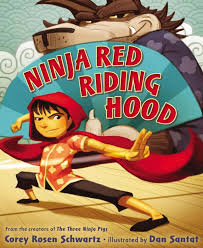
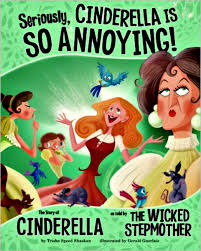
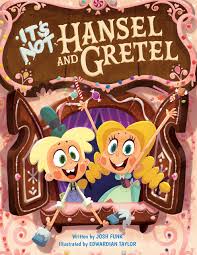
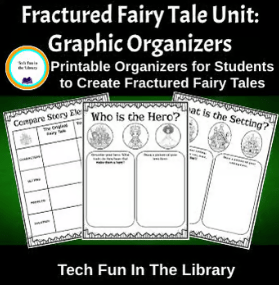
After that, I introduce fractured fairy tales — the silly or twisted versions of the originals. We read lots of those too. The older kids, grades 4–6, get to write their own fractured fairy tales, and they always come up with such creative and funny ideas. I have created some graphic organizers that work well for helping them to gather their thoughts and get those creative juices flowing. While students may start with a groan about writing it usually turns out to be one of their favorite projects.
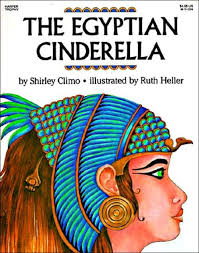
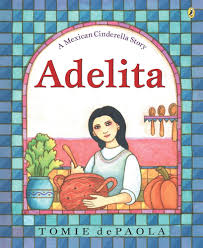
To wrap up the unit I like to read fairy tales from other countries. It’s a great way to show students that these stories exist all over the world and often teach similar lessons. They start to notice how different cultures tell similar kinds of stories.
This unit is always a highlight of the year. It’s fun, engaging, and a great way to end the school year on a high note.
Using Donors Choose is a great way to get new resources for your library. Over the last 8 years, I’ve received over $25,000 in donations for our library through this site.
Creating a project doesn’t take long, and the payoff can be big. I usually keep my projects around $100–$150. That way, when there’s a match offer, the amount left is small, and many times a donor will step in and fully fund it.
It’s also smart to watch for funding opportunities. A lot of times they’re tied to fun learning activities you can do with your students. When you complete them, you get a gift code to use on your own projects.
I don’t use my gift codes right away. I hold on to them until there’s a match day, so I get more bang for my buck. Once a project is funded I make sure to send pictures and thank you messages to the donors so they know how much I appreciate their support.
If you haven’t tried Donors Choose yet, give it a shot. It’s really helped our library, and it can help yours too.
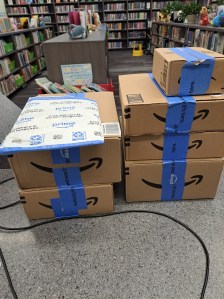
Below images: project funded May 2025 and projects funded over the summer 2024
April is Poetry Month, and I love celebrating it in the library! But I know not all students feel the same way about poetry. A lot of them don’t really enjoy it, mostly because they don’t understand it. That’s totally okay! I like to start with something simple and fun that everyone can enjoy—a Haiku.
Haikus are perfect for students in grades 2-6. They are easy to understand and fun to make. A Haiku is a very short poem, just three lines long. The lines follow a simple syllable pattern: 5 syllables in the first line, 7 syllables in the second line, and 5 syllables in the third line. It’s a great way to get started with poetry because the structure is simple and it’s not overwhelming.
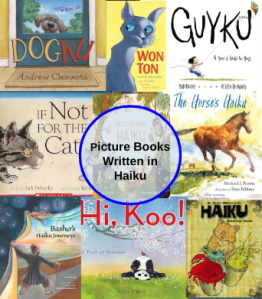
To start, I like to read books that are written entirely in Haiku. This helps students hear the rhythm of the Haiku format and see how it can be used to tell a whole story or share a message. Reading these Haiku books gives students a chance to experience how simple syllables can come together to create something beautiful. It also shows them that writing a complete book using Haikus is possible! After hearing the books, students are often excited to try writing their own Haikus.
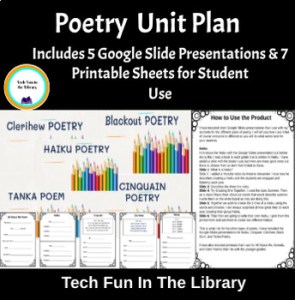
To help students learn about Haikus, I created my own Google Slides presentation. It takes them step by step through the process of writing a Haiku. I like to go through each slide with the class and explain everything clearly. There’s even a slide where we all work together to create a Haiku as a class. It’s a great way to get everyone involved and show them that poetry isn’t as hard as it seems.
Kwame Alexander has a great video on Youtube that helps students understand Haikus. I use it every year and students are enthralled and listening to his instructions. Here is a link to his video if you would like to use it. Kwame Introduces Haikus
Once the students write their own Haikus, they feel really proud of their work. It’s amazing how something so simple can spark creativity and help them see that poetry can be fun and not so scary after all. So if you want to celebrate Poetry Month in a way that everyone can enjoy, try starting with a Haiku! It’s a great way to show students how easy and fun poetry can be.
As a librarian, one of my primary goals is to encourage students to develop a love for reading while ensuring our school library has the resources it needs to continue fostering that passion. For the last 4 years I have been doing something for our library that allows me to meet both of these goals: a Read-A-Thon. The results have been incredible, and I couldn’t be more thrilled about our choice to hold a Read -A-Thon each year.
A Simple, Yet Effective Way to Fundraise
The Read-A-Thon proved to be a game-changer for our library’s fundraising efforts. We are a small district and this year we had 108 students sign up for the Read-A-Thon and log their minutes. But with 108 students participating, the total minutes read was an impressive 37,179! That was up 10,000 minutes from last year. And as if that wasn’t impressive enough, the Read-A-Thon raised over $5,000 for the library—all with very little effort on my part.
What made this event so successful wasn’t just the enthusiasm of the students, but also the simplicity of the process. The Read-A-Thon website was incredibly user-friendly, making it easy for both students and their families to get involved. No need to worry about tracking down donation checks or loose change—people could donate directly through the website, making the whole process smooth and convenient.
Encouraging Reading While Raising Funds
One of the best parts of the Read-A-Thon was that it motivated students to read even more! With the goal of logging as many minutes as possible, students dove into books with an enthusiasm that was contagious. It was so heartwarming to see them excited not just about earning money for the library, but also about the simple act of reading.
The Read-A-Thon was a perfect blend of education and fundraising. It gave students a tangible way to support their school while also developing their reading skills. Plus, they were able to share their accomplishments with their families, who were excited to support them—and the library—by making donations.
Easy, No-Hassle Fundraising
From a fundraising perspective, the Read-A-Thon was a dream. The website made everything so easy—from registering students to tracking minutes read and donations made. It was simple for parents to sign up their children and make donations online, which meant no paperwork or collection of physical money for me to handle.
Not only did this reduce my workload significantly, but it also gave families a chance to participate from the comfort of their homes. The transparency of the online platform helped everyone see how much was being raised in real-time, which sparked even more excitement throughout the event.
Prizes for Readers
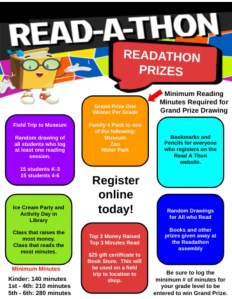
While the Read-A-Thon company does provide prizes I decided to go with the option to provide my own prizes to motivate our students. The PTO (Parent Teacher Organization) was incredibly generous, also donating funds to support a special Grand Prize for each grade level—a family 4-pack to either the zoo, museum, or water park!
To keep things exciting, I also organized random drawings for those who logged minutes, offering a fun field trip to the museum as a reward.
Additionally, we wanted to recognize our top achievers: the top 3 money raisers and top 3 readers received an exciting field trip to a local bookstore, where they each received a $25 gift card to spend on books of their choice.
These prizes not only encouraged students to participate but also made the entire event more fun and engaging for everyone involved!
Final Thoughts
If you’re looking for an effortless and effective way to fundraise for your school library while encouraging students to read, I can’t recommend the Read-A-Thon enough. It’s a win-win situation: students are motivated to read more, and you raise funds for your library with little hassle. The event was a success, and I’m already looking forward to next year!
If you’re interested in hosting your own Read-A-Thon, I highly suggest checking out the website. It’s an incredibly easy tool to use, and I’m confident it will help you reach your fundraising goals just like it did for us.















 Tech Fun In The Library