Poetry Month Made Simple

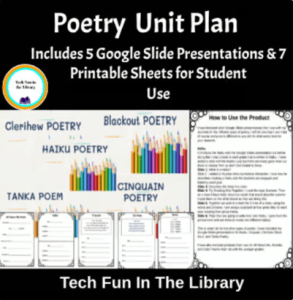
April in the elementary library is all about Poetry Month. The whole month we focus on reading poems, sharing them, and giving students time to write their own. It is always fun to see how creative they get and how proud they are to share what they wrote.

To make things easier for teachers, I put together a poetry unit that is simple to use and ready to go. It includes Google Slides that introduce different types of poems in a way students can actually understand and enjoy, plus worksheets they can use to practice and create their own writing.

I know how busy things can get, so this unit is meant to take the stress out of planning. It is an easy way to bring poetry into your classroom without a lot of extra prep.

Poetry Month is such a great chance for students to try something new, have fun with words, and build confidence as writers. It is always a highlight of the year in the library.

Click here to go to my TPT page.

Lucky Stories and Folklore Fun: St. Patrick’s Day Reads for the Library

One of my favorite things about being a school librarian is tying books to holidays. It just makes reading feel a little more fun for students, and it’s an easy way to bring in traditions, stories, and a little learning at the same time. St. Patrick’s Day is a great one for this because there are so many stories about luck, leprechauns, and a little bit of mischief. Of course, I always keep in mind that not all students celebrate every holiday, so I try to approach it in a way that’s fun and educational without assuming everyone is participating.

It’s also a really good time to talk with students about folklore. A lot of the stories connected to St. Patrick’s Day come from Irish folklore. Folklore is basically stories that have been passed down over time. People told them long before they were written down, and they were shared from one generation to the next. Sometimes the stories change a little depending on who is telling them, but the main ideas stick around. I like pointing this out to students because it helps them see that stories can travel through time and still be enjoyed today.

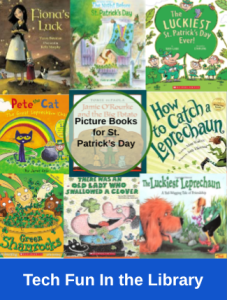
Here are some of the books I like to share in the library around St. Patrick’s Day.

How to Catch a Leprechaun by Adam Wallace is always a big hit. Students love the rhymes and all the creative traps people try to build to catch a sneaky leprechaun.

The Night Before St. Patrick’s Day by Natasha Wing is a fun twist on the classic Night Before Christmas style rhyme. Two kids get everything ready for the holiday, and it builds a lot of excitement.

Fiona’s Luck by Gail Gibbons is one I like to use when talking about folklore. Fiona is clever and brave, and students enjoy seeing how she outsmarts the leprechauns.

The Luckiest St. Patrick’s Day Ever! by Teddy Slater follows a boy named Sean who thinks finding a pot of gold will make his day perfect. By the end he realizes that the real luck comes from family and friends.

Pete the Cat: The Great Leprechaun Chase by Kimberly and James Dean is perfect for younger students who already love Pete. When Pete hears about a hidden pot of gold, he goes on a leprechaun chase to try to find it.

Jamie O’Rourke and the Big Potato by Tomie dePaola is a funny Irish folktale about the laziest man in Ireland who somehow ends up growing a giant potato. It’s a great read aloud and a fun way to introduce folktales.

Green Shamrocks by Eve Bunting is a sweet story about Rabbit growing shamrocks for the St. Patrick’s Day parade. When they go missing, Rabbit goes on a search to find them before the celebration.

There Was an Old Lady Who Swallowed a Clover by Lucille Colandro is a silly read aloud that students love to join in on.

The Luckiest Leprechaun by Bryce Dallas Howard tells the story of Finn, a leprechaun who has plenty of luck but wishes he had a real friend to share it with.

Holiday themed books make it easy to mix fun with learning. Students get excited about the stories, and it’s a great way to bring in things like traditions, folktales, and cultural stories from around the world.

If you use these books with your students, I also have companion activities in my TPT store that go along with many of these titles and work well as follow up activities after the read aloud.

Click here to check out activities on my TPT page.

Deep Thinking Over Hot Coffee

This week in our Grade 7 and 8 library class we dove into Retro News articles, and it ended up being one of those lessons that went even better than I planned. Surprisingly my students were really engaged in this assignment, and you could actually see the deep thinking happening.

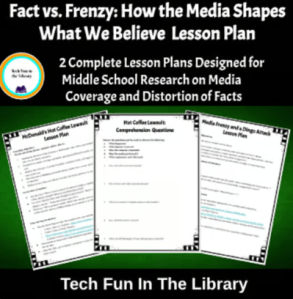
This lesson focused on the famous Liebeck v. McDonald’s Restaurants case, better known to most people as the McDonald’s hot coffee lawsuit. Some of the students thought they already knew the story while some had never heard of it which is not surprising since it did happen in the early 90s. “Someone spilled coffee and sued for millions.” That was the reaction at first. After talking about it a bit we watched a short video on Retro News that walked through what actually happened.

As they watched, students answered comprehension questions to show they were really paying attention. I always tell them that in library class we are not just reading books. We are learning how to read the world. The questions helped them slow down and notice details. What were the injuries? What did the company know? What information was left out of the headlines?

The discussion after the video is when some great discussions began. Students were genuinely surprised at how different the full story was from the version they had heard before. We talked about the power of media and how a story can be framed in a way that shapes public opinion. We looked at headlines, tone, and how quickly people form opinions without all the facts.

Then we moved into group work. I split the class into four teams and each one took a different deep dive angle.

*Product Safety and Corporate Response
*Legal Precedents and Consumer Protection
*Media Framing and Public Opinion
*Ethics, Fairness and Corporate Responsibility

Each group created a presentation to teach the rest of the class about their findings. I loved seeing them take ownership of their section. They were citing evidence, making connections between cases, and even challenging each other’s thinking in respectful ways. Several students said they were shocked at how many similar cases have happened and how often key details get left out when stories are retold.

What started as “that silly coffee lawsuit” turned into a powerful lesson in media literacy, critical thinking, and asking better questions. Watching students move from quick assumptions to thoughtful analysis reminded me exactly why I love teaching library.

Retro News for the win.

Don’t Judge a Book by Its Page Count: Picture Books in Middle School

When people think of picture books, they often imagine elementary classrooms and early readers. But here is something I have been happily reminded of this year: middle school students still love picture books, and they benefit from them in powerful ways.

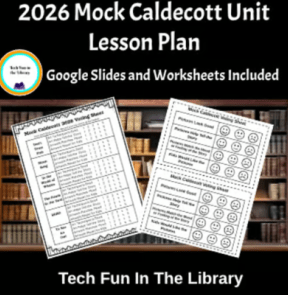
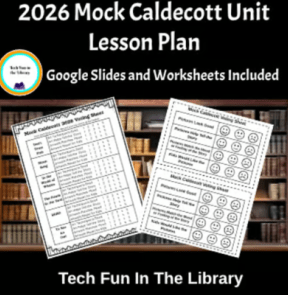
I was not sure how my middle school students (grades 7 and 8) would respond to participating in a Mock Caldecott Medal this year. Would they think it was too young? Would they take it seriously? As it turns out, they absolutely rose to the occasion.

At their age, they were mature enough to thoughtfully evaluate the books using our four criteria: Art Technique is Good, Art Helps Tell the Story, Artwork Matches Mood, and Artwork Meant for Kids. As they read through the titles on our mock list, I could hear them debating artistic choices, discussing how illustrations supported the text, defending their scores with evidence, and even questioning the mediums used for the artwork. They were asking whether an illustrator used watercolor, collage, digital art, or mixed media, and discussing how those choices affected the overall impact of the story. They were not just reading. They were analyzing.

Picture books are uniquely powerful for middle schoolers for several reasons.

First, they spark great conversations. Because the books are shorter, students are more willing to jump in and share their opinions. Before you know it, they are pointing out small details in the illustrations or arguing about whether the artwork really matches the mood of the story.

They also let students dig deeper without feeling overwhelmed. A picture book might look simple, but there is often a lot going on beneath the surface. The combination of text and illustrations gives them more to notice and more to talk about.

And honestly, they are fun. Middle schoolers still enjoy being read to. They still like flipping through beautifully illustrated pages. Giving them access to picture books reminds them that reading does not always have to feel heavy or complicated to be meaningful.

Our Mock Caldecott experience did more than introduce students to new and engaging picture books. It also gave them an understanding into how the Caldecott process works and helped them appreciate the artistry behind the books they may have once rushed past.

Most importantly, it reminded all of us that picture books are not defined by age level. They are defined by the power of storytelling. And middle schoolers are more than ready to engage with that power.

If you need a Mock Caldecott lesson plan you can find one in my TPT store.

Big Impact, Small District: The Power of Our Read A Thon

For the past five years, our annual Read A Thon has been one of the highlights of the school year. What started as something I wasn’t quite sure would take off in our small district has grown into a positive, exciting experience for both our students and our library.

Our Read A Thon serves two important purposes: it encourages daily reading and it raises funds to support our library. As a fundraiser, it has exceeded my expectations. Families truly jump onboard and enthusiastically sponsor their students to read. We use the Read A Thon website, which makes the entire process incredibly simple. They provide the flyers, host everything on their platform, and handle all payments online. Parents register their students and submit donations directly through the website, which means I don’t have to collect, track, or manage any money. That convenience alone has been a game changer.

I always select the 80% no-prize option, which allows us to keep more of the funds raised. Instead of spending money on pre-packaged prizes, I purchase books to use as rewards. The money we raise goes right back into our library—buying new books, funding reading contest prizes, and stocking our makerspace with supplies. For a small district, this fundraiser has made a big difference.

Beyond fundraising, the Read A Thon is a powerful reading incentive. Once students are registered, they record their reading minutes each day. We offer grand prizes that require a minimum number of minutes read to qualify, which motivates students to stay consistent and build strong reading habits. It’s amazing to see the focus and excitement around reading during this time.

We celebrate our readers in big ways. Each grade level has one grand prize winner who receives a family four-pack to the zoo, museum, or local waterpark. I also select 15 students in grades K–3 for a field trip to the science museum and 15 students in grades 4–6 for a second science museum trip. Last year, I added a special bonus: the top two readers and the top two money earners enjoyed a trip to the bookstore to spend $25 on books of their choice. Watching students pick out their own books was such a rewarding experience.

We also recognize classes as a whole. The class with the most minutes read and the class with the most money raised each earn an ice cream party and an extra activity day in the library. These celebrations build excitement and create a shared goal within classrooms.

Overall, our Read A Thon has become so much more than a fundraiser. It’s a joyful, community-supported event that strengthens our reading culture while providing meaningful financial support for our library. Five years in, I can confidently say it has been one of the best initiatives we’ve implemented—and I can’t wait to see it continue to grow.

Going for Gold: The Keyboard Olympics

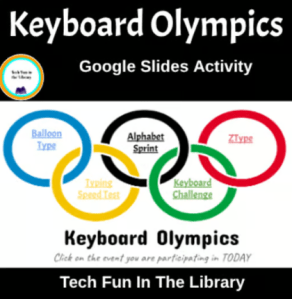
To celebrate the upcoming Winter Olympics, my library classes are shifting gears into our own version of the games: the Keyboard Olympics. This event starts next week to coincide with the official Olympic schedule, and it is always a highlight for the students.

We have five different keyboarding activities where students “compete” to show off their skills. It isn’t just about being the fastest in the room; students spend the unit documenting their own speeds and trying to beat their personal bests. I double-check and record their progress as they work through each event.

At the end of the unit, we will crown a gold, silver, and bronze winner for each grade level. It is a great way to acknowledge the hard work our “Olympians” put into mastering the keyboard while keeping the energy high and the learning fun.

If you want to run this event in your own library or classroom, I have the full lesson available in my TPT store. It includes fully editable Google Slides so you can customize the activities and goals for your specific grade levels.

I’m looking forward to seeing how much the kids improve over the next few weeks!

Hooked on Books: The Best First Sentence Challenge

As the semester wrapped up this week I wanted to send my middle schoolers off to their next elective with more than just a free day. My goal was simple. I wanted to get them into the stacks, get them reading, and get them talking.

I decided to try an activity I called the Best First Sentence Challenge.

The Mission

Students had exactly 15 minutes to scour the library shelves. Their goal was to find one opening sentence so gripping or hilarious that it would beat out every other book in the room.

The Process

  • The Search: Armed with shelf markers to keep our stacks tidy, students dove into different genres.
  • The Tech: Once they found the one they liked, they posted it to a shared Padlet through Google Classroom.
  • The Format: I had them put the Book Title as the header and the Sentence in the body. This turned our Padlet into a great recommendation list for the rest of the class to see.

The Showdown

After the timer buzzed I projected the Padlet onto the whiteboard. We read them aloud and voted by eliminating choices until only one winner remained. It went so well that we actually had time for two rounds.

Why It Worked

As a librarian there is nothing better than seeing a room full of students pulling books and actually talking about them. They were not just staring at covers. They were evaluating the writing.

If you need a quick and fun activity to keep students engaged give this a try. It reminded my kids that a great adventure is often just one sentence away.

We Called It! Our Mock Caldecott Results

One of my absolute favorite units to teach is the Mock Caldecott, and this year with my 4th through 6th graders was so much fun.

I picked out 12 books that I thought were strong contenders, and the students got to act like real judges. They read through them and reviewed each one based on the same criteria the real Caldecott committee uses. It was such a great way to get the older kids reading picture books again. They really loved looking at all the beautiful illustrations.

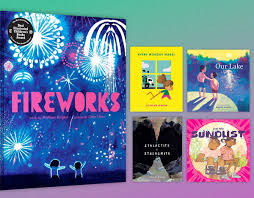
The best part was seeing how close we were to the real thing. This year, our winner was Fireworks, and you should have seen how excited the kids were when they found out it actually won the real medal! It was such a cool moment for them to see their picks match up with the experts.

I also had my formal observation during one of these classes. You would think that after 33 years of teaching I wouldn’t get the jitters anymore, but I still get a bit nervous for an observation! Luckily, the kids were so into the activity and the books that it went great. I just love this unit because it brings together library skills and a real love for reading. I am already thinking about what books to use for next year!

Tech Skills & Research Fun in the Library!

It has been a busy, high-energy week in the library! We’ve been blending traditional research with some hands-on Google Slides practice, and it’s been so fun to see the students get creative with their new tech skills.

2nd Grade: Australian Adventures

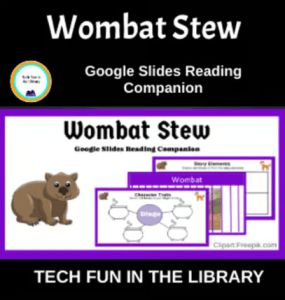
After reading the classic Wombat Stew, our 2nd graders dived into Google Slides. They practiced finding images of animals from Australia and learned how to “click and drag” to resize them. The big “magic trick” this week? Learning how to use the send to back feature so their animals stayed where they belonged in the scene!

3rd Grade: Arctic Explorers

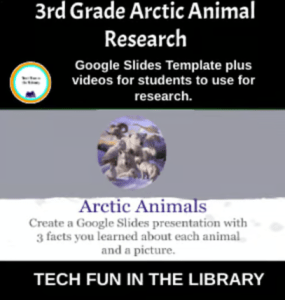
3rd grade has been hard at work researching Arctic animals using a slide template. They’ve been watching short videos and picking out three interesting facts to share. We are working on turning those facts into bulleted lists and adding matching images. We definitely had to pause for some spelling help here and there, but their focus was incredible!

4th Grade: Birds, Bats, and Stellaluna

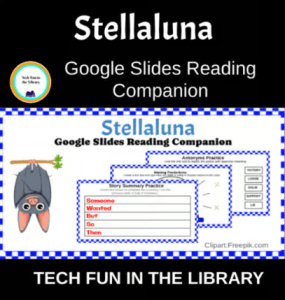
Our 4th graders read Stellaluna and used the story to dig into story elements and characters. They even tackled a Venn diagram to compare the differences between birds and bats. To wrap it all up, they’re creating their own research slides by building text boxes from scratch and adding images to show what they’ve learned about bats.

Calm, Cozy, and Consistent: Managing December in the Library

December in the library can feel magical… and a little chaotic. With excitement building for winter break, keeping routines consistent is key to helping students stay focused and successful. I’ve learned that sticking to our regular expectations, no matter the season, creates a calm, predictable environment for everyone.

After Thanksgiving break, I always start with a quick reteach of library rules and expectations. Even a 2–3 minute review helps students (especially the younger grades) remember what it looks like to listen to stories, stay in their seats, follow directions, and participate in our activities. A refresher sets the tone and helps prevent behavior issues before they start.

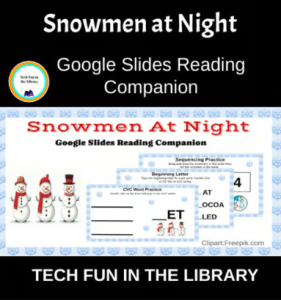
To keep engagement high, I fill our time with plenty of winter-themed read-alouds featuring snowmen, snowy adventures, and cozy seasonal stories. I also make sure our displays reflect the many ways people celebrate this time of year. Along with Christmas, I feature books on Hanukkah, Kwanzaa, Diwali, Las Posadas, St. Lucia Day, and Winter Solstice/Yule.

I always keep inclusivity in mind. I know I have students in a few classes who do not celebrate holidays, so for those groups, I skip holiday-themed read-alouds completely. Instead, I focus on snowmen, winter animals, and other neutral seasonal stories. This ensures that every student feels comfortable, included, and respected.

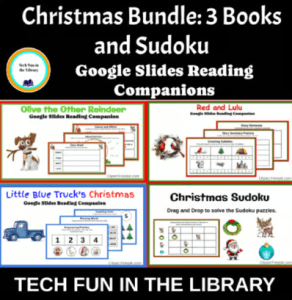
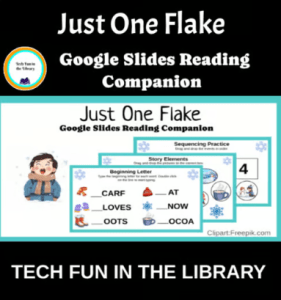
I’ve also created a variety of lesson activities that connect directly to the books we read, which helps maintain structure and purpose during a busy month. If you’re looking for low-prep resources to use in your own library or classroom, you can find many of these activities in my Teachers Pay Teachers store.

Keeping routines steady doesn’t take away the fun—it helps students enjoy the season even more. With clear expectations, engaging stories, and a welcoming space for all, December becomes one of the most joyful months in the library.

You can find these and more on my TPT store. Click here to see my entire store.