Calm, Cozy, and Consistent: Managing December in the Library

December in the library can feel magical… and a little chaotic. With excitement building for winter break, keeping routines consistent is key to helping students stay focused and successful. I’ve learned that sticking to our regular expectations, no matter the season, creates a calm, predictable environment for everyone.

After Thanksgiving break, I always start with a quick reteach of library rules and expectations. Even a 2–3 minute review helps students (especially the younger grades) remember what it looks like to listen to stories, stay in their seats, follow directions, and participate in our activities. A refresher sets the tone and helps prevent behavior issues before they start.

To keep engagement high, I fill our time with plenty of winter-themed read-alouds featuring snowmen, snowy adventures, and cozy seasonal stories. I also make sure our displays reflect the many ways people celebrate this time of year. Along with Christmas, I feature books on Hanukkah, Kwanzaa, Diwali, Las Posadas, St. Lucia Day, and Winter Solstice/Yule.

I always keep inclusivity in mind. I know I have students in a few classes who do not celebrate holidays, so for those groups, I skip holiday-themed read-alouds completely. Instead, I focus on snowmen, winter animals, and other neutral seasonal stories. This ensures that every student feels comfortable, included, and respected.

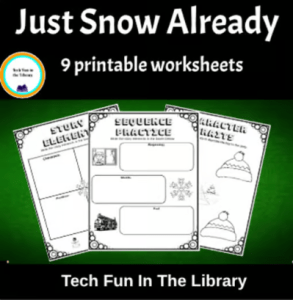
I’ve also created a variety of lesson activities that connect directly to the books we read, which helps maintain structure and purpose during a busy month. If you’re looking for low-prep resources to use in your own library or classroom, you can find many of these activities in my Teachers Pay Teachers store.

Keeping routines steady doesn’t take away the fun—it helps students enjoy the season even more. With clear expectations, engaging stories, and a welcoming space for all, December becomes one of the most joyful months in the library.

You can find these and more on my TPT store. Click here to see my entire store.

Making 90 Minutes Count in Junior High Library

This is my first year teaching a junior high library class, and I’ll be honest—I’m only about one step ahead of the students most days when it comes to planning. One of the biggest challenges has been filling a full 90-minute class block, especially with new classes still getting used to the routine.

Today, though, I pulled together an educational, engaging activity that filled the whole time and actually went really well, so I wanted to share in case it helps someone else.

I knew I wanted to cover a digital citizenship lesson and found a great one on PBS Learning Media called “When Is Your Brain Ready for Social Media?” It includes a short video and a viewing guide with questions. We watched the video once and answered the questions together. Then we watched it again so students could take notes to use for writing a claim.

After that, they wrote their own claim using evidence from the video to back it up. This part only took about 30 minutes. So… I had 60 minutes left and needed to come up with something fast!

Last week I had them do a research activity in which they created Google Slides to present their information. While grading I noticed a lot of students were struggling with how to make their slides look polished. So I saw a chance to squeeze in a quick Google Slides lesson using the same video content.

I showed them how to:

  • Add background color or themes
  • Use simple animations
  • Add images to support their points and make their slides more professional

They each made a short slideshow using the information from the video. They practiced their digital skills and reviewed the video info again—win win! Best part? It took up the full 90 minutes and everyone stayed engaged.

Just a reminder that sometimes we have to turn on a dime and be flexible. Those quick thinking moments can turn into great lessons!

Here’s the link to the PBS lesson if you want to check it out:
When Is Your Brain Ready for Social Media? – PBS LearningMedia

Library Scavenger Hunt with Middle Schoolers

This year, I was asked to teach a library class for our 7th and 8th graders. I’ve been teaching elementary library (K–6) for a while now, but middle school is new territory for me. We’re all on the same campus, but once kids hit middle school, they kind of disappear from the library. So I was actually really excited to have a reason to bring them back in.

I spent a good chunk of my summer coming up with ideas and lessons that would get them moving and keep things interesting. For our first class this week, I did a QR code scavenger hunt, and it ended up being a total hit.

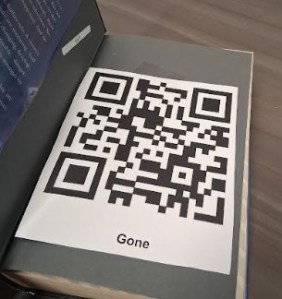
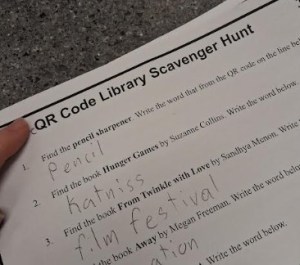
I made 30 QR codes, and when scanned, each one shows a word related to books and a few that connect to something in the library — like “pencil sharpener,” “Chromecart,” “circulation desk,” stuff like that. The students had an answer sheet with clues, and they had to scan the codes and write the correct word in the right spot.

I wasn’t sure how they’d react — middle schoolers can be a tough crowd sometimes — but they were all over it. Everyone was up out of their seat, looking around, scanning codes, finding books, and talking about what they were discovering. Not one single student said, “This is dumb” or “I don’t want to do this.” That’s a win in my book!

One group did put a book back in the wrong place, and I’m still hunting it down… but hey, small price to pay.

I’m planning to make a few more versions of this activity to use throughout the year. If you’re interested in trying it with your students, I added it to my TPT store. It’s fully editable so you can change the titles to fit your own library setup. Link is below!

Click here to go to my TPT store.

Book Shelving…Who Has the Time?

Here we are almost half way through the current school year and book returns are on the rise. While this is great it does pose a problem….shelving. One of the big issues I hear from school librarians is that there is very little time to shelve books. What do you do about book returns? How do you get them back on the shelves in a timely manner? As a librarian of a K-12 library with no aide, I understand the difficulties of shelving books while conducting back to back classes. I have made a few adjustments in my library to make it easier to go home with an empty book cart every day.

Baskets for Series Books

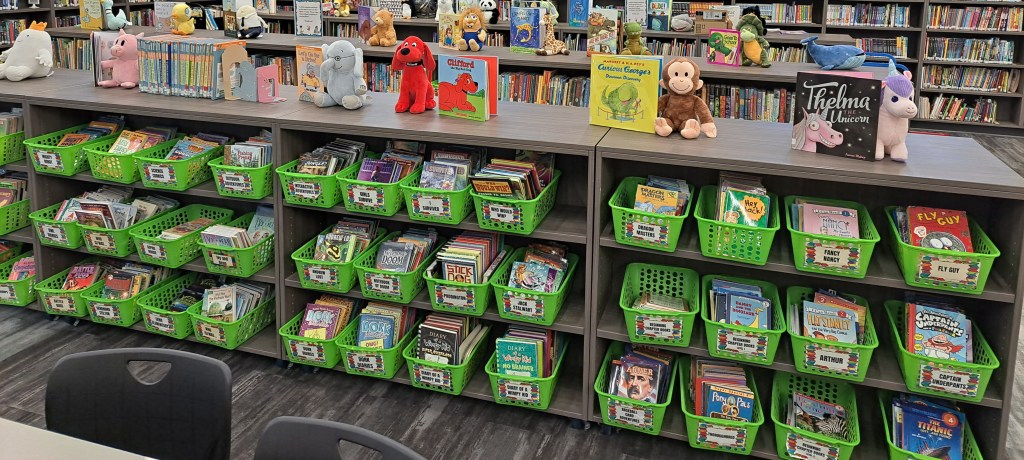
When I set up our new library 7 years ago I purchased baskets for all of the elementary series books. There are sooooo many series books and they take up valuable real estate on the shelves. Putting the series books in baskets was a game changer for our library.

Putting them in baskets means that all of the series books are easy for students to find and easy for me to shelve. The bulk of my books, aside from graphic novels, that are checked out by 1st through 4th come from these baskets. Students find a book they like and then they run with it and finish the series. When books are returned I just walk around and drop them in the correct basket. I don’t worry about putting them in order within the basket during the school year. At the end of the year, if I have time, I go through and arrange them in order but to be honest being out of order within the basket does not seem to hinder students in finding their desired read.

What about the cost? I had no budget when I set up our brand new library 7 years ago. I went to Dollar Tree and found these green baskets that matched the color decor fairly well. I wondered how they would hold up but I have not had to replace one basket in 7 years so I would say they were worth the dollar. There are lots of options out there for baskets that would work for your library.

Graphic Novel Section

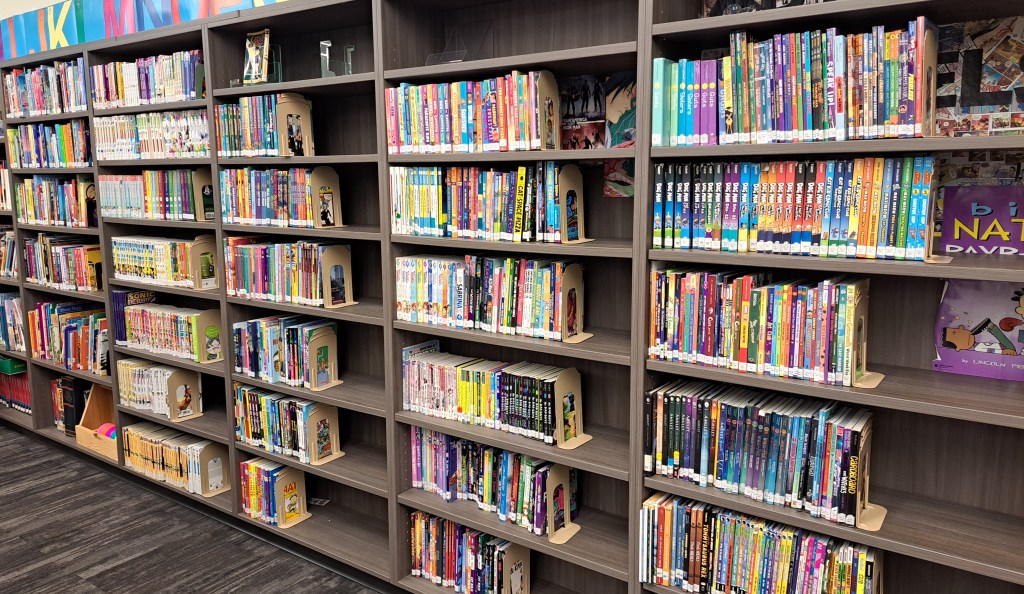
The busiest section of my library is the graphic novel section. Student’s love these books so making them easy to access was key. I moved them out of the nonfiction section and created a section of shelving just for the graphic novels. When I first set it up I had 5 sparsely filled shelves. Fast forward to today and I have 36 shelves of graphic novels. I just had to move things around this week to free up space so the shelves weren’t packed so tightly. I keep series books together within this section and…total transparency here… the rest are just put on the shelves in any order. They go in and out so quickly I don’t worry about alphabetical order. When shelving I am able to grab the graphic novels and go right to this section to put them away. Again, easy for students to find the graphic novel section and easy for me to shelve.

Finding the Time

I have found that shelving books is much like doing laundry. If you take the clothes out of the dryer and throw them on the sofa or in a spare room to “fold later”. They can pile up and become an overwhelming task. But, if you fold each load right as it comes out of the dryer it only takes a few minutes. For me, it is the same principle with shelving books in the library. When students come in they put their books on the blue book cart I use for library returns. After we read a story and they start their lesson or centers I go and scan the books that were returned. I then call them over 2 at a time to check out. While they are checking out I am walking through the stacks putting books away. With the systems I spoke of above it takes no time at all to put them back on the shelves. I have all the books from each class put away by the end of that class. If something happens, and I get busy I might end up with a few at the end of the day but I can quickly get those put away after my last class before heading home.

Now, that being said my book return cart is empty each day but that by no means is saying I have everything on my library list done. Back in my office I have an overflowing cart and stacks of books waiting to be processed and put on the shelves. But….we will leave that for another blog post. Happy shelving friends!!

What have you done in your library to make shelving easier? Any super tips you would like to share?