A blog for school librarians, media specialists, and teachers. Find ideas for lessons, library centers, and books to read with students to support reading.
This year, I was asked to teach a library class for our 7th and 8th graders. I’ve been teaching elementary library (K–6) for a while now, but middle school is new territory for me. We’re all on the same campus, but once kids hit middle school, they kind of disappear from the library. So I was actually really excited to have a reason to bring them back in.
I spent a good chunk of my summer coming up with ideas and lessons that would get them moving and keep things interesting. For our first class this week, I did a QR code scavenger hunt, and it ended up being a total hit.
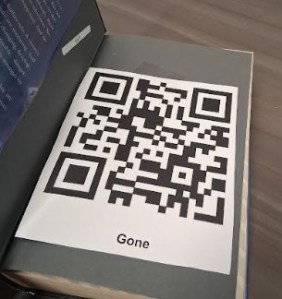
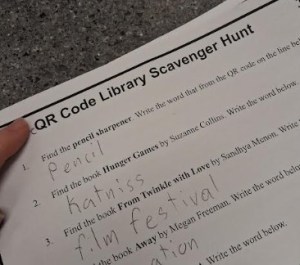
I made 30 QR codes, and when scanned, each one shows a word related to books and a few that connect to something in the library — like “pencil sharpener,” “Chromecart,” “circulation desk,” stuff like that. The students had an answer sheet with clues, and they had to scan the codes and write the correct word in the right spot.
I wasn’t sure how they’d react — middle schoolers can be a tough crowd sometimes — but they were all over it. Everyone was up out of their seat, looking around, scanning codes, finding books, and talking about what they were discovering. Not one single student said, “This is dumb” or “I don’t want to do this.” That’s a win in my book!
One group did put a book back in the wrong place, and I’m still hunting it down… but hey, small price to pay.
I’m planning to make a few more versions of this activity to use throughout the year. If you’re interested in trying it with your students, I added it to my TPT store. It’s fully editable so you can change the titles to fit your own library setup. Link is below!
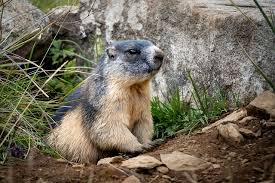
This little holiday is overlooked by many. I know in my school, until I started sharing books about Groundhog Day, most my young readers had never even heard of it. Teachers have so much to squeeze into their day they don’t have time to add this little holiday into the mix. Thus, sharing books and “celebrating” in the library is a great way to expose students to this quirky little holiday that is sometimes overlooked.
Groundhog Day Read Alouds
Each year I have a different book that I read to each grade. Reading picture books about Groundhog Day to students in the library is a delightful way to get them excited about the season’s big question—will we have an early spring or six more weeks of winter? Depending on where February 2nd falls in the we will celebrate the day of or the day before and other years we celebrate the day after.
Here are some books I like to share with my students:
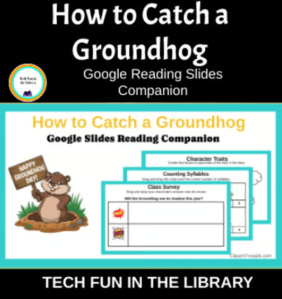
Kindergarten: How to Catch a Groundhog
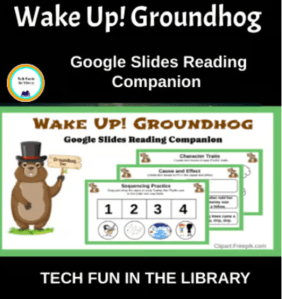
1st Grade: Wake Up Groundhog
2nd Grade: Groundhog’s Day Off
3rd Grade: Groundhog’s Dilemma
4th Grade: Groundhog Gets a Say
5th Grade: Groundhog Gets it Wrong
6th Grade: Phil’s Big Day
After we read the story I like to share a video about Groundhog Day so they understand the background behind it and why it is celebrated. Here are a couple good ones I found on Youtube that I like to share with students.
Lesson Finale
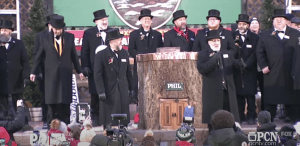
After reading the picture book and watching the short video it is time to actually watch the real Phil make his predictions. It is fun to do a quick class vote to see who wants 6 more weeks of winter and who wants an early spring. This year my classes had an overwhelming desire for 6 more weeks of winter because we have not had any snow yet and we are all still hopeful.
If I am doing this lesson prior to Groundhog Day I show the video from the previous year to let them see how it works. Once February 2nd has arrived and the new prediction is made I take time in class to show them the current results. This year Groundhog Day falls on Sunday February 2nd so we will do the lesson on Monday February 3rd and Tuesday February 4th. We will then be able to watch the most recent prediction on the same day we read the stories. I always just go to Youtube and look for “Groundhog Phil Prediction Pennsylvania” to find the most recent one.
Here is the one from this year that we watched.
There you have it, celebrating Groundhog Day in the library with picture books and short video clips is a fun and engaging way to introduce your students to this quirky tradition. So, whether you’re reading a fun picture book, watching a short video, or doing both Groundhog Day in the library is a fantastic way to embrace the season and spark children’s imaginations.
Looking for some fun activities to add to your lesson?
Lunar New Year, also known as the Spring Festival, is a time of celebration, family gatherings, and cultural reflection. For many families, it’s not just about the festivities; it’s also about passing down traditions and values to the next generation. One of the most enjoyable and meaningful ways to help your students learn about the culture importance of Lunar New Year is by reading picture books that highlight the stories, customs, and history of this holiday.
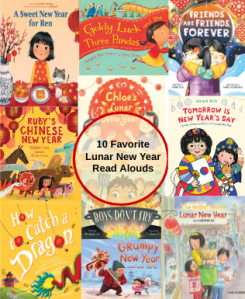
A Sweet New Year for Ren by Michelle Sterling: A picture book about a young girl named Ren who eagerly anticipates Lunar New Year and the family traditions and festivities that come with it.
Goldy Luck and the Three Pandas by Natasha Yim: A girl named Goldy Luck is not very lucky and ends up causing chaos in her neighbor’s home. This is a fractured fairy tale replacing Goldilocks with Goldy and the Three Bears with Pandas.
Friends are Friends Forever by Dane Liu: Join Dandan, a young girl who is moving from China to America, and her close friend Yueyue, as they navigate the emotions of saying goodbye while cherishing their shared tradition of making paper snowflake decorations on Lunar New Year’s Eve.
Ruby’s Chinese New Year by Vickie Lee: Tells the story of a young girl named Ruby who wants to deliver a special card to her grandmother for Chinese New Year, but her grandmother can’t travel so Ruby decides to journey to her instead.
Chloe’s Lunar New Year by Lily LaMotte and Michelle Lee: Join Chloe as her family prepares for the Lunar New Year.
Tomorrow is New Year’s Day by Aram Kim: Mina shares the traditions of Seollal (Korean Lunar New Year) with her classmates at school while trying to include her reluctant younger brother.
Boys Don’t Fry by Kimberly Lee: Jin wants to help his Malaysian family prepare for the Lunar New Year feast. But, he is discouraged because “boys don’t fry” or cook. Jin’s grandmother recognizes his passion and allows him to join in the meal prep traditions.
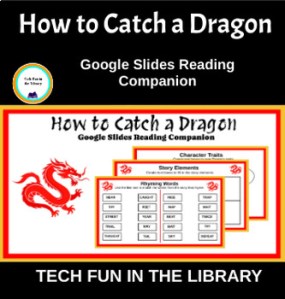
How to Catch a dragon by Adam Wallace: This book follows a group of kids during Chinese New Year celebrations as they try to catch a mischievous dragon that is roaming through their town.
Grumpy New Year by Katrina Moore: A young girl named Daisy wants to visit her Grandpa in China to celebrate Lunar New Year. In her excitement she becomes too tired to sleep and becomes grumpy.
The Night Before Lunar New Year by Natasha Wing and Lingfeng Ho: A picture book about a young girl who is excited for Lunar New Year but is nervous about the loud noises at the parade.
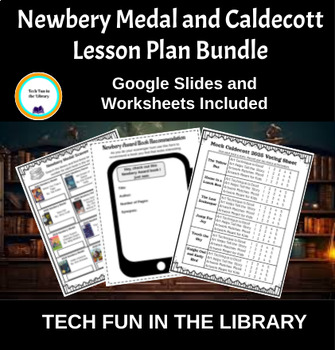
January has arrived, winter break is almost over, and planning for a new year has begun. The Newbery Awards is one of my favorite lessons to do in January, second only to Mock Caldecott, but just as worthy of some recognition. I feel it is a valuable lesson that exposes students to past winners and hopefully gets them reading some of these great books that are hiding on the shelves. There are reasons why the books on this list have won and exposing students to good literature is a key part of our job. Adding this unit has been a great way to keep students engaged and learning about NEW and OLD books in my library.
What is the Newbery Medal Award?
The Newbery Medal is an annual award given by the American Library Association to the author of the most distinguished children’s book published in the previous year. The winner is announced at the end of January at the same time Caldecott and other literature awards are announced. The Newbery Medal winner is chosen by a committee of 15 people. The winning author receives a bronze medal and may have a metallic seal of the medal added to future printings of their book. In addition to the medal winner, one or more honor books are also chosen each year.
Each year I start my unit by doing a Google Slides presentation to teach students about the Newbery Medal. Even though students may hear the lesson a couple times they are still learning as the information is lost over the year and reteaching is always a good idea. After the lesson slides we read the book Balderdash!: John Newbery and the Boisterous Birth of Children’s Books by Michelle Markel. This book gives some great background on John Newbery.
Finding Newbery Winners in Your Collection
Most of us have or should have many of the Newbery Award winners and Honor winners in our collections. This is a great time to bring them to the attention of students and get them circulating again. I like this lesson because it does stimulate circulation of good books that may have been forgotten. The lesson I use is a scavenger hunt that sends students into the stacks looking for the Newbery winners. Not only will they be looking at books to possibly check out later but they are also practicing finding books within my library. That is a win win in my book.
To add to this lesson and give them more to do than simply find the books and write the call numbers. While they are doing the scavenger hunt they will also need to make book recommendations. I usually have them do 2 recommendations from all the books they will search. This is just short form they fill out with title, number of pages, and brief synopsis.
What if I Don’t Have the Book?
When using the Newbery winner and the Honor Medal list there may be a number of books you don’t have in your library. I also don’t have all of them but this leads to a great opportunity for students to use Destiny….or whatever system your library uses…to look up the books. They can then see if the book is available in the library or if it might just be checked out by someone else. If it is not available I have them put an X on the box. If it is in our library but checked out I have them put a check mark on the box. I have found this to be a great way to get students using the library system to look for books and then later they can use that skill to find books they are wanting to read.
Wrapping Up the Lesson
This lesson may take more than one library class to complete. I have them work with a partner and that does help speed up the process as one can be the person who reads the call number while the other is writing it down. Same with the recommendation form, one can read the synopsis out loud and both can decide how to summarize it. Once they have completed the scavenger hunt and the recommendations I give them an exit ticket which is a half sheet that the fill out with the titles of 3 Newbery Award books they think they would like to check out in the future. I feel this adds to the lesson because students are picking up the books, reading the synopsis, and then deciding if it might be one they would like to read in the future.
I believe this is a great lesson for getting students out looking through your collection, finding Award winners, evaluating them, and maybe even reading some of them.