A blog for school librarians, media specialists, and teachers. Find ideas for lessons, library centers, and books to read with students to support reading.
December in the library can feel magical… and a little chaotic. With excitement building for winter break, keeping routines consistent is key to helping students stay focused and successful. I’ve learned that sticking to our regular expectations, no matter the season, creates a calm, predictable environment for everyone.
After Thanksgiving break, I always start with a quick reteach of library rules and expectations. Even a 2–3 minute review helps students (especially the younger grades) remember what it looks like to listen to stories, stay in their seats, follow directions, and participate in our activities. A refresher sets the tone and helps prevent behavior issues before they start.
To keep engagement high, I fill our time with plenty of winter-themed read-alouds featuring snowmen, snowy adventures, and cozy seasonal stories. I also make sure our displays reflect the many ways people celebrate this time of year. Along with Christmas, I feature books on Hanukkah, Kwanzaa, Diwali, Las Posadas, St. Lucia Day, and Winter Solstice/Yule.
I always keep inclusivity in mind. I know I have students in a few classes who do not celebrate holidays, so for those groups, I skip holiday-themed read-alouds completely. Instead, I focus on snowmen, winter animals, and other neutral seasonal stories. This ensures that every student feels comfortable, included, and respected.
I’ve also created a variety of lesson activities that connect directly to the books we read, which helps maintain structure and purpose during a busy month. If you’re looking for low-prep resources to use in your own library or classroom, you can find many of these activities in my Teachers Pay Teachers store.
Keeping routines steady doesn’t take away the fun—it helps students enjoy the season even more. With clear expectations, engaging stories, and a welcoming space for all, December becomes one of the most joyful months in the library.
This time of year, our library isn’t just about reading Thanksgiving books, though we definitely enjoy those too! We also mix in some fun Thanksgiving-themed activities that help students practice library skills and basic tech skills. By this point in November, students (and staff!) are definitely ready for a break, so these hands-on activities keep things fun and engaging.
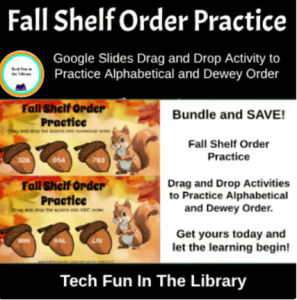
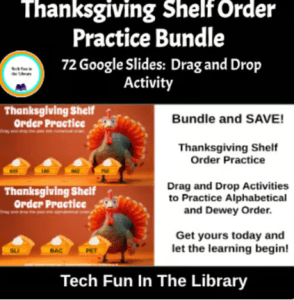
One activity my students love is our Thanksgivingshelf-order practice. This is a Google Slides activity I created where students drag and drop little “pie pieces” into alphabetical and numerical order. It sounds simple, but it really helps them understand how books are arranged on the shelves. This is an important skill when they start looking for books on their own. This is also available as a Fall shelf order practice activity for students who do not celebrate the holiday season. I add both to the Google classroom and they can choose.
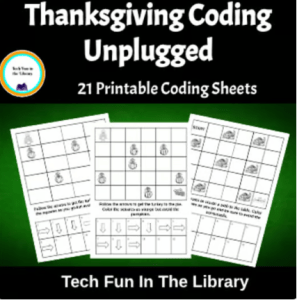
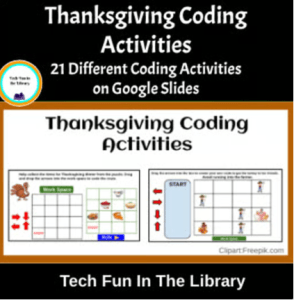
Students also have fun doing coding activities with a Thanksgiving twist. For my younger students, especially 2nd grade, we do unplugged coding where they learn the basics without devices. For 3rd and 4th graders, we use a digital coding activity in Google Slides with fun Thanksgiving-themed drag-and-drop tasks. They always enjoy it, and it’s a great way to ease into Hour of Code next month.
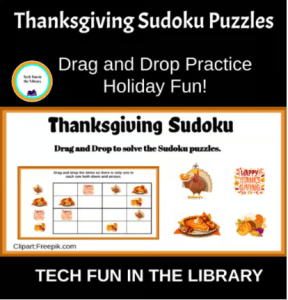
Another favorite is Thanksgiving Sudoku. I created a drag-and-drop Sudoku game in Google Slides where students move Thanksgiving pictures into the right spots to solve the puzzles. It’s great practice for using a trackpad or mouse, and it builds critical thinking and problem-solving skills. Grades 4–6 especially love this one. I have also offered a Fall Sudoku for my students who don’t celebrate holidays or for students who would just rather do a Fall themed activity. I put both into the Google classroom and they can choose.
These are just a few of the fun things we do in the library during November when we are learning, thinking, creating, and of course, having fun while celebrating the Thanksgiving season!
All of these activities are also available in my Teachers Pay Teachers store for anyone who wants to use them in their own library or classroom. Click the images below to go directly to the items.
Fall is such a fun time in the library! There are so many great books to choose from, and every year I pull out some of my favorites to read with students. These fall-themed books aren’t just fun — they help students build important reading skills too.
Some of my go-to titles include:
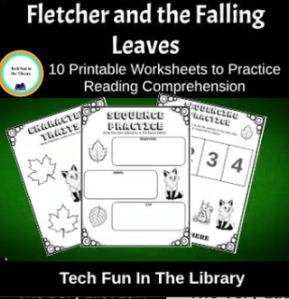
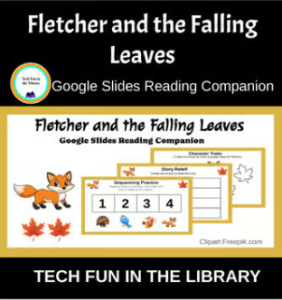
🍂 Fletcher and the Falling Leaves – We talk about how Fletcher feels as the seasons change and do a character traits activity. I also have a sequencing printable where students put the events of the story in order.
🍁 The Leaf Thief – This one is great for discussion on cause and effect! The activities we do cover character traits, sequencing, retelling the story, connecting to self by writing words they connect with fall and a fun word search.
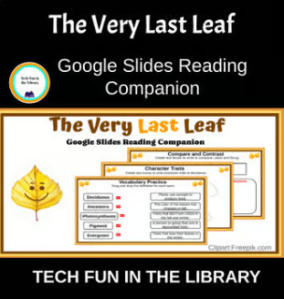
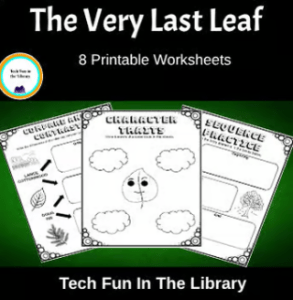
🍃 The Very Last Leaf – Perfect for discussing character growth. We talk about being brave and making connections to times students felt nervous about something new. The activities cover a range of skills but kids enjoy comparing deciduous trees and evergreen trees.
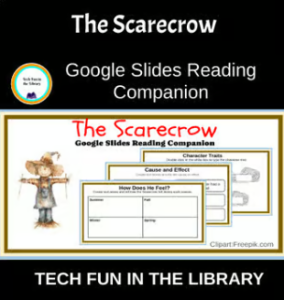
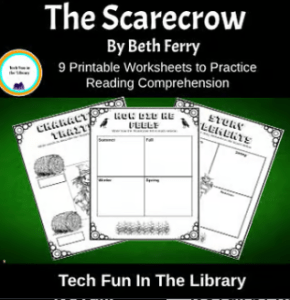
🌾 The Scarecrow – This book gets a little deeper. We compare and contrast characters and talk about kindness. These activities cover basic story elements but also cause and effect, rhyming words, and counting syllables. Students are then asked to think about how the Scarecrow was feeling each season of the year.
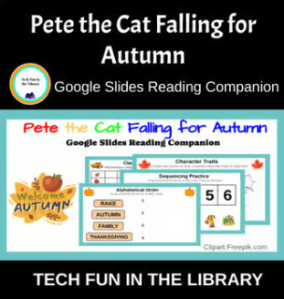
🎃 Pete the Cat: Falling for Autumn – Always a hit! I use this with my younger grades and they love it! Students learn to put words in alphabetical order, pute events in sequential order, and do a fun class survey. It is great watching them walk around the room asking classmates for their favorite Fall activity/item. A fun way to get them interacting with others while still learning drag and drop skills on the computer.
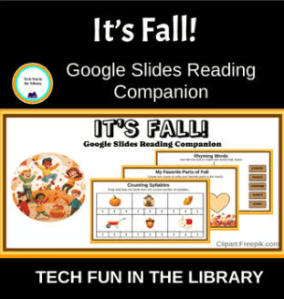
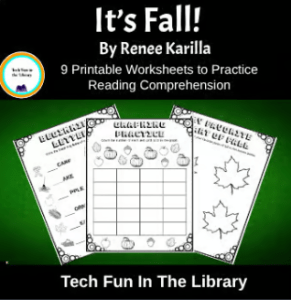
🍁 It’s Fall! – Great for nonfiction tie-ins. We use it to talk about signs of fall and then do either the digital or printable activities that go with this book. With this students practice graphing skills, connection to self, alphabetical order, and then the fun of drawing their own Jack-O-Lantern.
These activities are available in both printable and digital — easy to grab and go, and flexible for different grade levels. Each book gives us the chance to work on skills like story recall, character traits, sequencing, compare and contrast, and even some simple graphing! With these activities students stay engaged, and admin is always happy to see meaningful work that supports reading comprehension.
The best part? Kids have fun while learning. That’s what the library is all about this time of year!
This is my first year teaching a junior high library class, and I’ll be honest—I’m only about one step ahead of the students most days when it comes to planning. One of the biggest challenges has been filling a full 90-minute class block, especially with new classes still getting used to the routine.
Today, though, I pulled together an educational, engaging activity that filled the whole time and actually went really well, so I wanted to share in case it helps someone else.
I knew I wanted to cover a digital citizenship lesson and found a great one on PBS Learning Media called “When Is Your Brain Ready for Social Media?” It includes a short video and a viewing guide with questions. We watched the video once and answered the questions together. Then we watched it again so students could take notes to use for writing a claim.
After that, they wrote their own claim using evidence from the video to back it up. This part only took about 30 minutes. So… I had 60 minutes left and needed to come up with something fast!
Last week I had them do a research activity in which they created Google Slides to present their information. While grading I noticed a lot of students were struggling with how to make their slides look polished. So I saw a chance to squeeze in a quick Google Slides lesson using the same video content.
I showed them how to:
Add background color or themes
Use simple animations
Add images to support their points and make their slides more professional
They each made a short slideshow using the information from the video. They practiced their digital skills and reviewed the video info again—win win! Best part? It took up the full 90 minutes and everyone stayed engaged.
Just a reminder that sometimes we have to turn on a dime and be flexible. Those quick thinking moments can turn into great lessons!
This year, I was asked to teach a library class for our 7th and 8th graders. I’ve been teaching elementary library (K–6) for a while now, but middle school is new territory for me. We’re all on the same campus, but once kids hit middle school, they kind of disappear from the library. So I was actually really excited to have a reason to bring them back in.
I spent a good chunk of my summer coming up with ideas and lessons that would get them moving and keep things interesting. For our first class this week, I did a QR code scavenger hunt, and it ended up being a total hit.
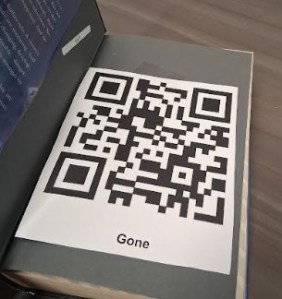
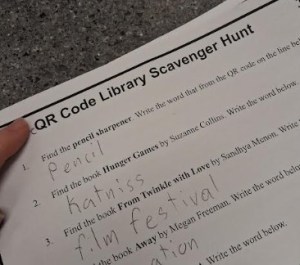
I made 30 QR codes, and when scanned, each one shows a word related to books and a few that connect to something in the library — like “pencil sharpener,” “Chromecart,” “circulation desk,” stuff like that. The students had an answer sheet with clues, and they had to scan the codes and write the correct word in the right spot.
I wasn’t sure how they’d react — middle schoolers can be a tough crowd sometimes — but they were all over it. Everyone was up out of their seat, looking around, scanning codes, finding books, and talking about what they were discovering. Not one single student said, “This is dumb” or “I don’t want to do this.” That’s a win in my book!
One group did put a book back in the wrong place, and I’m still hunting it down… but hey, small price to pay.
I’m planning to make a few more versions of this activity to use throughout the year. If you’re interested in trying it with your students, I added it to my TPT store. It’s fully editable so you can change the titles to fit your own library setup. Link is below!
One of my favorite ways to kick off the school year in the library is with a good old-fashioned game of “Would You Rather”—library-style! It’s a simple, fun activity that helps me get to know the kids and gets them learning a little bit about each other too. Plus, it gets them moving, which is always a win!
I use a Google Slides version of the game that I project on the whiteboard. Each slide has a fun, library-themed question with two choices (A or B), and students move to the side of the room that matches their answer. Example: “Would you rather read books that make you laugh or books that make you scared?” Boom—movement, laughter, and instant conversation starters.
As a library teacher, I only see students twice a week, so I don’t get the same daily time with them that their classroom teachers do. That’s why I try to be intentional about relationship-building right from the start. This game gives me a peek into their personalities and interests in a low-pressure way. And honestly, it’s just fun to see what they pick!
It’s also great for helping students learn about their classmates. They get to see who shares their love of fantasy books or who’s also into listening to audiobooks instead of reading print. It’s quick, interactive, and gets us all smiling and talking—exactly how I want the year to start.
If you’re looking for a simple way to connect with students and build community in your library space, give it a try. The Google Slides version I use is available in my TPT store if you want to grab it and use it with your own classes. You might just learn who would rather read a book that smells like cookies or read a book that makes noises when you turn the page—and that’s important stuff to know.
The first week back in the library is always exciting, and this year will be no different! We will spend the first visit talking about library rules, book care, and how to be respectful and responsible with our library materials. We will also go over basic classroom rules focusing on being respectful, responsible, and safe. It’s so important to set the stage for a great year of reading, and that all starts with knowing the basics.
For each grade, we will read a different book related to library skills and book care. I read a different book to each grade level so that they are not getting the same books year after year. With the younger kids we will read about how to treat books gently, and older grades discussed things like where books live in the library and how to find what they need. After reading, we always have a great discussion about the key points from the book, like why it’s important to keep our books in good shape and return them on time.
Then comes the best part: the first checkout of the year! I love that everyone gets to check out books on day one—yes, even the Kindergarten students! Some like to make them wait or limit them to books they keep in class but I let them check out and take home. These young readers are just as excited to take books home as the older kids, and in fact, they are often the best at bringing them back because parents seem to be more involved and on top of returning weekly.
The first day is always full of energy, excitement, and a lot of book love. It’s a great way to kick off a year of reading, learning, and growing in the library! Looking forward to another fun and productive year ahead.
As a librarian, one of my primary goals is to encourage students to develop a love for reading while ensuring our school library has the resources it needs to continue fostering that passion. For the last 4 years I have been doing something for our library that allows me to meet both of these goals: a Read-A-Thon. The results have been incredible, and I couldn’t be more thrilled about our choice to hold a Read -A-Thon each year.
A Simple, Yet Effective Way to Fundraise
The Read-A-Thon proved to be a game-changer for our library’s fundraising efforts. We are a small district and this year we had 108 students sign up for the Read-A-Thon and log their minutes. But with 108 students participating, the total minutes read was an impressive 37,179! That was up 10,000 minutes from last year. And as if that wasn’t impressive enough, the Read-A-Thon raised over $5,000 for the library—all with very little effort on my part.
What made this event so successful wasn’t just the enthusiasm of the students, but also the simplicity of the process. The Read-A-Thon website was incredibly user-friendly, making it easy for both students and their families to get involved. No need to worry about tracking down donation checks or loose change—people could donate directly through the website, making the whole process smooth and convenient.
Encouraging Reading While Raising Funds
One of the best parts of the Read-A-Thon was that it motivated students to read even more! With the goal of logging as many minutes as possible, students dove into books with an enthusiasm that was contagious. It was so heartwarming to see them excited not just about earning money for the library, but also about the simple act of reading.
The Read-A-Thon was a perfect blend of education and fundraising. It gave students a tangible way to support their school while also developing their reading skills. Plus, they were able to share their accomplishments with their families, who were excited to support them—and the library—by making donations.
Easy, No-Hassle Fundraising
From a fundraising perspective, the Read-A-Thon was a dream. The website made everything so easy—from registering students to tracking minutes read and donations made. It was simple for parents to sign up their children and make donations online, which meant no paperwork or collection of physical money for me to handle.
Not only did this reduce my workload significantly, but it also gave families a chance to participate from the comfort of their homes. The transparency of the online platform helped everyone see how much was being raised in real-time, which sparked even more excitement throughout the event.
Prizes for Readers
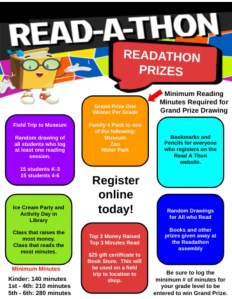
While the Read-A-Thon company does provide prizes I decided to go with the option to provide my own prizes to motivate our students. The PTO (Parent Teacher Organization) was incredibly generous, also donating funds to support a special Grand Prize for each grade level—a family 4-pack to either the zoo, museum, or water park!
To keep things exciting, I also organized random drawings for those who logged minutes, offering a fun field trip to the museum as a reward.
Additionally, we wanted to recognize our top achievers: the top 3 money raisers and top 3 readers received an exciting field trip to a local bookstore, where they each received a $25 gift card to spend on books of their choice.
These prizes not only encouraged students to participate but also made the entire event more fun and engaging for everyone involved!
Final Thoughts
If you’re looking for an effortless and effective way to fundraise for your school library while encouraging students to read, I can’t recommend the Read-A-Thon enough. It’s a win-win situation: students are motivated to read more, and you raise funds for your library with little hassle. The event was a success, and I’m already looking forward to next year!
If you’re interested in hosting your own Read-A-Thon, I highly suggest checking out the website. It’s an incredibly easy tool to use, and I’m confident it will help you reach your fundraising goals just like it did for us.
I love having library centers available for students to use after our read aloud or lesson. Library centers can provide another opportunity for students to practice library skills, writing, reading comprehension, vocabulary development, and much more under the disguise of playing games.
I have talked about Shark Bite! card games to practice book genres in another post so if you are interested feel free to check that one out. This time I wanted to share some fun matching games that are very popular with my students.
Book Genre Puzzle Matching Game
For this library center you will need to create some type of small puzzles that have book genre name, definition, and a picture to represent the genre if possible. Cut them into puzzle type pieces for students to spread out and then put back together matching the definitions with the genres. My students like to compete to see who can match the most. They also can be played individually with the student just trying to match all the correct genres to create the puzzles.
Book Genre Memory Matching Game
This one is great for students who love to play the memory game. Create cards with a picture representing the genre on one and the definition of the genre on another. These will be the matching cards students will try to match. Students will turn the cards face down on the table and then take turns trying to find the matching cards. Once all of the cards have been matched the one with the most matches wins.
Both of these activities are a fun way for students to practice book genres. Providing many options for library cents will help keep students from becoming bored which can then lead to behavior issues or disruptions. I
If you would like some premade matching activities you can find them on my TPT page.
There is much more to being a library teacher than simply reading a book. With all the duties we have in the library, on top of lesson planning, there are times when it can seem overwhelming trying to figure out what to teach next. Yesterday was one of those days for me. So, I went back to my planner (I use Planboard Chalk because it is free and easy to use) and looked at what I did last year in January. I found this easy lesson for Arnie the Doughnut that the kids loved. Remember lessons don’t always need to be a complex dog and pony show. It is okay to share a good book and then give students something fun to do that ties into it that doesn’t take a lot of prep work.
Arnie the Doughnut by Laurie Keller
I love this book and so do the kids. I use it with my first grade classes and they are always asking if we can read it again. For this one I simply went and found a free coloring sheet online. I typed in “Arnie the Doughnut coloring sheet” and found this one by Scholastic. It was perfect.
Since my admin wants the library to be “a class” I try to add more to their lesson than just a coloring sheet. Since we were reading about a doughnut I chose to use a worksheet that started with the letter D. Again I searched for free letter D worksheets and found one I liked. Then I simply printed the coloring sheet and the letter D worksheet back to back. And just like that I had a fun lesson (and educational) to go with the book.
Potato Pants by Laurie Keller
Once you find a good book it is then easy to find other books by the same author to use in your library lessons. Laurie Keller has written so many good books it is easy to keep going with her books and add more fun lessons to your classes.
Potato Pants is always a hit. I also use this one with my first grade classes but it could easily be used with younger or older students. There are tons of fun ideas you can use with this book to have kids decorate and make potato pants. Some people use actual potatoes and put fabric on them. Some use pictures of a potato and add fabric clothes. I choose to use an activity where kids color the clothes on their potato and other fruits and vegetables in a coloring page format.
The activity I like to do for this one takes a couple visits but the students have a blast working on it. I found this lesson idea on Facebook from the Clever Librarian. No cost other than your time to draw some fun looking fruits and vegetables. Don’t worry if you are not an artist, I definitely am not, but found it easy to draw these funny looking pictures from the students to color. It does take a bit of prep work to make the little Potato Pants coloring pages but once you do it one year, save the template and then you have it for years to come.
Once you have drawn your different fruits and vegetables on the coloring pages. Staple the edges along the long side of the paper to make a book. Cut the pages in half but not all the way across. This way the top and bottom can fold open and then the outfits are interchangeable for the different fruits and vegetables. My classes love showing each other how they colored their pants for the different pages. It is definitely an activity worth adding to your lessons.
Do Unto Otters by Laurie Keller
Do Unto Otters is a wonderful book to use for an SEL lesson. We can never give students too many reminders about how to treat others kindly and with respect. After we read and discuss this book I use my Google Slides reading Companion activity. Prep time for this lesson is super easy. All you have to do is add it to their Google classroom, make a copy for each student, and assign.
This lesson is a tech related lesson so students get to practice library skills and some basic tech skills at the same time. As students go through the lesson they will do predictions, story elements, and write three ways they can be friendly, considerate, kind, honest. Then at the end they can use the scribble line tool to solve a maze. This is just another way to keep students engaged and learning in the library.
I have give you three books by Laurie Keller to use but you can find more and use some simple ways to add fun and learning to your library lessons. I hope these ideas were helpful to you as you continue your journey to make your library a special place of learning and fun.