Calm, Cozy, and Consistent: Managing December in the Library

December in the library can feel magical… and a little chaotic. With excitement building for winter break, keeping routines consistent is key to helping students stay focused and successful. I’ve learned that sticking to our regular expectations, no matter the season, creates a calm, predictable environment for everyone.

After Thanksgiving break, I always start with a quick reteach of library rules and expectations. Even a 2–3 minute review helps students (especially the younger grades) remember what it looks like to listen to stories, stay in their seats, follow directions, and participate in our activities. A refresher sets the tone and helps prevent behavior issues before they start.

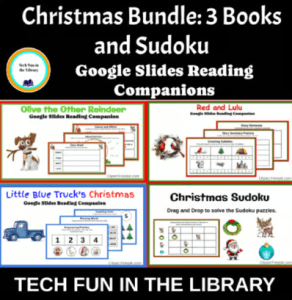
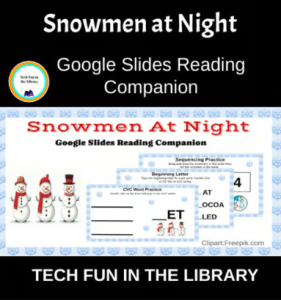
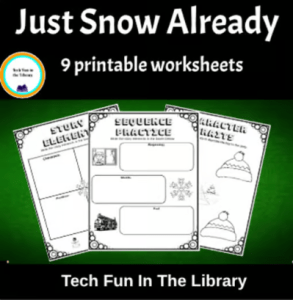
To keep engagement high, I fill our time with plenty of winter-themed read-alouds featuring snowmen, snowy adventures, and cozy seasonal stories. I also make sure our displays reflect the many ways people celebrate this time of year. Along with Christmas, I feature books on Hanukkah, Kwanzaa, Diwali, Las Posadas, St. Lucia Day, and Winter Solstice/Yule.

I always keep inclusivity in mind. I know I have students in a few classes who do not celebrate holidays, so for those groups, I skip holiday-themed read-alouds completely. Instead, I focus on snowmen, winter animals, and other neutral seasonal stories. This ensures that every student feels comfortable, included, and respected.

I’ve also created a variety of lesson activities that connect directly to the books we read, which helps maintain structure and purpose during a busy month. If you’re looking for low-prep resources to use in your own library or classroom, you can find many of these activities in my Teachers Pay Teachers store.

Keeping routines steady doesn’t take away the fun—it helps students enjoy the season even more. With clear expectations, engaging stories, and a welcoming space for all, December becomes one of the most joyful months in the library.

You can find these and more on my TPT store. Click here to see my entire store.

Fall Into Reading: Fun & Easy Activities for Your Favorite Autumn Books

Fall is such a fun time in the library! There are so many great books to choose from, and every year I pull out some of my favorites to read with students. These fall-themed books aren’t just fun — they help students build important reading skills too.

Some of my go-to titles include:

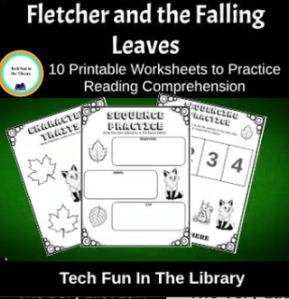
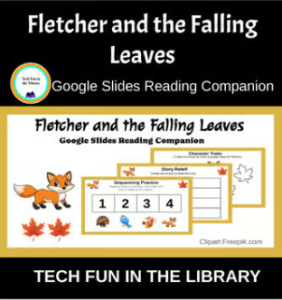
🍂 Fletcher and the Falling Leaves – We talk about how Fletcher feels as the seasons change and do a character traits activity. I also have a sequencing printable where students put the events of the story in order.

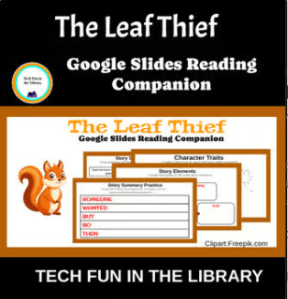
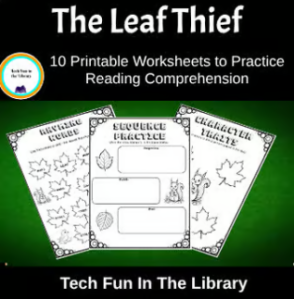
🍁 The Leaf Thief – This one is great for discussion on cause and effect! The activities we do cover character traits, sequencing, retelling the story, connecting to self by writing words they connect with fall and a fun word search.

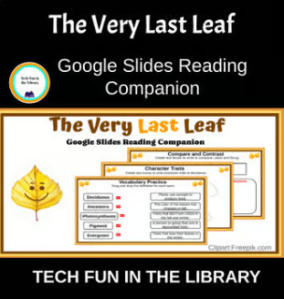
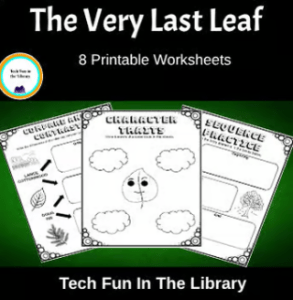
🍃 The Very Last Leaf – Perfect for discussing character growth. We talk about being brave and making connections to times students felt nervous about something new. The activities cover a range of skills but kids enjoy comparing deciduous trees and evergreen trees.

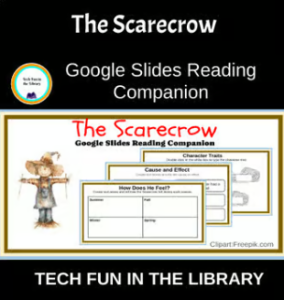
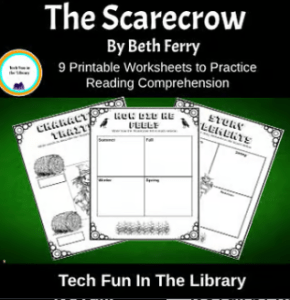
🌾 The Scarecrow – This book gets a little deeper. We compare and contrast characters and talk about kindness. These activities cover basic story elements but also cause and effect, rhyming words, and counting syllables. Students are then asked to think about how the Scarecrow was feeling each season of the year.

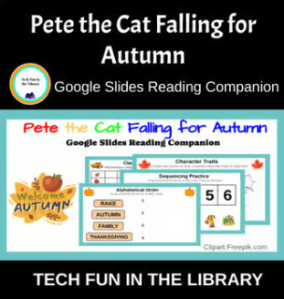
🎃 Pete the Cat: Falling for Autumn – Always a hit! I use this with my younger grades and they love it! Students learn to put words in alphabetical order, pute events in sequential order, and do a fun class survey. It is great watching them walk around the room asking classmates for their favorite Fall activity/item. A fun way to get them interacting with others while still learning drag and drop skills on the computer.

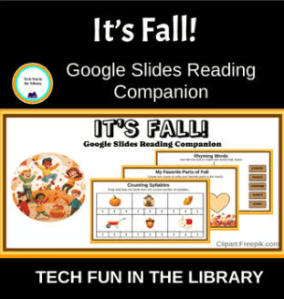
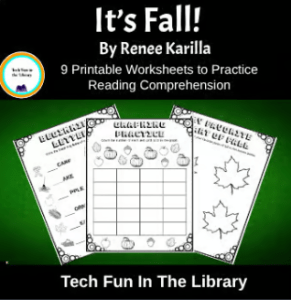
🍁 It’s Fall! – Great for nonfiction tie-ins. We use it to talk about signs of fall and then do either the digital or printable activities that go with this book. With this students practice graphing skills, connection to self, alphabetical order, and then the fun of drawing their own Jack-O-Lantern.

These activities are available in both printable and digital — easy to grab and go, and flexible for different grade levels. Each book gives us the chance to work on skills like story recall, character traits, sequencing, compare and contrast, and even some simple graphing! With these activities students stay engaged, and admin is always happy to see meaningful work that supports reading comprehension.

The best part? Kids have fun while learning. That’s what the library is all about this time of year!

Click on images to see product.

Shop for these and more on my TPT store!

Library Scavenger Hunt with Middle Schoolers

This year, I was asked to teach a library class for our 7th and 8th graders. I’ve been teaching elementary library (K–6) for a while now, but middle school is new territory for me. We’re all on the same campus, but once kids hit middle school, they kind of disappear from the library. So I was actually really excited to have a reason to bring them back in.

I spent a good chunk of my summer coming up with ideas and lessons that would get them moving and keep things interesting. For our first class this week, I did a QR code scavenger hunt, and it ended up being a total hit.

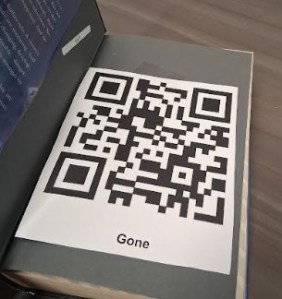
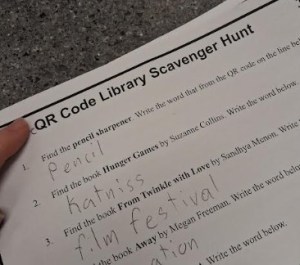
I made 30 QR codes, and when scanned, each one shows a word related to books and a few that connect to something in the library — like “pencil sharpener,” “Chromecart,” “circulation desk,” stuff like that. The students had an answer sheet with clues, and they had to scan the codes and write the correct word in the right spot.

I wasn’t sure how they’d react — middle schoolers can be a tough crowd sometimes — but they were all over it. Everyone was up out of their seat, looking around, scanning codes, finding books, and talking about what they were discovering. Not one single student said, “This is dumb” or “I don’t want to do this.” That’s a win in my book!

One group did put a book back in the wrong place, and I’m still hunting it down… but hey, small price to pay.

I’m planning to make a few more versions of this activity to use throughout the year. If you’re interested in trying it with your students, I added it to my TPT store. It’s fully editable so you can change the titles to fit your own library setup. Link is below!

Click here to go to my TPT store.

Picture Books That Make Teaching Character Traits Easy and Fun

One of the first things I teach at the beginning of the year is character traits. We talk about them a lot all year long, so it’s important to make sure students really understand what they are from the start. And honestly, this lesson is always one of my favorites — it’s fun, easy to connect to, and gets great conversations going.

I start by showing my character traits anchor chart that hangs on the whiteboard at the front of the room. We go over what a character trait is and the difference between inside traits (like how a character feels or acts) and outside traits (like how they look or dress).

Once we have discussed character traits I read a picture book that really shows character traits in action. I encourage them to think about the character traits as they listen to the story. After we read, I have students raise their hands and share a trait they noticed. After they identify the trait they tell me if it’s an inside or outside trait. Simple, but powerful — and the kids get it.

Here’s what I read by grade level:

  • Kindergarten – Grumpy Monkey
    We talk about feelings and how Jim shows them, even if he says he’s “fine.” It’s a great way to start talking about inside traits.
  • 1st Grade – The Recess Queen
    This one always gets good reactions. We talk about how kids act when they want friends and how behavior shows what’s going on inside.
  • 2nd Grade – Stand Tall, Molly Lou Melon
    The kids love Molly Lou. We notice how she looks different (outside trait) but also how brave and confident she is (inside trait).
  • 3rd Grade – The Girl Who Never Made Mistakes
    This one brings out some great connections. We talk about how the character feels pressure to be perfect and what happens when she finally messes up.
  • 4th Grade – A Bad Case of Stripes
    Such a fun book! We dig into how the main character changes and what she learns about being herself. Lots of inside traits to explore.
  • 5th Grade – The Paper Bag Princess
    This one always surprises them. We talk about bravery, confidence, and how the princess is different from what they expect.

By the end, students are usually excited to share traits, and they’re already starting to think a little deeper about the characters in books. It’s an engaging way to start working on story elements — and they don’t even realize how much they’re learning because they’re having so much fun with the books.

Starting the Year with a Library-Themed “Would You Rather” Game

One of my favorite ways to kick off the school year in the library is with a good old-fashioned game of “Would You Rather”—library-style! It’s a simple, fun activity that helps me get to know the kids and gets them learning a little bit about each other too. Plus, it gets them moving, which is always a win!

I use a Google Slides version of the game that I project on the whiteboard. Each slide has a fun, library-themed question with two choices (A or B), and students move to the side of the room that matches their answer. Example: “Would you rather read books that make you laugh or books that make you scared?” Boom—movement, laughter, and instant conversation starters.

As a library teacher, I only see students twice a week, so I don’t get the same daily time with them that their classroom teachers do. That’s why I try to be intentional about relationship-building right from the start. This game gives me a peek into their personalities and interests in a low-pressure way. And honestly, it’s just fun to see what they pick!

It’s also great for helping students learn about their classmates. They get to see who shares their love of fantasy books or who’s also into listening to audiobooks instead of reading print. It’s quick, interactive, and gets us all smiling and talking—exactly how I want the year to start.

If you’re looking for a simple way to connect with students and build community in your library space, give it a try. The Google Slides version I use is available in my TPT store if you want to grab it and use it with your own classes. You might just learn who would rather read a book that smells like cookies or read a book that makes noises when you turn the page—and that’s important stuff to know.

Shop here for your Library Themed Would You Rather.

Summer Reset: Rest, Read, and Get Ready

Summer is my time to relax and decompress from the busy school year. I think it’s so important to recharge after a busy, hectic, stressful school year. I spend the first part of my summer resting, binge-watching favorite shows, and enjoying time with family and friends doing all the fun summer things.

Around mid-July, I start to slowly shift back into school mode. I don’t go full speed, but I begin doing little things that help me feel more prepared for the new year. I’m always reading new books so I can have fresh titles to share with my students in the fall. As I am reading I am adding books to my Amazon wishlist. This helps me have my first book order partially completed before I even get back to school.

One thing I try to keep up on is making sure that my Donors Choose page is updated. If I’m lucky enough to have a project funded, I try to post a new one right away. So far this summer, I’ve had two projects funded and I’m so thankful for the kind people who made that happen. This means I have created two new book projects and posted them. I usually try to keep at least two live book projects going at a time. There is also a match day coming up so I am working on adding two extra projects…just in case. It is definitely worth the time to create and post projects to add books to your library.

Another thing I focus on in the summer is my Teachers Pay Teachers shop. I try to keep a running list of ideas I have throughout the year and focus on getting them completed over the summer. During the school year, there’s just not enough time to get everything done, so summer is the perfect time to add new resources, write blog posts, and get my shop ready for back-to-school shoppers.

In early August, I like to go into school for a day or two to get my bulletin boards done before our in-service days begin. Once the meetings start, there’s barely time to do it all. I enjoy being back in the library, getting things organized for the first day and enjoying the peace and tranquility of my library. I sharpen pencils, refill crayon totes, replace broken erasers, and tidy up cupboards that got a little wild at the end of the year and just try to get to those little things that will make the first day run a bit smoother.

I know that working over contract hours is controversial to some. Even though I try not to let school take over my whole summer, I’ve learned that a little prep now saves a lot of stress later. This fall will be year 33 for me, and that’s one thing I’ve figured out over time—being just a little ahead makes a big difference in how I feel the first week of school. We all have to do what works best for our own situation and for me a few days doesn’t seem like I am overdoing it or giving too much of my time.

I hope you’re enjoying your summer break. Take care, relax, and recharge—you’ve earned it!

Check out my TPT store!

Back to School in the Library: A Fun & Productive First Week

The first week back in the library is always exciting, and this year will be no different! We will spend the first visit talking about library rules, book care, and how to be respectful and responsible with our library materials. We will also go over basic classroom rules focusing on being respectful, responsible, and safe. It’s so important to set the stage for a great year of reading, and that all starts with knowing the basics.

For each grade, we will read a different book related to library skills and book care. I read a different book to each grade level so that they are not getting the same books year after year. With the younger kids we will read about how to treat books gently, and older grades discussed things like where books live in the library and how to find what they need. After reading, we always have a great discussion about the key points from the book, like why it’s important to keep our books in good shape and return them on time.

Then comes the best part: the first checkout of the year! I love that everyone gets to check out books on day one—yes, even the Kindergarten students! Some like to make them wait or limit them to books they keep in class but I let them check out and take home. These young readers are just as excited to take books home as the older kids, and in fact, they are often the best at bringing them back because parents seem to be more involved and on top of returning weekly.

The first day is always full of energy, excitement, and a lot of book love. It’s a great way to kick off a year of reading, learning, and growing in the library! Looking forward to another fun and productive year ahead.

St. Patrick’s Day Read Alouds

St. Patrick’s Day isn’t just about wearing green or hunting for four-leaf clovers—it’s also a fantastic opportunity to share stories that bring the magic of Ireland to life. Read-alouds are a great way to engage kids and ignite their imagination while introducing them to the rich culture and folklore of this festive day.

Whether you’re reading about leprechauns, shamrocks, or the legend of St. Patrick, these books offer a perfect blend of fun and learning. Not only do read-alouds help improve literacy skills, but they also create lasting memories and spark conversations about Irish traditions.

Some fantastic St. Patrick’s Day-themed read-alouds that I share with my students include:

  1. How to Catch a Leprechaun by Adam Wallace – A playful, rhyming story about mischievous leprechauns and clever traps.
  2. The Night Before St. Patrick’s Day by Natasha Wing is a festive and fun twist on the classic “Night Before Christmas” rhyme. The story follows two children eagerly preparing for St. Patrick’s Day.
  3. Fiona’s Luck by Gail Gibbons – A charming Irish folk tale that reimagines a classic legend with a delightful twist. Follow along as Fiona outwits the leprechauns with her quick thinking and courage.
  4. The Luckiest St. Patrick’s Day Ever! by Teddy Slater – A delightful story that follows a young boy named Sean as he celebrates St. Patrick’s Day with his family. Sean believes this will be the best St. Patrick’s Day ever, but when his plans to find a pot of gold at the end of a rainbow don’t go as expected, he learns that true luck comes from the love and joy of family and friends.
  5. Pete the Cat: The Great Leprechaun Chase by Kimberly and James Dean – When Pete hears about a leprechaun who might have hidden a pot of gold, he decides to go on a chase to find it.
  6. Jamie O’Rourke and the Big Potato by Tomie dePaola – A humorous Irish folktale about a lazy man named Jamie O’Rourke. One day, Jamie’s wife falls ill, and it’s up to him to grow a potato for their dinner. However, Jamie’s laziness leads to a surprising outcome—a giant potato that he can’t handle on his own.
  7. Green Shamrocks by Eve Bunting – Rabbit is growing shamrocks in a pretty yellow pot–he’s getting them ready for St. Patrick’s Day so he can wear them for the parade! When his pot of beautiful green shamrocks goes missing, he goes searching . . . will he find them in time?
  8. There Was an Old Lady Who Swallowed a Clover by Lucille Colandro – A fun twist on the classic “There Was an Old Lady Who Swallowed a Fly” rhyme, with a St. Patrick’s Day theme.
  9. The Luckiest Leprechaun by Bryce Dallas Howard – A story about a young leprechaun named Finn who is known for his luck. Despite his good fortune, Finn feels a little lonely and longs for a true friend to share his luck with.

So, gather around, open a book, and let the spirit of St. Patrick’s Day fill the room with joy and excitement through the magic of storytelling.

Are you looking for some fun book activities to use with students? Here are a few that I use:

Shop Here for Fiona’s Luck

Shop Here for The Luckiest Leprechaun

Shop Here for There was an Old Lady Who Swallowed a Clover

Looking for some learning games to use for St. Patrick’s Day? Check out these fun activities:

Shop Here for Shelf Order Practice

Shop Here for Leprechaun Coding

Shop Here for St. Patrick’s Day Sudoku

Book Genre Matching Games for Library Centers

I love having library centers available for students to use after our read aloud or lesson. Library centers can provide another opportunity for students to practice library skills, writing, reading comprehension, vocabulary development, and much more under the disguise of playing games.

I have talked about Shark Bite! card games to practice book genres in another post so if you are interested feel free to check that one out. This time I wanted to share some fun matching games that are very popular with my students.

Book Genre Puzzle Matching Game

For this library center you will need to create some type of small puzzles that have book genre name, definition, and a picture to represent the genre if possible. Cut them into puzzle type pieces for students to spread out and then put back together matching the definitions with the genres. My students like to compete to see who can match the most. They also can be played individually with the student just trying to match all the correct genres to create the puzzles.

Book Genre Memory Matching Game

This one is great for students who love to play the memory game. Create cards with a picture representing the genre on one and the definition of the genre on another. These will be the matching cards students will try to match. Students will turn the cards face down on the table and then take turns trying to find the matching cards. Once all of the cards have been matched the one with the most matches wins.

Both of these activities are a fun way for students to practice book genres. Providing many options for library cents will help keep students from becoming bored which can then lead to behavior issues or disruptions. I

If you would like some premade matching activities you can find them on my TPT page.

Shop for Book Cover Matching Game Here.

Shop for Heart Matching Game Here.

Shop for Book Genre Memory Game with pictures only here.

Shop for Book Genre Memory Game with pictures and definitions here.

The Importance of Male Characters in Books We Choose for Our Libraries

As we choose picture and chapter books to share with our students via read alouds or on our shelves, it is important to remember that they can be powerful tools to help shape young minds. In this mission to provide books that serve as windows and doors to all of our readers it is imperative we bring books with strong male protagonists to our young readers.

Positive Masculinity Representation

Providing books that have male characters who display empathy, kindness, respect, and emotional intelligence shows boys that it’s okay to show vulnerability and caring. These qualities can help bring a more rounded view of masculinity, possibly countering stereotypes that may limit emotional expression or compassion in boys.

Diverse Role Models

When boys encounter a variety of male characters with different experiences, personalities, and backgrounds, they learn that there is no single way to “be a man.” These characters can range from adventurous heroes to thoughtful leaders to young men struggling with mental or physical illnesses all broadening their understanding of who they can be.

Problem-Solving and Resilience

Male characters who overcome challenges, whether through intelligence, perseverance, or teamwork, help teach boys resilience. Seeing male characters work through difficult situations fosters a growth mindset and a belief in their own ability to solve problems.

Encouraging Emotional Expression

Books with male characters who express and process their feelings in healthy ways help boys understand that emotions are natural and should be acknowledged, not hidden or pushed aside.

Supporting Positive Relationships

Male characters in picture and chapter books can model positive relationships, whether with family, friends, or peers. Boys learn about friendship and the importance of mutual respect in these interactions.

Cultural and Social Awareness

Male characters in diverse settings and stories provide important lessons in cultural sensitivity and social awareness. They can show boys how to interact with people from different backgrounds, teaching acceptance and empathy from a young age.

Promoting Gender Equality

By featuring male characters who support and respect female characters, picture books can also model gender equality. Boys learn early on that valuing others and working together is important, regardless of gender.

In short, male characters in picture and chapter books can be essential role models who teach young boys about emotional health, problem-solving, empathy, resilience, and equality. The lessons they impart can significantly shape boys’ development into well-rounded, compassionate, and self-assured individuals.