Book Genre Matching Games for Library Centers

I love having library centers available for students to use after our read aloud or lesson. Library centers can provide another opportunity for students to practice library skills, writing, reading comprehension, vocabulary development, and much more under the disguise of playing games.

I have talked about Shark Bite! card games to practice book genres in another post so if you are interested feel free to check that one out. This time I wanted to share some fun matching games that are very popular with my students.

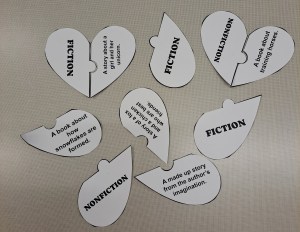
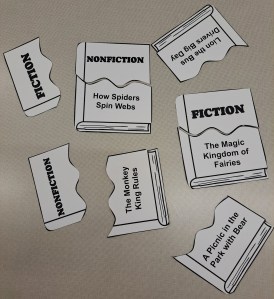
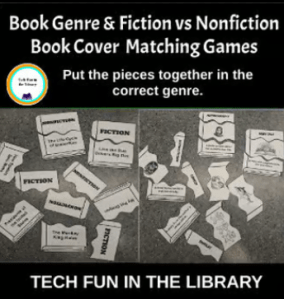
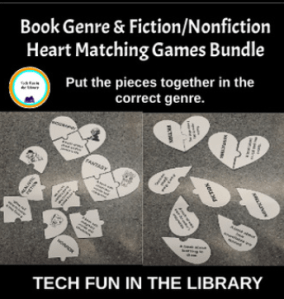
Book Genre Puzzle Matching Game

For this library center you will need to create some type of small puzzles that have book genre name, definition, and a picture to represent the genre if possible. Cut them into puzzle type pieces for students to spread out and then put back together matching the definitions with the genres. My students like to compete to see who can match the most. They also can be played individually with the student just trying to match all the correct genres to create the puzzles.

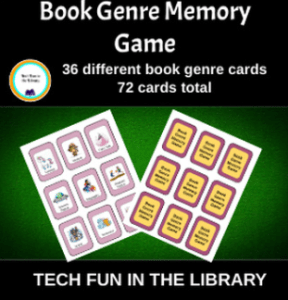
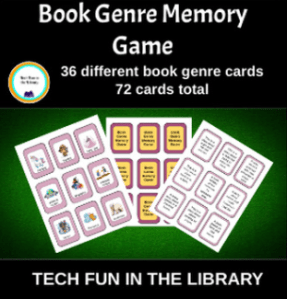
Book Genre Memory Matching Game

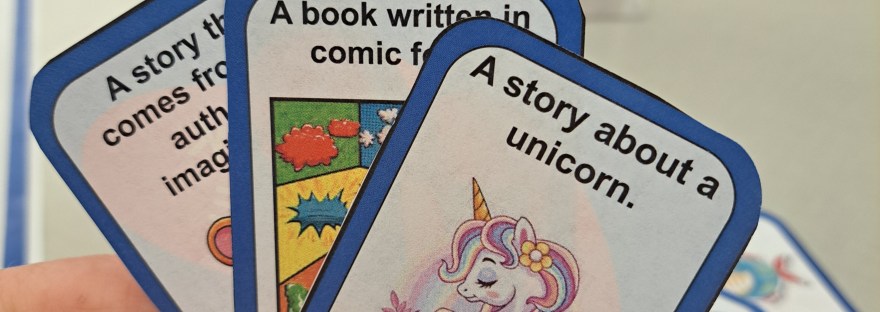
This one is great for students who love to play the memory game. Create cards with a picture representing the genre on one and the definition of the genre on another. These will be the matching cards students will try to match. Students will turn the cards face down on the table and then take turns trying to find the matching cards. Once all of the cards have been matched the one with the most matches wins.

Both of these activities are a fun way for students to practice book genres. Providing many options for library cents will help keep students from becoming bored which can then lead to behavior issues or disruptions. I

If you would like some premade matching activities you can find them on my TPT page.

Shop for Book Cover Matching Game Here.

Shop for Heart Matching Game Here.

Shop for Book Genre Memory Game with pictures only here.

Shop for Book Genre Memory Game with pictures and definitions here.

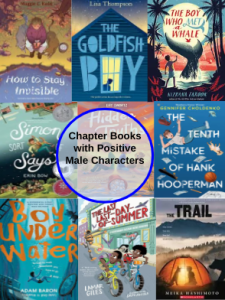
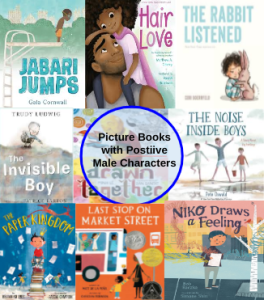
The Importance of Male Characters in Books We Choose for Our Libraries

As we choose picture and chapter books to share with our students via read alouds or on our shelves, it is important to remember that they can be powerful tools to help shape young minds. In this mission to provide books that serve as windows and doors to all of our readers it is imperative we bring books with strong male protagonists to our young readers.

Positive Masculinity Representation

Providing books that have male characters who display empathy, kindness, respect, and emotional intelligence shows boys that it’s okay to show vulnerability and caring. These qualities can help bring a more rounded view of masculinity, possibly countering stereotypes that may limit emotional expression or compassion in boys.

Diverse Role Models

When boys encounter a variety of male characters with different experiences, personalities, and backgrounds, they learn that there is no single way to “be a man.” These characters can range from adventurous heroes to thoughtful leaders to young men struggling with mental or physical illnesses all broadening their understanding of who they can be.

Problem-Solving and Resilience

Male characters who overcome challenges, whether through intelligence, perseverance, or teamwork, help teach boys resilience. Seeing male characters work through difficult situations fosters a growth mindset and a belief in their own ability to solve problems.

Encouraging Emotional Expression

Books with male characters who express and process their feelings in healthy ways help boys understand that emotions are natural and should be acknowledged, not hidden or pushed aside.

Supporting Positive Relationships

Male characters in picture and chapter books can model positive relationships, whether with family, friends, or peers. Boys learn about friendship and the importance of mutual respect in these interactions.
Cultural and Social Awareness

Male characters in diverse settings and stories provide important lessons in cultural sensitivity and social awareness. They can show boys how to interact with people from different backgrounds, teaching acceptance and empathy from a young age.

Promoting Gender Equality

By featuring male characters who support and respect female characters, picture books can also model gender equality. Boys learn early on that valuing others and working together is important, regardless of gender.

In short, male characters in picture and chapter books can be essential role models who teach young boys about emotional health, problem-solving, empathy, resilience, and equality. The lessons they impart can significantly shape boys’ development into well-rounded, compassionate, and self-assured individuals.

Arnie the Doughnut Lesson and More…

There is much more to being a library teacher than simply reading a book. With all the duties we have in the library, on top of lesson planning, there are times when it can seem overwhelming trying to figure out what to teach next. Yesterday was one of those days for me. So, I went back to my planner (I use Planboard Chalk because it is free and easy to use) and looked at what I did last year in January. I found this easy lesson for Arnie the Doughnut that the kids loved. Remember lessons don’t always need to be a complex dog and pony show. It is okay to share a good book and then give students something fun to do that ties into it that doesn’t take a lot of prep work.

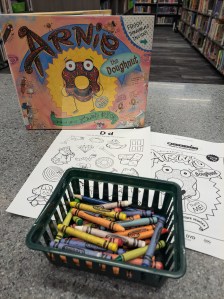
Arnie the Doughnut by Laurie Keller

I love this book and so do the kids. I use it with my first grade classes and they are always asking if we can read it again. For this one I simply went and found a free coloring sheet online. I typed in “Arnie the Doughnut coloring sheet” and found this one by Scholastic. It was perfect.

Since my admin wants the library to be “a class” I try to add more to their lesson than just a coloring sheet. Since we were reading about a doughnut I chose to use a worksheet that started with the letter D. Again I searched for free letter D worksheets and found one I liked. Then I simply printed the coloring sheet and the letter D worksheet back to back. And just like that I had a fun lesson (and educational) to go with the book.

Potato Pants by Laurie Keller

Once you find a good book it is then easy to find other books by the same author to use in your library lessons. Laurie Keller has written so many good books it is easy to keep going with her books and add more fun lessons to your classes.

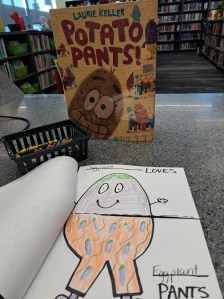
Potato Pants is always a hit. I also use this one with my first grade classes but it could easily be used with younger or older students. There are tons of fun ideas you can use with this book to have kids decorate and make potato pants. Some people use actual potatoes and put fabric on them. Some use pictures of a potato and add fabric clothes. I choose to use an activity where kids color the clothes on their potato and other fruits and vegetables in a coloring page format.

The activity I like to do for this one takes a couple visits but the students have a blast working on it. I found this lesson idea on Facebook from the Clever Librarian. No cost other than your time to draw some fun looking fruits and vegetables. Don’t worry if you are not an artist, I definitely am not, but found it easy to draw these funny looking pictures from the students to color. It does take a bit of prep work to make the little Potato Pants coloring pages but once you do it one year, save the template and then you have it for years to come.

Once you have drawn your different fruits and vegetables on the coloring pages. Staple the edges along the long side of the paper to make a book. Cut the pages in half but not all the way across. This way the top and bottom can fold open and then the outfits are interchangeable for the different fruits and vegetables. My classes love showing each other how they colored their pants for the different pages. It is definitely an activity worth adding to your lessons.

Do Unto Otters by Laurie Keller

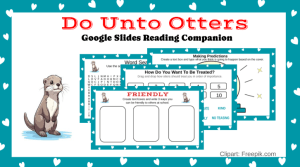
Do Unto Otters is a wonderful book to use for an SEL lesson. We can never give students too many reminders about how to treat others kindly and with respect. After we read and discuss this book I use my Google Slides reading Companion activity. Prep time for this lesson is super easy. All you have to do is add it to their Google classroom, make a copy for each student, and assign.

This lesson is a tech related lesson so students get to practice library skills and some basic tech skills at the same time. As students go through the lesson they will do predictions, story elements, and write three ways they can be friendly, considerate, kind, honest. Then at the end they can use the scribble line tool to solve a maze. This is just another way to keep students engaged and learning in the library.

Shop for your copy of Do Unto Otters here.

I have give you three books by Laurie Keller to use but you can find more and use some simple ways to add fun and learning to your library lessons. I hope these ideas were helpful to you as you continue your journey to make your library a special place of learning and fun.

How to Play Shark Bite! A Library Centers Game

Are your library centers starting to get a bit stagnant? Looking for new ideas on how to make centers fun and educational? Well, don’t worry, I have you covered. Time to add another fun game to your bag of tricks with Shark Bite! This is a perfect way for students to practice library skills in centers while having fun.

Shark Bite! is a fun card game that is perfect for elementary library centers. The game is similar to Kaboom! but with some more intense action cards to add to the fun. The goal is to get as many cards as possible by naming the book genre of each but some of the cards work for or against the students. If they pull an Octopus card they have to put a card back, an Angler Fish card they switch hands with another player, and a SHARK BITE card means they have to put all of their cards back in the bucket/pile. The library breaks out is excitement when they pull these ocean animal cards and have to give up their cards or switch hands.

How to Play Shark Bite

  • Print out the cards ( I like to use card stock and laminate to make them last) and put them into a bucket or pile.
  • Player draws a card, reads the card, and then chooses which genre that book or story would be placed. 
  • If player gets it right they keep their card. If they get it wrong the card is placed back in the bucket or pile.
  • If a player draws a card with one of the ocean animals they have to follow the instructions for that animal.
  • The game continues until all of the cards are gone.
  • The student with the most cards at the end is the winner.

I have one student act as “Expert” to hold the answer key and make sure everyone is getting the correct book genre.

As you can see, this game can be done with any concept, just switch book genre with one of the other library related Shark Bite! cards.

Secret fact about the game…IT NEVER ENDS. Eventually, somebody gets a Shark Bite! card which means they have to put their cards back in the bucket thus adding to the cards in the bucket over and over again. For library teachers this means students are engaged and learning the full 10 to 15 minutes of the library centers rotation.

Shop for your copy of Shark Bite! here.

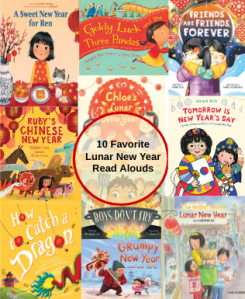
Celebrate Lunar New Year with Picture Books

Lunar New Year, also known as the Spring Festival, is a time of celebration, family gatherings, and cultural reflection. For many families, it’s not just about the festivities; it’s also about passing down traditions and values to the next generation. One of the most enjoyable and meaningful ways to help your students learn about the culture importance of Lunar New Year is by reading picture books that highlight the stories, customs, and history of this holiday.

A Sweet New Year for Ren by Michelle Sterling: A picture book about a young girl named Ren who eagerly anticipates Lunar New Year and the family traditions and festivities that come with it.

Goldy Luck and the Three Pandas by Natasha Yim: A girl named Goldy Luck is not very lucky and ends up causing chaos in her neighbor’s home. This is a fractured fairy tale replacing Goldilocks with Goldy and the Three Bears with Pandas.

Friends are Friends Forever by Dane Liu:  Join Dandan, a young girl who is moving from China to America, and her close friend Yueyue, as they navigate the emotions of saying goodbye while cherishing their shared tradition of making paper snowflake decorations on Lunar New Year’s Eve.

Ruby’s Chinese New Year by Vickie Lee: Tells the story of a young girl named Ruby who wants to deliver a special card to her grandmother for Chinese New Year, but her grandmother can’t travel so Ruby decides to journey to her instead.

Chloe’s Lunar New Year by Lily LaMotte and Michelle Lee: Join Chloe as her family prepares for the Lunar New Year.

Tomorrow is New Year’s Day by Aram Kim: Mina shares the traditions of Seollal (Korean Lunar New Year) with her classmates at school while trying to include her reluctant younger brother.

Boys Don’t Fry by Kimberly Lee: Jin wants to help his Malaysian family prepare for the Lunar New Year feast. But, he is discouraged because “boys don’t fry” or cook. Jin’s grandmother recognizes his passion and allows him to join in the meal prep traditions.

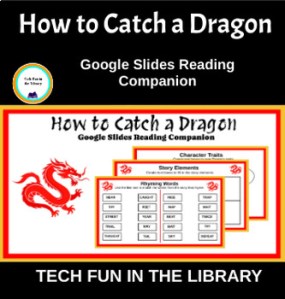
How to Catch a dragon by Adam Wallace: This book follows a group of kids during Chinese New Year celebrations as they try to catch a mischievous dragon that is roaming through their town.

Grumpy New Year by Katrina Moore: A young girl named Daisy wants to visit her Grandpa in China to celebrate Lunar New Year. In her excitement she becomes too tired to sleep and becomes grumpy.

The Night Before Lunar New Year by Natasha Wing and Lingfeng Ho: A picture book about a young girl who is excited for Lunar New Year but is nervous about the loud noises at the parade.

Activities You Might Find Helpful:

Shop for your copy of How to Catch a Dragon here.

Shop for your copy of Lunar New Year Sudoku here.

Same Same But Different: Kindergarten Lesson

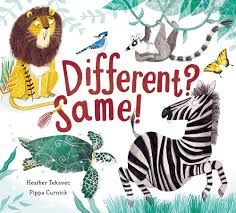
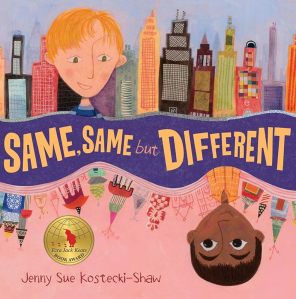
I have been doing this lesson with kindergarten for a few years and thought I would share. Because…who can’t use some new ideas? I like this lesson because it gives me the chance to use a great SEL book about how we are all different and discuss how it is okay to be different. For this lesson you need to use the books Same Same But Different by Jenny Sue Kostecki-Shaw and Different? Same? by Heather Tekavec. If you don’t have the books in your library yet you can always borrow from the public library for the lesson. I have also had great success with using EPIC at times and projecting the book to read to them. Sometimes we have to be creative in finding books when budgets are small for school libraries.

Different? Same?

I read this one to the students first to get them thinking about how animals are different. As I read each page I give them time to guess what they think the animals will have in common before I read the last sentence. Kinders love to be involved in the story so this is a perfect chance to let them share their ideas. I also use this as a time to encourage hand raising and not yelling out. They will come up with lots of different ideas and some they get the same answer as the story right away and others it takes a bit of prodding. I love it because they are learning to think outside the box and realizing that there can be more than one right answer.

Same Same But Different

After we finish the first book we move on to read the book Same Same But Different. I like to start by asking how people could be the same, how people could be different, and is it okay to be different? It is also a good time to let them make predictions. Show the cover and ask them what they think the book will be about. Anything to get them thinking about the book before you start.

As you read you can stop and ask how the boys are the same and different in the story. After the story you can discuss how we might all be the same and different. You could start a discussion about where they live, what they eat, etc. then compare to one another. EXAMPLE: “My favorite ice cream is chocolate ice cream.” you could let each one tell their favorites. After they share you can reinforce the idea that it is okay that we all like different kinds…there is no wrong or right kind of ice cream. There are lots of things you can do to get them thinking about how it is okay to be different.

Activity After the Story

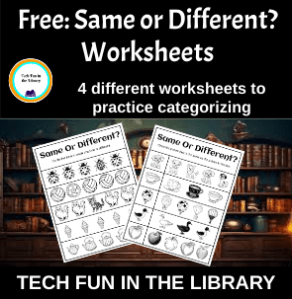
I like to always have some type of lesson for them to do that ties to the book. My admin wants library to be “like a class” so I try to combine fun and learning whenever possible. I know they like to draw and color so some days we do that but I feel that adding some type of learning worksheet gives it just a bit more “class” feel. For these books I chose to have them do a couple worksheets finding things that were the same and different. They can use crayons and then color the pages after they circle their answer. I have created 4 different worksheets that my students use and you can get a copy of them for FREE by clicking the link below.

Get your FREE Same or Different? worksheets here.

I have had great success with this lesson. It keeps students engaged, it gives the chance to share 2 fun books, and there are learning activities at the end. If you are looking for lesson ideas for your kindergarten class give it a try and let me know what you think. See you next time!

Fun Lesson with First Graders

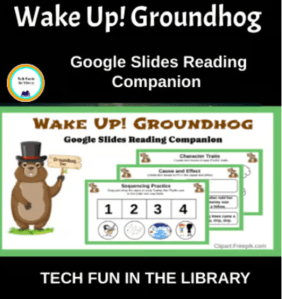
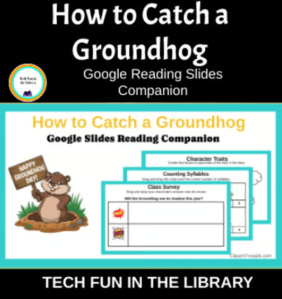
My first graders come to the library twice a week. If you know this age group you know that there are times they can get a little squirmy and bored if you don’t have something to keep them engaged the whole class period. This week we worked on one of my Google Slides Reading Companions activities. It was the perfect way for students to get back into the swing of library after an extended break.

What are Google Slides Reading Companions?

These are lessons I have created to bring both tech and library together. I not only teach library but I also teach technology. When I first started doing both 8 years ago I had no idea how to get enough time to improve skills in both areas. I decided to create some lessons that would give them the library skills and books while at the same time working on basic tech skills. The Google Slides Reading Companion was born!

No Snow Yet…But We Are Hopeful

As I have said in other blogs winter themed read aloud are perfect for this time of year. I chose to do Just One Flake this week. We read the story and then talked about times that they tried to catch snowflakes on their tongues. Almost all admitted they have tried to do this when it snows. After the story I used the projector to display the slides and show students what they needed to do for each slide. Then students logged onto their Chromebooks and began the lesson.

Tech Skills Practiced

At this age I know mastering the track pad is key to being successful on the Chromebooks. This lesson has a lot of drag and drop activities to give students the practice they need manipulating the trackpad. Is it always easy? No, sometimes they get frustrated when they can’t get the object to move or when they stretch out the circle they are trying to drag and drop. But, as with anything, practice makes perfect. I remind them that the more they practice the easier it will become. Below is an example of one student’s work dragging and dropping circles over the correct number for syllables. As you can see they did stretch out the circles.

Movement During the Lesson

I love that this lesson adds a chance for movement during class. At the end of the slides there is a survey slide that students need to ask their classmates about a favorite event on a snow day. It is so fun to watch them go around asking their classmates what they like best and then dragging and dropping the snowflake to the appropriate box. They love getting to move around and talk while still being engaged in the lesson. Now that is a win for everyone!

A Great Way to Learn

Overall, it has been a great few days working with my first graders. Students have been engaged and having fun which makes them happy. Students have been learning new skills and practicing old skills which makes me happy. I didn’t have to make a stack of copies for assignments, I didn’t have to keep track of unfinished work until the next time they came, and I was able to watch them grow in their computer skills. If you are looking for a fun activity to use with your students Google Reading Slides Companions are a great way to add tech to your lessons.

Shop for your copy of Just One Flake here.

What Are You Teaching In the Library After Winter Break???

Aaahhh….that 5:00 am alarm. Yep, it was set and went off first thing this morning. Time to get into the routine of waking up early and heading to work. Back to reality.

If you are wondering what to do this first week back, you are not alone. I saw a reel last night of a teacher saying he had no idea what he was teaching today. He couldn’t even remember where they left off before break. Sound familiar? Yeah, me too.

This week in my library we will be doing a lot of reviewing library expectations and procedures. It has been a few weeks since we have all been together and let’s be honest…things got a bit lax right before break….so time for a refresher. Like us, kids have turned off their school brains over break and many need these reminders to get back on track with behaviors in class, thus going over expectations and procedures is always a good idea.

The other thing I like to do is ease back into things before starting new concepts or lessons. Our library will be doing Caldecott and Newbery Award lessons this month which are fun but I am going to give them a day or two to get back into the routine of school before jumping into these activities.

Here are a few ideas on how to start back a bit more low key but still learning.

New Year’s Themed Read Alouds

This is always a fun way to start back the first day after winter break. I like to read different books with a New Year’s theme to students and then we talk about resolutions or goals they might have for the new year. One of my favorites is Squirrel’s New Year’s Resolution. Students enjoy the story and then can think of ideas on how they can help others each day and make a few resolutions for themselves just like Squirrel. Here is a great Google Slides Reading Companion to go with this book. I love these Google Slides Reading Companions because they take no prep on my part. I don’t have to crowd into the printer room trying to get my turn to make 60 copies of an activity. All I do is put it into the Google Classroom and make a copy for all students.

Shop for your Google Slides Reading Companion here.

Winter Themed Read Alouds

There are sooo many great winter themed read alouds it is hard to choose. One of my favorites is Blizzard by John Rocco. The illustrations are great, the story is great, the fold out pages are great…and right now many are dealing with huge snowfall so it is definitely timely. Another fun one for younger grades is Just One Flake by Travis Jonker. My students love this story and can definitely relate to trying to catch snowflakes on their tongues. Then you can switch it up and read The Snow Globe Family or Snow Globe Wishes both great winter read alouds. With so many great reads out there you can’t go wrong just grab some and enjoy!!

Shop for your book activities here.

Winter Themed Library Activities

Choosing activities that go with the seasons are always a fun way for students to learn in the library. I like to add some digital activities to my centers along with games and writing activities. Some fun winter themed digital activities are these snowman library skills drag and drop activities. Students can practice their shelf order skills, call number skills, and Dewey Decimal skills with these fun winter themed Google Slides. Easy to share with students to use in centers or for something to do after check out.

Shop for your Snowman Library Skills Practice Bundle here.

Library Centers Games

Kids love games and adding games that practice library skills is a win for any library centers activity. My students love Shark Bite! and Kaboom! both are great ways to practice library skills. Younger students enjoy playing the memory games that focus on book genres. Another popular one is UNO. Everyone loves to original game and this library themed one is a hit as well. These are just a few ideas to add fun and games to your library centers as you head back to school.

Shop for your Shark Bite Game Bundle here.

Shop for your Kaboom Game Bundle here.

Shop for your Book Genre Memory Game here.

Enjoy the Time with Students

As hard as it is to go back after a break remember how excited some students are to be back at school and be back to the library. They are going to be excited to see you and eager to do whatever fun activities you have planned for them in the library. Enjoy the time you get with students, bring them more great stories and activities that will help them connect to reading and the library.

How I Teach the Newbery Medal Awards

January has arrived, winter break is almost over, and planning for a new year has begun. The Newbery Awards is one of my favorite lessons to do in January, second only to Mock Caldecott, but just as worthy of some recognition. I feel it is a valuable lesson that exposes students to past winners and hopefully gets them reading some of these great books that are hiding on the shelves. There are reasons why the books on this list have won and exposing students to good literature is a key part of our job. Adding this unit has been a great way to keep students engaged and learning about NEW and OLD books in my library.

What is the Newbery Medal Award?

The Newbery Medal is an annual award given by the American Library Association to the author of the most distinguished children’s book published in the previous year. The winner is announced at the end of January at the same time Caldecott and other literature awards are announced. The Newbery Medal winner is chosen by a committee of 15 people. The winning author receives a bronze medal and may have a metallic seal of the medal added to future printings of their book. In addition to the medal winner, one or more honor books are also chosen each year. 

Each year I start my unit by doing a Google Slides presentation to teach students about the Newbery Medal. Even though students may hear the lesson a couple times they are still learning as the information is lost over the year and reteaching is always a good idea. After the lesson slides we read the book Balderdash!: John Newbery and the Boisterous Birth of Children’s Books by Michelle Markel. This book gives some great background on John Newbery.

Finding Newbery Winners in Your Collection

Most of us have or should have many of the Newbery Award winners and Honor winners in our collections. This is a great time to bring them to the attention of students and get them circulating again. I like this lesson because it does stimulate circulation of good books that may have been forgotten. The lesson I use is a scavenger hunt that sends students into the stacks looking for the Newbery winners. Not only will they be looking at books to possibly check out later but they are also practicing finding books within my library. That is a win win in my book.

To add to this lesson and give them more to do than simply find the books and write the call numbers. While they are doing the scavenger hunt they will also need to make book recommendations. I usually have them do 2 recommendations from all the books they will search. This is just short form they fill out with title, number of pages, and brief synopsis.

What if I Don’t Have the Book?

When using the Newbery winner and the Honor Medal list there may be a number of books you don’t have in your library. I also don’t have all of them but this leads to a great opportunity for students to use Destiny….or whatever system your library uses…to look up the books. They can then see if the book is available in the library or if it might just be checked out by someone else. If it is not available I have them put an X on the box. If it is in our library but checked out I have them put a check mark on the box. I have found this to be a great way to get students using the library system to look for books and then later they can use that skill to find books they are wanting to read.

Wrapping Up the Lesson

This lesson may take more than one library class to complete. I have them work with a partner and that does help speed up the process as one can be the person who reads the call number while the other is writing it down. Same with the recommendation form, one can read the synopsis out loud and both can decide how to summarize it. Once they have completed the scavenger hunt and the recommendations I give them an exit ticket which is a half sheet that the fill out with the titles of 3 Newbery Award books they think they would like to check out in the future. I feel this adds to the lesson because students are picking up the books, reading the synopsis, and then deciding if it might be one they would like to read in the future.

I believe this is a great lesson for getting students out looking through your collection, finding Award winners, evaluating them, and maybe even reading some of them.

Shop for your Newbery Medal Award Unit Lesson Plan here.

Shop for your Caldecott and Newbery Unit Lesson Plan Bundle here.

Grab your your FREE Coretta Scott King Awards Google Slides Presentation here.

MLK Read Alouds

In honor of Martin Luther King Jr.’s birthday I like to read books about his life and contributions during the month of January. I feel it is important to introduce his powerful words and ideas to students of all ages. Whether teaching about his role in the Civil Rights Movement or simply sharing the values of equality and justice, books about Dr. King are a great way to engage young readers. Here are 12 of my favorite MLK books that offer valuable lessons for students and are both educational and inspiring.

Be A King by Carole Boston Weatherford: Uses key moments from Dr. Martin Luther King Jr.’s life to inspire children to stand up for what is right and make the world a better place.

I Have a Dream by Dr. Martin Luther King Jr.: Presenting key excerpts from the speech alongside vibrant paintings depicting the March on Washington and the dream of a racially harmonious America

We Dream a World by Yolanda Renee King: With inspiration from Langston Hughes and deep love for her grandparents, Yolanda King shows the world that young people are strong enough to carry on their elders’ legacy while creating a new path for themselves.

Martin Luther King, Jr.: A Kid’s Book About Advancing Civil Rights With Nonviolence by Mary Nhin: Find out what happens in this kid’s book about achieving goals with nonviolence. Sometimes, we are faced with challenges that seem insurmountable. But with grit and hard work, one can achieve great things!

Good Night Martin Luther King Jr. by Adam Gamble and Mark Jasper: An educational board book that teaches young readers about the life of Martin Luther King Jr., a leader of the American civil rights movement

I am Martin Luther King Jr. by Brad Meltzer: Biography that tells the story of Martin Luther King, Jr.’s life from childhood to his role in the civil rights movement

A Place to Land by Barry Wittenstein: Focuses on the night before Martin Luther King Jr.’s historic “I Have a Dream” speech at the March on Washington, where he struggles to find the perfect words to end his speech.

My Daddy Dr. Martin Luther King Jr. by Martin Luther King III: Kids will learn about the early civil rights movement, growing up as the son of a famous activist, how it feels to experience racism as a child, and what it’s like to lose a parent at a young age.

A Picture Book of Martin Luther King Jr. by David A. Adler: A brief, illustrated, biography of the Baptist minister and civil rights leader whose philosophy and practice of nonviolent civil disobedience helped American blacks win many battles for equal rights.