Here we are almost half way through the current school year and book returns are on the rise. While this is great it does pose a problem….shelving. One of the big issues I hear from school librarians is that there is very little time to shelve books. What do you do about book returns? How do you get them back on the shelves in a timely manner? As a librarian of a K-12 library with no aide, I understand the difficulties of shelving books while conducting back to back classes. I have made a few adjustments in my library to make it easier to go home with an empty book cart every day.
Baskets for Series Books
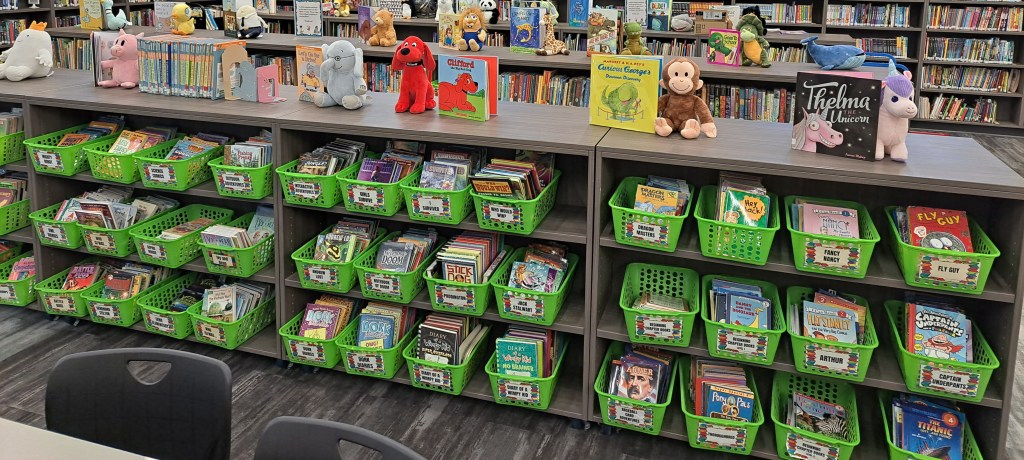
When I set up our new library 7 years ago I purchased baskets for all of the elementary series books. There are sooooo many series books and they take up valuable real estate on the shelves. Putting the series books in baskets was a game changer for our library.
Putting them in baskets means that all of the series books are easy for students to find and easy for me to shelve. The bulk of my books, aside from graphic novels, that are checked out by 1st through 4th come from these baskets. Students find a book they like and then they run with it and finish the series. When books are returned I just walk around and drop them in the correct basket. I don’t worry about putting them in order within the basket during the school year. At the end of the year, if I have time, I go through and arrange them in order but to be honest being out of order within the basket does not seem to hinder students in finding their desired read.
What about the cost? I had no budget when I set up our brand new library 7 years ago. I went to Dollar Tree and found these green baskets that matched the color decor fairly well. I wondered how they would hold up but I have not had to replace one basket in 7 years so I would say they were worth the dollar. There are lots of options out there for baskets that would work for your library.
Graphic Novel Section
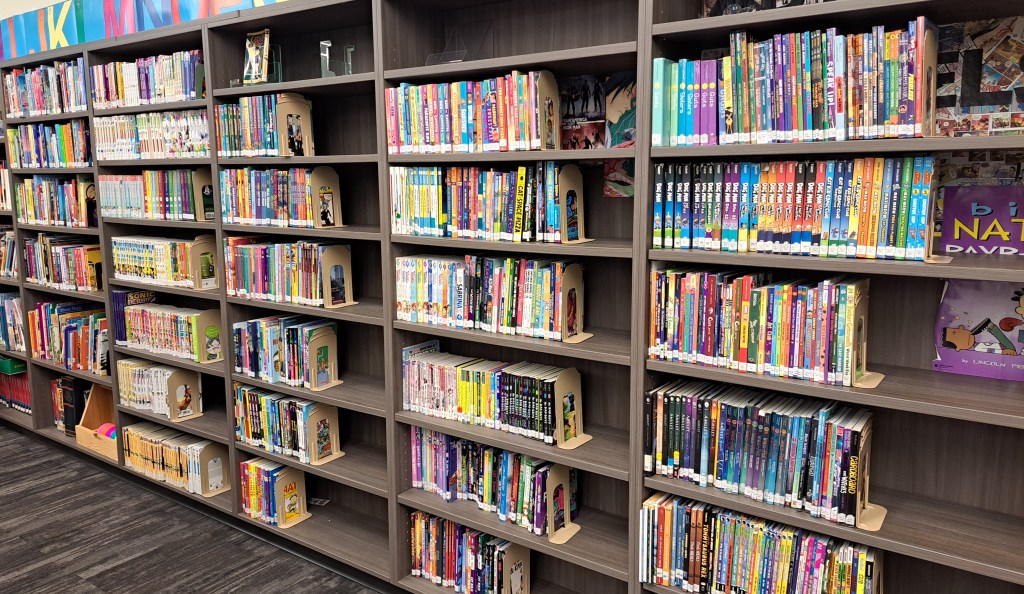
The busiest section of my library is the graphic novel section. Student’s love these books so making them easy to access was key. I moved them out of the nonfiction section and created a section of shelving just for the graphic novels. When I first set it up I had 5 sparsely filled shelves. Fast forward to today and I have 36 shelves of graphic novels. I just had to move things around this week to free up space so the shelves weren’t packed so tightly. I keep series books together within this section and…total transparency here… the rest are just put on the shelves in any order. They go in and out so quickly I don’t worry about alphabetical order. When shelving I am able to grab the graphic novels and go right to this section to put them away. Again, easy for students to find the graphic novel section and easy for me to shelve.
Finding the Time
I have found that shelving books is much like doing laundry. If you take the clothes out of the dryer and throw them on the sofa or in a spare room to “fold later”. They can pile up and become an overwhelming task. But, if you fold each load right as it comes out of the dryer it only takes a few minutes. For me, it is the same principle with shelving books in the library. When students come in they put their books on the blue book cart I use for library returns. After we read a story and they start their lesson or centers I go and scan the books that were returned. I then call them over 2 at a time to check out. While they are checking out I am walking through the stacks putting books away. With the systems I spoke of above it takes no time at all to put them back on the shelves. I have all the books from each class put away by the end of that class. If something happens, and I get busy I might end up with a few at the end of the day but I can quickly get those put away after my last class before heading home.
Now, that being said my book return cart is empty each day but that by no means is saying I have everything on my library list done. Back in my office I have an overflowing cart and stacks of books waiting to be processed and put on the shelves. But….we will leave that for another blog post. Happy shelving friends!!
What have you done in your library to make shelving easier? Any super tips you would like to share?
 Tech Fun In The Library