
One of my favorite fall lessons in the library is pairing a fiction story with a nonfiction book. Around Halloween, I always pull out Stellaluna, Bats in the Library, and Diary of a Spider to pair with a nonfiction books about bats and spiders. It’s a great way to blend literacy with science — and kids love learning “real stuff” about animals after reading a fun story.
Here is an example of what I do this with my fourth graders each year. We read Stellaluna together, talk about the story, characters, and the message, then we dive into some cool bat facts using nonfiction books I have in the library. After that, we compare and contrast the two using a simple Venn diagram that I write on the whiteboard. This kind of lesson helps students learn how to think critically, spot differences between fiction and nonfiction, and back up their ideas with details.
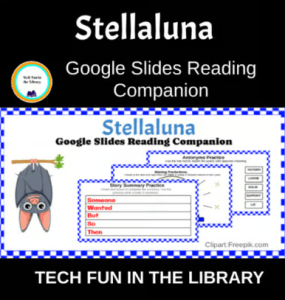
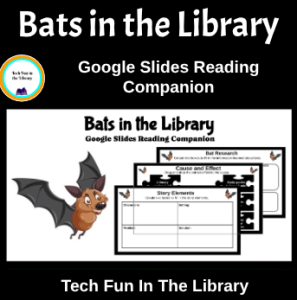
This unit is also a great way to squeeze in some library and tech skills. I use my Google Slides Reading Companion activity for Stellaluna where students review story elements, do a little bat research, and even practice some basic tech skills. I do the same type of activity with my 3rd grade classes using the book Bats in the Library, another great book to use to pair fiction with nonfiction.
I do something similar with Diary of a Spider and a nonfiction spider book — another big hit with students! After reading the book and comparing it to nonfiction books about spiders students jump into their Google Slides activity. These kinds of lessons are perfect for October and easy to adapt for different grades.
Doing comparisons like these throughout the year really helps students understand how fiction can stretch the truth while nonfiction gives us the facts. These lessons spark great discussions and help kids start to think like readers and researchers.
Pairing fiction and nonfiction books not only builds comprehension but also encourages curiosity, critical thinking, and a love for learning — which is exactly what we want in the library.
Click the images below for link.

Other extension ideas for these books:
1. Bat Research Mini-Project
- After reading, have students pick one species of bat to research (using PebbleGo, Epic, or a simple book).
- They can create a bat “fact card” with 3 facts and a drawing.
2. Bat Diagram Labeling
- Provide a simple bat diagram for students to label parts (wings, ears, etc.).
- You can make it hands-on by cutting and pasting labels, or drag-and-drop digitally.
3. Bat Craft with Facts
- Foldable bat craft with wings that open up to reveal facts inside.
- Display in the hallway or on a library bulletin board!
1. Diary Entry as a Spider
- Have students write their own “Diary of a ___” page from a spider’s point of view.
- Include what they do during the day, who they hang out with (flies?), etc.
- Let them illustrate it and make a mini book.
2. Spider Web Building
- STEAM idea: Give students string, glue, or paper to design and build a spider web.
- You could pair it with a short science video on how spiders build webs.
3. Spider Life Cycle
- Have students create a mini life cycle chart using cut-and-paste or drawings.
- Add this to your nonfiction reading follow-up.
4. Spider Fact Flipbook
- Simple paper flipbook with sections like:
- What they eat
- Where they live
- Cool facts
- Why they’re helpful
 Tech Fun In The Library