A blog for school librarians, media specialists, and teachers. Find ideas for lessons, library centers, and books to read with students to support reading.
I love having library centers available for students to use after our read aloud or lesson. Library centers can provide another opportunity for students to practice library skills, writing, reading comprehension, vocabulary development, and much more under the disguise of playing games.
I have talked about Shark Bite! card games to practice book genres in another post so if you are interested feel free to check that one out. This time I wanted to share some fun matching games that are very popular with my students.
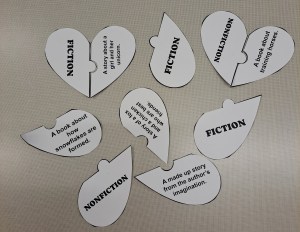
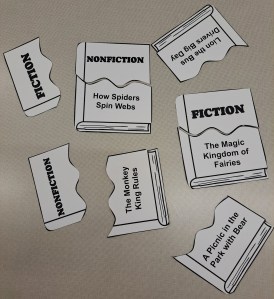
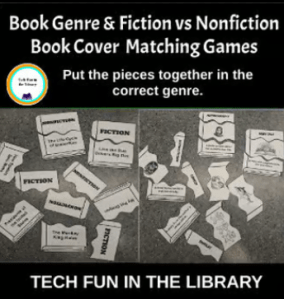
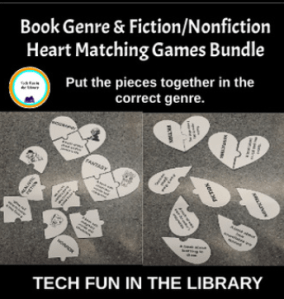
Book Genre Puzzle Matching Game
For this library center you will need to create some type of small puzzles that have book genre name, definition, and a picture to represent the genre if possible. Cut them into puzzle type pieces for students to spread out and then put back together matching the definitions with the genres. My students like to compete to see who can match the most. They also can be played individually with the student just trying to match all the correct genres to create the puzzles.
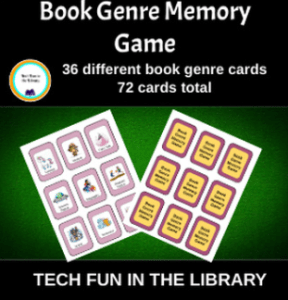
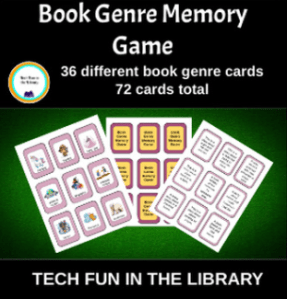
Book Genre Memory Matching Game
This one is great for students who love to play the memory game. Create cards with a picture representing the genre on one and the definition of the genre on another. These will be the matching cards students will try to match. Students will turn the cards face down on the table and then take turns trying to find the matching cards. Once all of the cards have been matched the one with the most matches wins.
Both of these activities are a fun way for students to practice book genres. Providing many options for library cents will help keep students from becoming bored which can then lead to behavior issues or disruptions. I
If you would like some premade matching activities you can find them on my TPT page.
There is much more to being a library teacher than simply reading a book. With all the duties we have in the library, on top of lesson planning, there are times when it can seem overwhelming trying to figure out what to teach next. Yesterday was one of those days for me. So, I went back to my planner (I use Planboard Chalk because it is free and easy to use) and looked at what I did last year in January. I found this easy lesson for Arnie the Doughnut that the kids loved. Remember lessons don’t always need to be a complex dog and pony show. It is okay to share a good book and then give students something fun to do that ties into it that doesn’t take a lot of prep work.
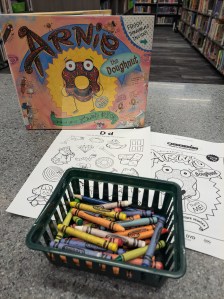
Arnie the Doughnut by Laurie Keller
I love this book and so do the kids. I use it with my first grade classes and they are always asking if we can read it again. For this one I simply went and found a free coloring sheet online. I typed in “Arnie the Doughnut coloring sheet” and found this one by Scholastic. It was perfect.
Since my admin wants the library to be “a class” I try to add more to their lesson than just a coloring sheet. Since we were reading about a doughnut I chose to use a worksheet that started with the letter D. Again I searched for free letter D worksheets and found one I liked. Then I simply printed the coloring sheet and the letter D worksheet back to back. And just like that I had a fun lesson (and educational) to go with the book.
Potato Pants by Laurie Keller
Once you find a good book it is then easy to find other books by the same author to use in your library lessons. Laurie Keller has written so many good books it is easy to keep going with her books and add more fun lessons to your classes.
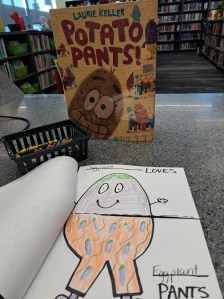
Potato Pants is always a hit. I also use this one with my first grade classes but it could easily be used with younger or older students. There are tons of fun ideas you can use with this book to have kids decorate and make potato pants. Some people use actual potatoes and put fabric on them. Some use pictures of a potato and add fabric clothes. I choose to use an activity where kids color the clothes on their potato and other fruits and vegetables in a coloring page format.
The activity I like to do for this one takes a couple visits but the students have a blast working on it. I found this lesson idea on Facebook from the Clever Librarian. No cost other than your time to draw some fun looking fruits and vegetables. Don’t worry if you are not an artist, I definitely am not, but found it easy to draw these funny looking pictures from the students to color. It does take a bit of prep work to make the little Potato Pants coloring pages but once you do it one year, save the template and then you have it for years to come.
Once you have drawn your different fruits and vegetables on the coloring pages. Staple the edges along the long side of the paper to make a book. Cut the pages in half but not all the way across. This way the top and bottom can fold open and then the outfits are interchangeable for the different fruits and vegetables. My classes love showing each other how they colored their pants for the different pages. It is definitely an activity worth adding to your lessons.
Do Unto Otters by Laurie Keller
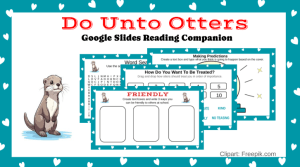
Do Unto Otters is a wonderful book to use for an SEL lesson. We can never give students too many reminders about how to treat others kindly and with respect. After we read and discuss this book I use my Google Slides reading Companion activity. Prep time for this lesson is super easy. All you have to do is add it to their Google classroom, make a copy for each student, and assign.
This lesson is a tech related lesson so students get to practice library skills and some basic tech skills at the same time. As students go through the lesson they will do predictions, story elements, and write three ways they can be friendly, considerate, kind, honest. Then at the end they can use the scribble line tool to solve a maze. This is just another way to keep students engaged and learning in the library.
I have give you three books by Laurie Keller to use but you can find more and use some simple ways to add fun and learning to your library lessons. I hope these ideas were helpful to you as you continue your journey to make your library a special place of learning and fun.
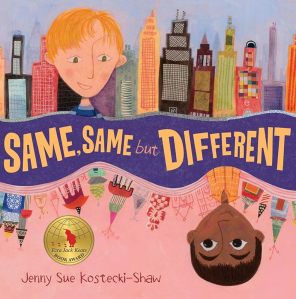
I have been doing this lesson with kindergarten for a few years and thought I would share. Because…who can’t use some new ideas? I like this lesson because it gives me the chance to use a great SEL book about how we are all different and discuss how it is okay to be different. For this lesson you need to use the books Same Same But Different by Jenny Sue Kostecki-Shaw and Different? Same? by Heather Tekavec. If you don’t have the books in your library yet you can always borrow from the public library for the lesson. I have also had great success with using EPIC at times and projecting the book to read to them. Sometimes we have to be creative in finding books when budgets are small for school libraries.
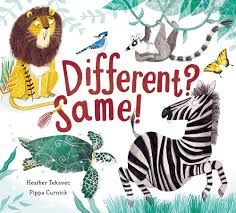
Different? Same?
I read this one to the students first to get them thinking about how animals are different. As I read each page I give them time to guess what they think the animals will have in common before I read the last sentence. Kinders love to be involved in the story so this is a perfect chance to let them share their ideas. I also use this as a time to encourage hand raising and not yelling out. They will come up with lots of different ideas and some they get the same answer as the story right away and others it takes a bit of prodding. I love it because they are learning to think outside the box and realizing that there can be more than one right answer.
Same Same But Different
After we finish the first book we move on to read the book Same Same But Different. I like to start by asking how people could be the same, how people could be different, and is it okay to be different? It is also a good time to let them make predictions. Show the cover and ask them what they think the book will be about. Anything to get them thinking about the book before you start.
As you read you can stop and ask how the boys are the same and different in the story. After the story you can discuss how we might all be the same and different. You could start a discussion about where they live, what they eat, etc. then compare to one another. EXAMPLE: “My favorite ice cream is chocolate ice cream.” you could let each one tell their favorites. After they share you can reinforce the idea that it is okay that we all like different kinds…there is no wrong or right kind of ice cream. There are lots of things you can do to get them thinking about how it is okay to be different.
Activity After the Story
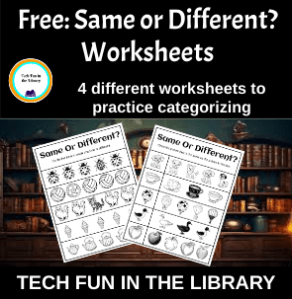
I like to always have some type of lesson for them to do that ties to the book. My admin wants library to be “like a class” so I try to combine fun and learning whenever possible. I know they like to draw and color so some days we do that but I feel that adding some type of learning worksheet gives it just a bit more “class” feel. For these books I chose to have them do a couple worksheets finding things that were the same and different. They can use crayons and then color the pages after they circle their answer. I have created 4 different worksheets that my students use and you can get a copy of them for FREE by clicking the link below.
I have had great success with this lesson. It keeps students engaged, it gives the chance to share 2 fun books, and there are learning activities at the end. If you are looking for lesson ideas for your kindergarten class give it a try and let me know what you think. See you next time!
Aaahhh….that 5:00 am alarm. Yep, it was set and went off first thing this morning. Time to get into the routine of waking up early and heading to work. Back to reality.
If you are wondering what to do this first week back, you are not alone. I saw a reel last night of a teacher saying he had no idea what he was teaching today. He couldn’t even remember where they left off before break. Sound familiar? Yeah, me too.
This week in my library we will be doing a lot of reviewing library expectations and procedures. It has been a few weeks since we have all been together and let’s be honest…things got a bit lax right before break….so time for a refresher. Like us, kids have turned off their school brains over break and many need these reminders to get back on track with behaviors in class, thus going over expectations and procedures is always a good idea.
The other thing I like to do is ease back into things before starting new concepts or lessons. Our library will be doing Caldecott and Newbery Award lessons this month which are fun but I am going to give them a day or two to get back into the routine of school before jumping into these activities.
Here are a few ideas on how to start back a bit more low key but still learning.
New Year’s Themed Read Alouds
This is always a fun way to start back the first day after winter break. I like to read different books with a New Year’s theme to students and then we talk about resolutions or goals they might have for the new year. One of my favorites is Squirrel’s New Year’s Resolution. Students enjoy the story and then can think of ideas on how they can help others each day and make a few resolutions for themselves just like Squirrel. Here is a great Google Slides Reading Companion to go with this book. I love these Google Slides Reading Companions because they take no prep on my part. I don’t have to crowd into the printer room trying to get my turn to make 60 copies of an activity. All I do is put it into the Google Classroom and make a copy for all students.
There are sooo many great winter themed read alouds it is hard to choose. One of my favorites is Blizzard by John Rocco. The illustrations are great, the story is great, the fold out pages are great…and right now many are dealing with huge snowfall so it is definitely timely. Another fun one for younger grades is Just One Flake by Travis Jonker. My students love this story and can definitely relate to trying to catch snowflakes on their tongues. Then you can switch it up and read The Snow Globe Family or Snow Globe Wishes both great winter read alouds. With so many great reads out there you can’t go wrong just grab some and enjoy!!
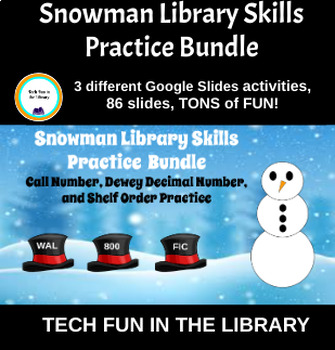
Choosing activities that go with the seasons are always a fun way for students to learn in the library. I like to add some digital activities to my centers along with games and writing activities. Some fun winter themed digital activities are these snowman library skills drag and drop activities. Students can practice their shelf order skills, call number skills, and Dewey Decimal skills with these fun winter themed Google Slides. Easy to share with students to use in centers or for something to do after check out.
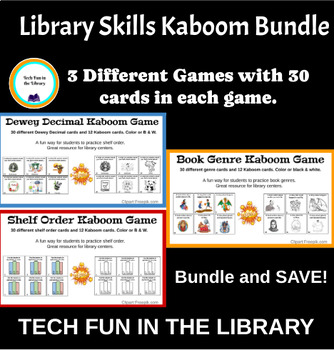
Kids love games and adding games that practice library skills is a win for any library centers activity. My students love Shark Bite! and Kaboom! both are great ways to practice library skills. Younger students enjoy playing the memory games that focus on book genres. Another popular one is UNO. Everyone loves to original game and this library themed one is a hit as well. These are just a few ideas to add fun and games to your library centers as you head back to school.
As hard as it is to go back after a break remember how excited some students are to be back at school and be back to the library. They are going to be excited to see you and eager to do whatever fun activities you have planned for them in the library. Enjoy the time you get with students, bring them more great stories and activities that will help them connect to reading and the library.
In an increasingly diverse world, one of the most important responsibilities of libraries is to make sure our collections reflect a wide range of voices, experiences, and perspectives. A diverse collection in a library is not merely a matter of quantity—it’s about ensuring that everyone can see themselves represented in the materials we have in our libraries. The content in libraries should reflect the richness of human experience, addressing issues of race, gender, class, sexuality, ability, and beyond. Here’s why a diverse collection is so important:
Promoting Inclusivity and Representation
Representation matters. When libraries feature diverse materials, they validate the experiences of all groups. This is especially crucial for young readers and members of underrepresented communities who might not see themselves reflected often in books. Diverse collections ensure that every patron, regardless of background, can find books that connect with their identity, experiences, and struggles.
For example, children who see characters from various cultures, backgrounds, and abilities in books are more likely to develop empathy and an understanding of people who are different from themselves.
Encouraging Critical Thinking and Empathy
Our library collections should serve as a mirror to the world. Having library materials that present different viewpoints, backgrounds, and beliefs, will help encourage students to think critically about the world around them. Exposing students to diverse perspectives helps them to develop a deeper understanding of the world and people around them.
Fostering a Sense of Belonging
Libraries should be safe spaces where students can explore new ideas, learn, or even just find comfort in a place they feel safe and seen. When library collections are diverse, they create an environment where everyone feels seen and heard. For members of underrepresented communities, knowing that the library acknowledges their histories, experiences, and identities fosters a sense of belonging and respect.
These are just a few of the reasons we should be making sure that our collections are diverse to meet the needs of all our students. It is never too early to get started on making your collection as diverse as possible. A diverse library collection is not just about offering more books—it’s about building a more inclusive, understanding, and just world for everyone.







 Tech Fun In The Library