A blog for school librarians, media specialists, and teachers. Find ideas for lessons, library centers, and books to read with students to support reading.
Using Donors Choose is a great way to get new resources for your library. Over the last 8 years, I’ve received over $25,000 in donations for our library through this site.
Creating a project doesn’t take long, and the payoff can be big. I usually keep my projects around $100–$150. That way, when there’s a match offer, the amount left is small, and many times a donor will step in and fully fund it.
It’s also smart to watch for funding opportunities. A lot of times they’re tied to fun learning activities you can do with your students. When you complete them, you get a gift code to use on your own projects.
I don’t use my gift codes right away. I hold on to them until there’s a match day, so I get more bang for my buck. Once a project is funded I make sure to send pictures and thank you messages to the donors so they know how much I appreciate their support.
If you haven’t tried Donors Choose yet, give it a shot. It’s really helped our library, and it can help yours too.
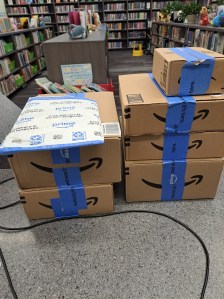
Below images: project funded May 2025 and projects funded over the summer 2024
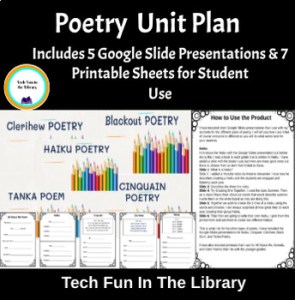
April is Poetry Month, and I love celebrating it in the library! But I know not all students feel the same way about poetry. A lot of them don’t really enjoy it, mostly because they don’t understand it. That’s totally okay! I like to start with something simple and fun that everyone can enjoy—a Haiku.
Haikus are perfect for students in grades 2-6. They are easy to understand and fun to make. A Haiku is a very short poem, just three lines long. The lines follow a simple syllable pattern: 5 syllables in the first line, 7 syllables in the second line, and 5 syllables in the third line. It’s a great way to get started with poetry because the structure is simple and it’s not overwhelming.
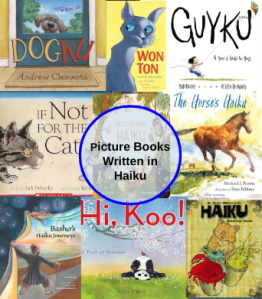
To start, I like to read books that are written entirely in Haiku. This helps students hear the rhythm of the Haiku format and see how it can be used to tell a whole story or share a message. Reading these Haiku books gives students a chance to experience how simple syllables can come together to create something beautiful. It also shows them that writing a complete book using Haikus is possible! After hearing the books, students are often excited to try writing their own Haikus.
To help students learn about Haikus, I created my own Google Slides presentation. It takes them step by step through the process of writing a Haiku. I like to go through each slide with the class and explain everything clearly. There’s even a slide where we all work together to create a Haiku as a class. It’s a great way to get everyone involved and show them that poetry isn’t as hard as it seems.
Kwame Alexander has a great video on Youtube that helps students understand Haikus. I use it every year and students are enthralled and listening to his instructions. Here is a link to his video if you would like to use it. Kwame Introduces Haikus
Once the students write their own Haikus, they feel really proud of their work. It’s amazing how something so simple can spark creativity and help them see that poetry can be fun and not so scary after all. So if you want to celebrate Poetry Month in a way that everyone can enjoy, try starting with a Haiku! It’s a great way to show students how easy and fun poetry can be.
As a librarian, one of my primary goals is to encourage students to develop a love for reading while ensuring our school library has the resources it needs to continue fostering that passion. For the last 4 years I have been doing something for our library that allows me to meet both of these goals: a Read-A-Thon. The results have been incredible, and I couldn’t be more thrilled about our choice to hold a Read -A-Thon each year.
A Simple, Yet Effective Way to Fundraise
The Read-A-Thon proved to be a game-changer for our library’s fundraising efforts. We are a small district and this year we had 108 students sign up for the Read-A-Thon and log their minutes. But with 108 students participating, the total minutes read was an impressive 37,179! That was up 10,000 minutes from last year. And as if that wasn’t impressive enough, the Read-A-Thon raised over $5,000 for the library—all with very little effort on my part.
What made this event so successful wasn’t just the enthusiasm of the students, but also the simplicity of the process. The Read-A-Thon website was incredibly user-friendly, making it easy for both students and their families to get involved. No need to worry about tracking down donation checks or loose change—people could donate directly through the website, making the whole process smooth and convenient.
Encouraging Reading While Raising Funds
One of the best parts of the Read-A-Thon was that it motivated students to read even more! With the goal of logging as many minutes as possible, students dove into books with an enthusiasm that was contagious. It was so heartwarming to see them excited not just about earning money for the library, but also about the simple act of reading.
The Read-A-Thon was a perfect blend of education and fundraising. It gave students a tangible way to support their school while also developing their reading skills. Plus, they were able to share their accomplishments with their families, who were excited to support them—and the library—by making donations.
Easy, No-Hassle Fundraising
From a fundraising perspective, the Read-A-Thon was a dream. The website made everything so easy—from registering students to tracking minutes read and donations made. It was simple for parents to sign up their children and make donations online, which meant no paperwork or collection of physical money for me to handle.
Not only did this reduce my workload significantly, but it also gave families a chance to participate from the comfort of their homes. The transparency of the online platform helped everyone see how much was being raised in real-time, which sparked even more excitement throughout the event.
Prizes for Readers
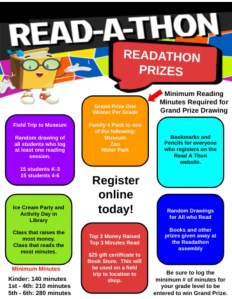
While the Read-A-Thon company does provide prizes I decided to go with the option to provide my own prizes to motivate our students. The PTO (Parent Teacher Organization) was incredibly generous, also donating funds to support a special Grand Prize for each grade level—a family 4-pack to either the zoo, museum, or water park!
To keep things exciting, I also organized random drawings for those who logged minutes, offering a fun field trip to the museum as a reward.
Additionally, we wanted to recognize our top achievers: the top 3 money raisers and top 3 readers received an exciting field trip to a local bookstore, where they each received a $25 gift card to spend on books of their choice.
These prizes not only encouraged students to participate but also made the entire event more fun and engaging for everyone involved!
Final Thoughts
If you’re looking for an effortless and effective way to fundraise for your school library while encouraging students to read, I can’t recommend the Read-A-Thon enough. It’s a win-win situation: students are motivated to read more, and you raise funds for your library with little hassle. The event was a success, and I’m already looking forward to next year!
If you’re interested in hosting your own Read-A-Thon, I highly suggest checking out the website. It’s an incredibly easy tool to use, and I’m confident it will help you reach your fundraising goals just like it did for us.
St. Patrick’s Day isn’t just about wearing green or hunting for four-leaf clovers—it’s also a fantastic opportunity to share stories that bring the magic of Ireland to life. Read-alouds are a great way to engage kids and ignite their imagination while introducing them to the rich culture and folklore of this festive day.
Whether you’re reading about leprechauns, shamrocks, or the legend of St. Patrick, these books offer a perfect blend of fun and learning. Not only do read-alouds help improve literacy skills, but they also create lasting memories and spark conversations about Irish traditions.
Some fantastic St. Patrick’s Day-themed read-alouds that I share with my students include:
How to Catch a Leprechaun by Adam Wallace – A playful, rhyming story about mischievous leprechauns and clever traps.
The Night Before St. Patrick’s Day by Natasha Wing is a festive and fun twist on the classic “Night Before Christmas” rhyme. The story follows two children eagerly preparing for St. Patrick’s Day.
Fiona’s Luck by Gail Gibbons – A charming Irish folk tale that reimagines a classic legend with a delightful twist. Follow along as Fiona outwits the leprechauns with her quick thinking and courage.
The Luckiest St. Patrick’s Day Ever! by Teddy Slater – A delightful story that follows a young boy named Sean as he celebrates St. Patrick’s Day with his family. Sean believes this will be the best St. Patrick’s Day ever, but when his plans to find a pot of gold at the end of a rainbow don’t go as expected, he learns that true luck comes from the love and joy of family and friends.
Pete the Cat: The Great Leprechaun Chase by Kimberly and James Dean – When Pete hears about a leprechaun who might have hidden a pot of gold, he decides to go on a chase to find it.
Jamie O’Rourke and the Big Potato by Tomie dePaola – A humorous Irish folktale about a lazy man named Jamie O’Rourke. One day, Jamie’s wife falls ill, and it’s up to him to grow a potato for their dinner. However, Jamie’s laziness leads to a surprising outcome—a giant potato that he can’t handle on his own.
Green Shamrocks by Eve Bunting – Rabbit is growing shamrocks in a pretty yellow pot–he’s getting them ready for St. Patrick’s Day so he can wear them for the parade! When his pot of beautiful green shamrocks goes missing, he goes searching . . . will he find them in time?
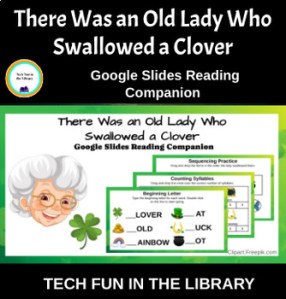
There Was an Old Lady Who Swallowed a Clover by Lucille Colandro – A fun twist on the classic “There Was an Old Lady Who Swallowed a Fly” rhyme, with a St. Patrick’s Day theme.
The Luckiest Leprechaun by Bryce Dallas Howard – A story about a young leprechaun named Finn who is known for his luck. Despite his good fortune, Finn feels a little lonely and longs for a true friend to share his luck with.
So, gather around, open a book, and let the spirit of St. Patrick’s Day fill the room with joy and excitement through the magic of storytelling.
Are you looking for some fun book activities to use with students? Here are a few that I use:
This little holiday is overlooked by many. I know in my school, until I started sharing books about Groundhog Day, most my young readers had never even heard of it. Teachers have so much to squeeze into their day they don’t have time to add this little holiday into the mix. Thus, sharing books and “celebrating” in the library is a great way to expose students to this quirky little holiday that is sometimes overlooked.
Groundhog Day Read Alouds
Each year I have a different book that I read to each grade. Reading picture books about Groundhog Day to students in the library is a delightful way to get them excited about the season’s big question—will we have an early spring or six more weeks of winter? Depending on where February 2nd falls in the we will celebrate the day of or the day before and other years we celebrate the day after.
Here are some books I like to share with my students:
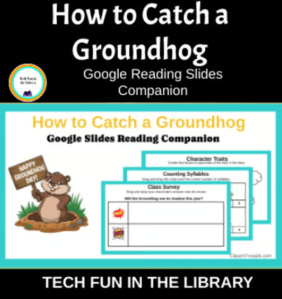
Kindergarten: How to Catch a Groundhog
1st Grade: Wake Up Groundhog
2nd Grade: Groundhog’s Day Off
3rd Grade: Groundhog’s Dilemma
4th Grade: Groundhog Gets a Say
5th Grade: Groundhog Gets it Wrong
6th Grade: Phil’s Big Day
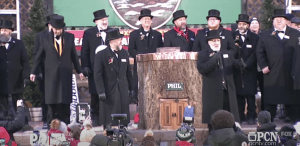
After we read the story I like to share a video about Groundhog Day so they understand the background behind it and why it is celebrated. Here are a couple good ones I found on Youtube that I like to share with students.
Lesson Finale
After reading the picture book and watching the short video it is time to actually watch the real Phil make his predictions. It is fun to do a quick class vote to see who wants 6 more weeks of winter and who wants an early spring. This year my classes had an overwhelming desire for 6 more weeks of winter because we have not had any snow yet and we are all still hopeful.
If I am doing this lesson prior to Groundhog Day I show the video from the previous year to let them see how it works. Once February 2nd has arrived and the new prediction is made I take time in class to show them the current results. This year Groundhog Day falls on Sunday February 2nd so we will do the lesson on Monday February 3rd and Tuesday February 4th. We will then be able to watch the most recent prediction on the same day we read the stories. I always just go to Youtube and look for “Groundhog Phil Prediction Pennsylvania” to find the most recent one.
Here is the one from this year that we watched.
There you have it, celebrating Groundhog Day in the library with picture books and short video clips is a fun and engaging way to introduce your students to this quirky tradition. So, whether you’re reading a fun picture book, watching a short video, or doing both Groundhog Day in the library is a fantastic way to embrace the season and spark children’s imaginations.
Looking for some fun activities to add to your lesson?
I love having library centers available for students to use after our read aloud or lesson. Library centers can provide another opportunity for students to practice library skills, writing, reading comprehension, vocabulary development, and much more under the disguise of playing games.
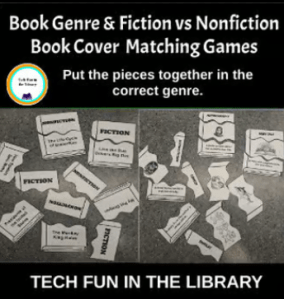
I have talked about Shark Bite! card games to practice book genres in another post so if you are interested feel free to check that one out. This time I wanted to share some fun matching games that are very popular with my students.
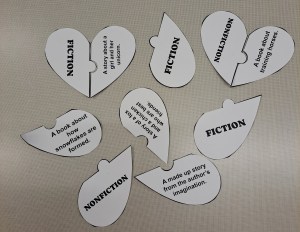
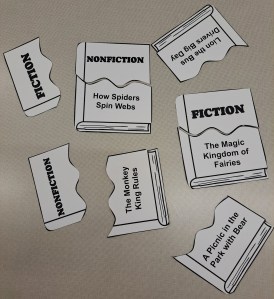
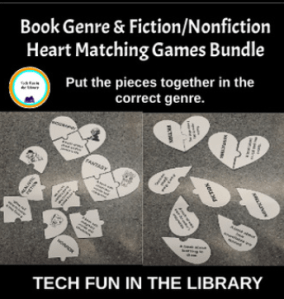
Book Genre Puzzle Matching Game
For this library center you will need to create some type of small puzzles that have book genre name, definition, and a picture to represent the genre if possible. Cut them into puzzle type pieces for students to spread out and then put back together matching the definitions with the genres. My students like to compete to see who can match the most. They also can be played individually with the student just trying to match all the correct genres to create the puzzles.
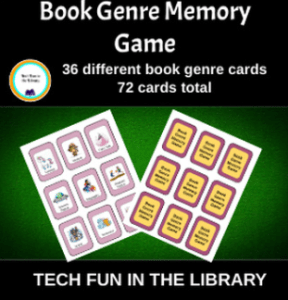
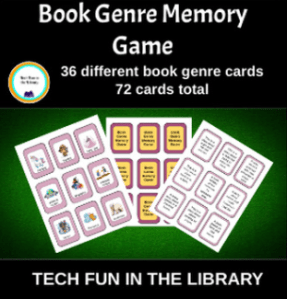
Book Genre Memory Matching Game
This one is great for students who love to play the memory game. Create cards with a picture representing the genre on one and the definition of the genre on another. These will be the matching cards students will try to match. Students will turn the cards face down on the table and then take turns trying to find the matching cards. Once all of the cards have been matched the one with the most matches wins.
Both of these activities are a fun way for students to practice book genres. Providing many options for library cents will help keep students from becoming bored which can then lead to behavior issues or disruptions. I
If you would like some premade matching activities you can find them on my TPT page.
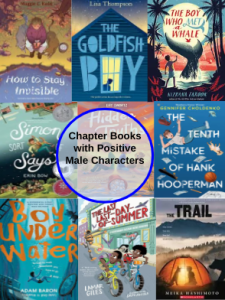
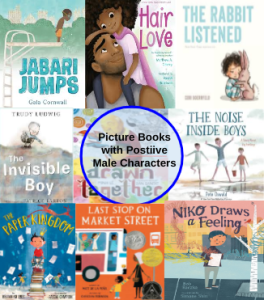
As we choose picture and chapter books to share with our students via read alouds or on our shelves, it is important to remember that they can be powerful tools to help shape young minds. In this mission to provide books that serve as windows and doors to all of our readers it is imperative we bring books with strong male protagonists to our young readers.
Positive Masculinity Representation
Providing books that have male characters who display empathy, kindness, respect, and emotional intelligence shows boys that it’s okay to show vulnerability and caring. These qualities can help bring a more rounded view of masculinity, possibly countering stereotypes that may limit emotional expression or compassion in boys.
Diverse Role Models
When boys encounter a variety of male characters with different experiences, personalities, and backgrounds, they learn that there is no single way to “be a man.” These characters can range from adventurous heroes to thoughtful leaders to young men struggling with mental or physical illnesses all broadening their understanding of who they can be.
Problem-Solving and Resilience
Male characters who overcome challenges, whether through intelligence, perseverance, or teamwork, help teach boys resilience. Seeing male characters work through difficult situations fosters a growth mindset and a belief in their own ability to solve problems.
Encouraging Emotional Expression
Books with male characters who express and process their feelings in healthy ways help boys understand that emotions are natural and should be acknowledged, not hidden or pushed aside.
Supporting Positive Relationships
Male characters in picture and chapter books can model positive relationships, whether with family, friends, or peers. Boys learn about friendship and the importance of mutual respect in these interactions.
Cultural and Social Awareness
Male characters in diverse settings and stories provide important lessons in cultural sensitivity and social awareness. They can show boys how to interact with people from different backgrounds, teaching acceptance and empathy from a young age.
Promoting Gender Equality
By featuring male characters who support and respect female characters, picture books can also model gender equality. Boys learn early on that valuing others and working together is important, regardless of gender.
In short, male characters in picture and chapter books can be essential role models who teach young boys about emotional health, problem-solving, empathy, resilience, and equality. The lessons they impart can significantly shape boys’ development into well-rounded, compassionate, and self-assured individuals.
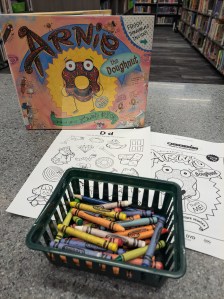
There is much more to being a library teacher than simply reading a book. With all the duties we have in the library, on top of lesson planning, there are times when it can seem overwhelming trying to figure out what to teach next. Yesterday was one of those days for me. So, I went back to my planner (I use Planboard Chalk because it is free and easy to use) and looked at what I did last year in January. I found this easy lesson for Arnie the Doughnut that the kids loved. Remember lessons don’t always need to be a complex dog and pony show. It is okay to share a good book and then give students something fun to do that ties into it that doesn’t take a lot of prep work.
Arnie the Doughnut by Laurie Keller
I love this book and so do the kids. I use it with my first grade classes and they are always asking if we can read it again. For this one I simply went and found a free coloring sheet online. I typed in “Arnie the Doughnut coloring sheet” and found this one by Scholastic. It was perfect.
Since my admin wants the library to be “a class” I try to add more to their lesson than just a coloring sheet. Since we were reading about a doughnut I chose to use a worksheet that started with the letter D. Again I searched for free letter D worksheets and found one I liked. Then I simply printed the coloring sheet and the letter D worksheet back to back. And just like that I had a fun lesson (and educational) to go with the book.
Potato Pants by Laurie Keller
Once you find a good book it is then easy to find other books by the same author to use in your library lessons. Laurie Keller has written so many good books it is easy to keep going with her books and add more fun lessons to your classes.
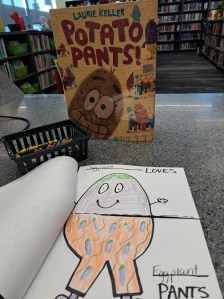
Potato Pants is always a hit. I also use this one with my first grade classes but it could easily be used with younger or older students. There are tons of fun ideas you can use with this book to have kids decorate and make potato pants. Some people use actual potatoes and put fabric on them. Some use pictures of a potato and add fabric clothes. I choose to use an activity where kids color the clothes on their potato and other fruits and vegetables in a coloring page format.
The activity I like to do for this one takes a couple visits but the students have a blast working on it. I found this lesson idea on Facebook from the Clever Librarian. No cost other than your time to draw some fun looking fruits and vegetables. Don’t worry if you are not an artist, I definitely am not, but found it easy to draw these funny looking pictures from the students to color. It does take a bit of prep work to make the little Potato Pants coloring pages but once you do it one year, save the template and then you have it for years to come.
Once you have drawn your different fruits and vegetables on the coloring pages. Staple the edges along the long side of the paper to make a book. Cut the pages in half but not all the way across. This way the top and bottom can fold open and then the outfits are interchangeable for the different fruits and vegetables. My classes love showing each other how they colored their pants for the different pages. It is definitely an activity worth adding to your lessons.
Do Unto Otters by Laurie Keller
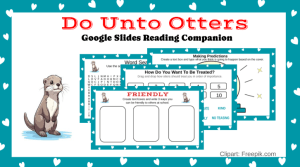
Do Unto Otters is a wonderful book to use for an SEL lesson. We can never give students too many reminders about how to treat others kindly and with respect. After we read and discuss this book I use my Google Slides reading Companion activity. Prep time for this lesson is super easy. All you have to do is add it to their Google classroom, make a copy for each student, and assign.
This lesson is a tech related lesson so students get to practice library skills and some basic tech skills at the same time. As students go through the lesson they will do predictions, story elements, and write three ways they can be friendly, considerate, kind, honest. Then at the end they can use the scribble line tool to solve a maze. This is just another way to keep students engaged and learning in the library.
I have give you three books by Laurie Keller to use but you can find more and use some simple ways to add fun and learning to your library lessons. I hope these ideas were helpful to you as you continue your journey to make your library a special place of learning and fun.
Are your library centers starting to get a bit stagnant? Looking for new ideas on how to make centers fun and educational? Well, don’t worry, I have you covered. Time to add another fun game to your bag of tricks with Shark Bite! This is a perfect way for students to practice library skills in centers while having fun.
Shark Bite! is a fun card game that is perfect for elementary library centers. The game is similar to Kaboom! but with some more intense action cards to add to the fun. The goal is to get as many cards as possible by naming the book genre of each but some of the cards work for or against the students. If they pull an Octopus card they have to put a card back, an Angler Fish card they switch hands with another player, and a SHARK BITE card means they have to put all of their cards back in the bucket/pile. The library breaks out is excitement when they pull these ocean animal cards and have to give up their cards or switch hands.
How to Play Shark Bite
Print out the cards ( I like to use card stock and laminate to make them last) and put them into a bucket or pile.
Player draws a card, reads the card, and then chooses which genre that book or story would be placed.
If player gets it right they keep their card. If they get it wrong the card is placed back in the bucket or pile.
If a player draws a card with one of the ocean animals they have to follow the instructions for that animal.
The game continues until all of the cards are gone.
The student with the most cards at the end is the winner.
I have one student act as “Expert” to hold the answer key and make sure everyone is getting the correct book genre.
As you can see, this game can be done with any concept, just switch book genre with one of the other library related Shark Bite! cards.
Secret fact about the game…IT NEVER ENDS. Eventually, somebody gets a Shark Bite! card which means they have to put their cards back in the bucket thus adding to the cards in the bucket over and over again. For library teachers this means students are engaged and learning the full 10 to 15 minutes of the library centers rotation.
Lunar New Year, also known as the Spring Festival, is a time of celebration, family gatherings, and cultural reflection. For many families, it’s not just about the festivities; it’s also about passing down traditions and values to the next generation. One of the most enjoyable and meaningful ways to help your students learn about the culture importance of Lunar New Year is by reading picture books that highlight the stories, customs, and history of this holiday.
A Sweet New Year for Ren by Michelle Sterling: A picture book about a young girl named Ren who eagerly anticipates Lunar New Year and the family traditions and festivities that come with it.
Goldy Luck and the Three Pandas by Natasha Yim: A girl named Goldy Luck is not very lucky and ends up causing chaos in her neighbor’s home. This is a fractured fairy tale replacing Goldilocks with Goldy and the Three Bears with Pandas.
Friends are Friends Forever by Dane Liu: Join Dandan, a young girl who is moving from China to America, and her close friend Yueyue, as they navigate the emotions of saying goodbye while cherishing their shared tradition of making paper snowflake decorations on Lunar New Year’s Eve.
Ruby’s Chinese New Year by Vickie Lee: Tells the story of a young girl named Ruby who wants to deliver a special card to her grandmother for Chinese New Year, but her grandmother can’t travel so Ruby decides to journey to her instead.
Chloe’s Lunar New Year by Lily LaMotte and Michelle Lee: Join Chloe as her family prepares for the Lunar New Year.
Tomorrow is New Year’s Day by Aram Kim: Mina shares the traditions of Seollal (Korean Lunar New Year) with her classmates at school while trying to include her reluctant younger brother.
Boys Don’t Fry by Kimberly Lee: Jin wants to help his Malaysian family prepare for the Lunar New Year feast. But, he is discouraged because “boys don’t fry” or cook. Jin’s grandmother recognizes his passion and allows him to join in the meal prep traditions.
How to Catch a dragon by Adam Wallace: This book follows a group of kids during Chinese New Year celebrations as they try to catch a mischievous dragon that is roaming through their town.
Grumpy New Year by Katrina Moore: A young girl named Daisy wants to visit her Grandpa in China to celebrate Lunar New Year. In her excitement she becomes too tired to sleep and becomes grumpy.
The Night Before Lunar New Year by Natasha Wing and Lingfeng Ho: A picture book about a young girl who is excited for Lunar New Year but is nervous about the loud noises at the parade.