
January has arrived, winter break is almost over, and planning for a new year has begun. The Newbery Awards is one of my favorite lessons to do in January, second only to Mock Caldecott, but just as worthy of some recognition. I feel it is a valuable lesson that exposes students to past winners and hopefully gets them reading some of these great books that are hiding on the shelves. There are reasons why the books on this list have won and exposing students to good literature is a key part of our job. Adding this unit has been a great way to keep students engaged and learning about NEW and OLD books in my library.
What is the Newbery Medal Award?
The Newbery Medal is an annual award given by the American Library Association to the author of the most distinguished children’s book published in the previous year. The winner is announced at the end of January at the same time Caldecott and other literature awards are announced. The Newbery Medal winner is chosen by a committee of 15 people. The winning author receives a bronze medal and may have a metallic seal of the medal added to future printings of their book. In addition to the medal winner, one or more honor books are also chosen each year.
Each year I start my unit by doing a Google Slides presentation to teach students about the Newbery Medal. Even though students may hear the lesson a couple times they are still learning as the information is lost over the year and reteaching is always a good idea. After the lesson slides we read the book Balderdash!: John Newbery and the Boisterous Birth of Children’s Books by Michelle Markel. This book gives some great background on John Newbery.

Finding Newbery Winners in Your Collection
Most of us have or should have many of the Newbery Award winners and Honor winners in our collections. This is a great time to bring them to the attention of students and get them circulating again. I like this lesson because it does stimulate circulation of good books that may have been forgotten. The lesson I use is a scavenger hunt that sends students into the stacks looking for the Newbery winners. Not only will they be looking at books to possibly check out later but they are also practicing finding books within my library. That is a win win in my book.
To add to this lesson and give them more to do than simply find the books and write the call numbers. While they are doing the scavenger hunt they will also need to make book recommendations. I usually have them do 2 recommendations from all the books they will search. This is just short form they fill out with title, number of pages, and brief synopsis.
What if I Don’t Have the Book?
When using the Newbery winner and the Honor Medal list there may be a number of books you don’t have in your library. I also don’t have all of them but this leads to a great opportunity for students to use Destiny….or whatever system your library uses…to look up the books. They can then see if the book is available in the library or if it might just be checked out by someone else. If it is not available I have them put an X on the box. If it is in our library but checked out I have them put a check mark on the box. I have found this to be a great way to get students using the library system to look for books and then later they can use that skill to find books they are wanting to read.
Wrapping Up the Lesson
This lesson may take more than one library class to complete. I have them work with a partner and that does help speed up the process as one can be the person who reads the call number while the other is writing it down. Same with the recommendation form, one can read the synopsis out loud and both can decide how to summarize it. Once they have completed the scavenger hunt and the recommendations I give them an exit ticket which is a half sheet that the fill out with the titles of 3 Newbery Award books they think they would like to check out in the future. I feel this adds to the lesson because students are picking up the books, reading the synopsis, and then deciding if it might be one they would like to read in the future.
I believe this is a great lesson for getting students out looking through your collection, finding Award winners, evaluating them, and maybe even reading some of them.

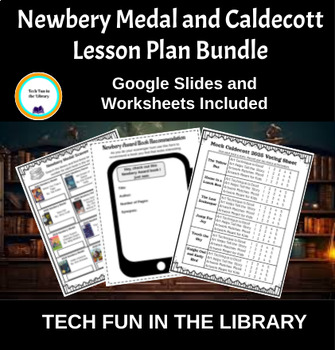
Shop for your Newbery Medal Award Unit Lesson Plan here.
Shop for your Caldecott and Newbery Unit Lesson Plan Bundle here.
Grab your your FREE Coretta Scott King Awards Google Slides Presentation here.
 Tech Fun In The Library