Don’t Judge a Book by Its Page Count: Picture Books in Middle School

When people think of picture books, they often imagine elementary classrooms and early readers. But here is something I have been happily reminded of this year: middle school students still love picture books, and they benefit from them in powerful ways.

I was not sure how my middle school students (grades 7 and 8) would respond to participating in a Mock Caldecott Medal this year. Would they think it was too young? Would they take it seriously? As it turns out, they absolutely rose to the occasion.

At their age, they were mature enough to thoughtfully evaluate the books using our four criteria: Art Technique is Good, Art Helps Tell the Story, Artwork Matches Mood, and Artwork Meant for Kids. As they read through the titles on our mock list, I could hear them debating artistic choices, discussing how illustrations supported the text, defending their scores with evidence, and even questioning the mediums used for the artwork. They were asking whether an illustrator used watercolor, collage, digital art, or mixed media, and discussing how those choices affected the overall impact of the story. They were not just reading. They were analyzing.

Picture books are uniquely powerful for middle schoolers for several reasons.

First, they spark great conversations. Because the books are shorter, students are more willing to jump in and share their opinions. Before you know it, they are pointing out small details in the illustrations or arguing about whether the artwork really matches the mood of the story.

They also let students dig deeper without feeling overwhelmed. A picture book might look simple, but there is often a lot going on beneath the surface. The combination of text and illustrations gives them more to notice and more to talk about.

And honestly, they are fun. Middle schoolers still enjoy being read to. They still like flipping through beautifully illustrated pages. Giving them access to picture books reminds them that reading does not always have to feel heavy or complicated to be meaningful.

Our Mock Caldecott experience did more than introduce students to new and engaging picture books. It also gave them an understanding into how the Caldecott process works and helped them appreciate the artistry behind the books they may have once rushed past.

Most importantly, it reminded all of us that picture books are not defined by age level. They are defined by the power of storytelling. And middle schoolers are more than ready to engage with that power.

If you need a Mock Caldecott lesson plan you can find one in my TPT store.
Back to School in the Library: A Fun & Productive First Week

The first week back in the library is always exciting, and this year will be no different! We will spend the first visit talking about library rules, book care, and how to be respectful and responsible with our library materials. We will also go over basic classroom rules focusing on being respectful, responsible, and safe. It’s so important to set the stage for a great year of reading, and that all starts with knowing the basics.

For each grade, we will read a different book related to library skills and book care. I read a different book to each grade level so that they are not getting the same books year after year. With the younger kids we will read about how to treat books gently, and older grades discussed things like where books live in the library and how to find what they need. After reading, we always have a great discussion about the key points from the book, like why it’s important to keep our books in good shape and return them on time.

Then comes the best part: the first checkout of the year! I love that everyone gets to check out books on day one—yes, even the Kindergarten students! Some like to make them wait or limit them to books they keep in class but I let them check out and take home. These young readers are just as excited to take books home as the older kids, and in fact, they are often the best at bringing them back because parents seem to be more involved and on top of returning weekly.

The first day is always full of energy, excitement, and a lot of book love. It’s a great way to kick off a year of reading, learning, and growing in the library! Looking forward to another fun and productive year ahead.

January is “Mock” Caldecott Time!

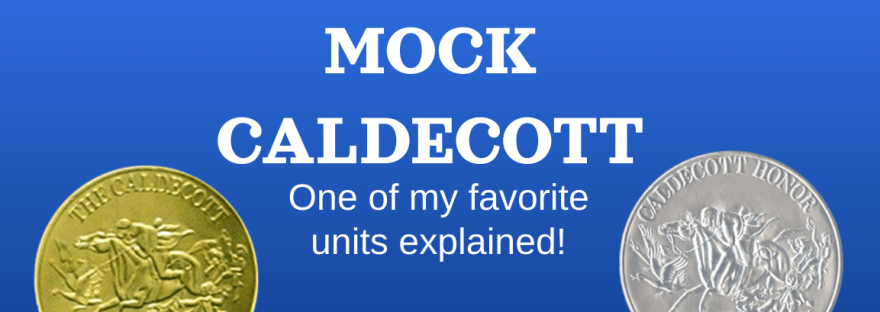
January is right around the corner and that means it is time for our “Mock” Caldecott. This is one of my favorite units because it gets kids reading and evaluating books. January can be a bit rough as we come back from an extended winter break and the fun of all the holiday activities is behind us. Adding this unit has been a great way to keep students engaged and learning in the library.

Preparing for the Unit

Getting ready for this unit does take a bit of preparation on your part as you need to decide what books you will have students reading and evaluating for the unit. I go on the Internet and search up Mock Caldecott books that others have posted and are using. There are also Mock Caldecott groups on social media that can be very helpful. I try to find ones that are mentioned on numerous sites. No one knows for sure what books are being scored by the actual Caldecott judges but so far I have always ended up with winning books in the list of books I provided for my students to judge.

Where Do You Get the Books?

Of course, I don’t always have all of the books that I put on my list. I work in a small district so purchasing that many new books for one unit is not feasible. What do I do? I go to my public library and check out the ones I don’t already have in my library. I make sure that I remind the students over and over that the books we are looking at do not belong to our school so we need to be extra careful when reading them. I have never had an issue with damaged books. If using the public library isn’t an option you can still do the unit by just picking books from your library that you feel have great illustrations and would be good for student evaluations. It is the process of viewing books and illustrations that is important for this unit not necessarily the books themselves.

Time to Start

On the first day of the unit I pull as many Caldecott and Honor winners as I can from my collection and display them on the tray of the whiteboard. When students come in they notice the books and they start asking about them. I find this is a great way to introduce the unit because it has already captured their attention. I then ask them what the books have in common. There are lots of different answers that arise but each time one student does notice the Caldecott Medals on the front. Once they know this is what we will be learning about I start my Google Slides lesson giving background about the award. Yes, I do this year after year and my upper grade students have heard it before but they always forget so it doesn’t hurt to reteach.

Looking Closely at Picture Books

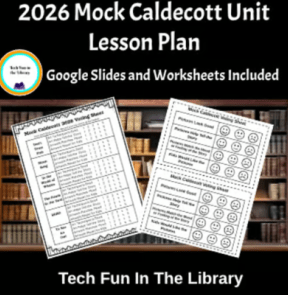
After that we dive into the books and get started. (Step by step lesson plans are included in my Mock Caldecott Unit Lesson) I choose to use 12 books each year and it takes us 2-3 weeks to get through them. I read the books to lower elementary then they vote. For upper elementary I have them read the books to themselves and vote. My students, even the reluctant readers, enjoy this unit because they are really evaluating the illustrations and the pressure to read is not there as it is in some other reading activities. As they are working on each book I love the conversations I am hearing about the books.

Overall, this unit is a great way for students to be exposed to new books and to take the time to evaluate the illustrations. I know my students enjoy this unit because each year when they come in and see the books on the whiteboard tray I hear, “Oh yay, we are picking the winners again!”

Shop for your 2026 Mock Caldecott Unit Lesson Plan here.

Shop for your 2025 Mock Caldecott and Newbery Award Unit Lesson Plan Bundle here.

Grab your your FREE Coretta Scott King Awards Google Slides Presentation here.